Giải Tiếng Anh 12 kết nối: Unit 7 The world of mass media
Hướng dẫn giải Tiếng Anh 12 kết nối tri thức: Giải Unit 7 The world of mass media. Bài được giải chi tiết, rõ ràng, dễ hiểu. Bài giải giúp học sinh nắm vững kiến thức trong sách giáo khoa, rèn kĩ năng giải bài tập và có phương pháp học tập hiệu quả.
Nội dung chi tiết
UNIT 7: The World of mass media
I. GETTING STARTED
Promoting a charity event
1. Listen and read.
Mark: Hi. Mai. What's up? You look so worried!
Mai: I'm so stressed! The school charity club is planning a music show, and I'm in charge of the publicity for the event. But it's so difficult to think of ways to attract people's attention. There hasn't been much interest so far.
Linda: Why don't you place an advert in the local newspaper? Everybody reads it, and I'm sure an advert there can help draw attention to the event.
Mai: It'll be too expensive. I'm afraid we can't afford to promote the show as if it were a big profit-making event.
Mark: I see... How about putting up posters in the area?
Mai: Well, they're not expensive, but there're so many of them that viewers may not pay enough attention to our poster.
Mark: How about the Internet?
Mai: You mean running commercials online? That will cost lots of money, too.
Mark: Not necessarily. We can post information on social media sites, which is free and effective. In fact, they are such popular tools of communication nowadays that everybody uses them to advertise products and events, and connect with people.
Mai: I've thought of that, but I don't have a big social media presence like you do.
Linda: Well, perhaps you should consider all of our suggestions. First, I'll phone the local newspaper to see if they offer any discounts for charity advertising.
Mark: And I can help you promote the event on the Internet. Let's get together this afternoon to design some posters, too.
Mai: Thanks so much! See you then.
2. Read the conversation again and circle the correct answers.
1. Advertising in the local newspaper is cheap/ expensive, but it will attract/won't attract people's attention.
2. Posters are expensive/not expensive, but people may/may not notice them.
3. Posting information on social media sites is a very popular way of promoting/selling things.
4. Linda/Mark will help Mai with promoting the event on the Internet.
Answer:
1. expensive - will attract
Advertising in the local newspaper is expensive, but it will attract people's attention.
The text mentions “Linda: Why don't you place an advert in the local newspaper? Everybody reads it, and I'm sure an advert there can help draw attention to the event.” - Mai: It'll be too expensive. I'm afraid we can't afford to promote the show as if it were a big profit-making event.
2. not expensive - may not
Posters are not expensive, but people may not notice them.
The text mentions “Mark: I see... How about putting up posters in the area?
Mai: Well, they're not expensive, but there're so many of them that viewers may not pay enough attention to our poster.”
3. promoting
Posting information on social media sites is a very popular way of promoting things.
The text mentions “Mark: Not necessarily. We can post information on social media sites, which is free and effective. In fact, they are such popular tools of communication nowadays that everybody uses them to advertise products and events, and connect with people.”
4. Mark
Mark will help Mai with promoting the event on the Internet.
The text mentions “Mark: And I can help you promote the event on the Internet. Let's get together this afternoon to design some posters, too.”
3. Find words in 1 with the following meanings.
1. p__________: the activity of ensuring that somebody or something gets a lot of attention from lots of people
2. v__________: people who watch or look at something
3. c__________: advertisements on television, on the radio, or on a website
4. p__________: the ability to make a strong impression on other people
Answer:
1. Promotion: the activity of ensuring that somebody or something gets a lot of attention from lots of people.
2. Viewers: people who watch or look at something.
3. Commercials: advertisements on television, on the radio, or on a website.
4. Presence: the ability to make a strong impression on other people.
4. Match the two clauses to make sentences used in 1.
1. They can't afford to promote the show | a. that everybody uses them to advertise products and events, and connect with people. |
2. Mai doesn't have a big social media presence | b. as if it were a big profit-making event.
|
3. There're so many posters | c. like Mark does. |
4. They are such popular tools of communication nowadays | d. that viewers may not pay enough attention to their poster. |
Answer:
1 - b. They can't afford to promote the show as if it were a big profit-making event.
The text mentions “I'm afraid we can't afford to promote the show as if it were a big profit-making event.”
2 - c. Mai doesn't have a big social media presence like Mark does.
The text mentions “I've thought of that, but I don't have a big social media presence like you do.”
3 - d. There're so many posters that viewers may not pay enough attention to their poster.
The text mentions “ Well, they're not expensive, but there're so many of them that viewers may not pay enough attention to our poster.”
4 - a. They are such popular tools of communication nowadays that everybody uses them to advertise products and events, and connect with people.
The text mentions “In fact, they are such popular tools of communication nowadays that everybody uses them to advertise products and events, and connect with people.”
II. LANGUAGE
PRONUNCIATION
Linking /r/ between two vowels
1. Listen and repeat. Pay attention to the linking /r/. Then practise saying the sentences in pairs.
1. I'm sure ᴗ an advert there can help draw ᴗ attention to the event.
2. We can't afford to promote the show as if it were ᴗ a big profit-making event.
3. Perhaps you should consider ᴗ all of our suggestions.
4. I'll phone the local newspaper to see if they offer ᴗ any discounts for charity advertising.
Answer:
1. I'm sure ᴗ an advert there can help draw ᴗ attention to the event. /aɪm ʃɔː ᴗ ən ˈædvɜːt ðeə kæn hɛlp drɔː ᴗ əˈtɛnʃᵊn tuː ði ɪˈvɛnt./
2. We can't afford to promote the show as if it were ᴗ a big profit-making event. /wiː kɑːnt əˈfɔːd tuː prəˈməʊt ðə ʃəʊ æz ɪf ɪt wɜː ᴗ ə bɪɡ ˈprɒfɪt-ˈmeɪkɪŋ ɪˈvɛnt./
3. Perhaps you should consider ᴗ all of our suggestions. /pəˈhæps juː ʃʊd kənˈsɪdə ᴗ ɔːl ɒv ˈaʊə səˈʤɛsʧᵊnz./
4. I'll phone the local newspaper to see if they offer ᴗ any discounts for charity advertising. / aɪl fəʊn ðə ˈləʊkᵊl ˈnjuːzˌpeɪpə tuː siː ɪf ðeɪ ˈɒfə ᴗ ˈɛni ˈdɪskaʊnts fɔː ˈʧærəti ˈædvətaɪzɪŋ.?
2. Mark (ᴗ) the places where the linking /r/ can appear. Listen and check. Then practise saying the sentences.
1. I saw an interesting advert about the charity event.
2. Traditional mass media, for example, TV and newspapers, are still popular
3. There are more adverts on TV nowadays.
4. There is a law against sharing private photos without permission.
Answer:
1. I saw ᴗ an interesting advert about the charity event.
2. Traditional mass media, for ᴗ example, TV and newspapers, are still popular.
3. There ᴗ are more adverts on TV nowadays.
4. There ᴗ is a law against sharing private photos without permission.
VOCABULARY
The mass media
1. Match each word (1-5) with its meaning (a-e).
1. reliable (adj) 2. bias (n) 3. fake news (n) 4. the press (n) 5. update (v) | a. to add the most recent information to something b. newspapers and magazines c. a strong feeling in favour of or against a group of people d. that is likely to be true or correct e. reports or stories that are not true |
Answer:
1 - d. reliable (adj): that is likely to be true or correct
2 - c. bias (n): a strong feeling in favour of or against a group of people
3 - e. fake news (n): reports or stories that are not true
4 - b. the press (n): newspapers and magazines
5 - a. update (v): to add the most recent information to something
2. Complete the following text using the correct forms of the words in 1.
Nowadays, information on the Internet is (1) _______ very quickly. The Internet has also changed (2) _______, and forced newspapers and magazines to move online. However, not all information on the Internet is (3) _______. Some information sources on the Internet may spread (4) _______, which confuses people. Others may contain strong (5) _______ against certain groups of people in society such as women or old people. Therefore, users should be careful when accessing information on the Internet.
Answer:
1. updated - Nowadays, information on the Internet is updated very quickly
2. the press - The Internet has also changed the press, and forced newspapers and magazines to move online.
3. reliable - However, not all information on the Internet is reliable.
4. fake news - Some information sources on the Internet may spread fake news, which confuses people
5. bias - Others may contain strong bias against certain groups of people in society such as women or old people.
GRAMMAR
Adverbial clauses of manner and result
1. Combine the sentences using suitable adverbial clauses.
1. My brother was looking at me nervously. I thought he was guilty of something.
→ My brother was looking at me nervously like _________________________
2. There is so much information available online. People sometimes get confused.
→ There is so much information available online ________________________
3. The injured reporter was talking in front of the camera. The pain didn't affect him at all.
→ The injured reporter was talking in front of the camera _________________
4. The Internet is a very powerful tool. As a result, it allows people to share information and ideas from around the world.
→ The Internet is such a powerful tool. ________________________________
Answer:
1. My brother was looking at me nervously. I thought he was guilty of something.
→ My brother was looking at me nervously like he was guilty of something.
2. There is so much information available online. People sometimes get confused.
→ There is so much information available online that people sometimes get confused.
3. The injured reporter was talking in front of the camera. The pain didn't affect him at all.
→ The injured reporter was talking in front of the camera as if the pain didn't affect him at all.
4. The Internet is a very powerful tool. As a result, it allows people to share information and ideas from around the world.
→ The Internet is such a powerful tool that it allows people to share information and ideas from around the world.
2. Work in pairs. Talk about a type of mass media you use in your everyday life, using adverbial clauses of manner and result.
Example:
I like watching TV so much that I always have the TV on at home. There are so many interesting programmes to watch that it is sometimes impossible to watch them all. When I'm not home, I watch my favorite TV channels on my smartphone.
Answer:
- I use social media so frequently that I often find myself scrolling through feeds whenever I have a free moment. There are so many updates and posts to keep up with that it can be overwhelming to stay informed about everything. Social media has become such an integral part of my daily routine that I check it first thing in the morning and last thing at night.
III. READING
Digital media vs. traditional media
1. Work in pairs. Read the first section of the article. Discuss the following questions.
Do you think that digital media can replace traditional media? Why/Why not?
Answer:
- I don't believe digital media can fully replace traditional media. Many people still lack access to the internet and smart devices, limiting digital media's reach. Traditional media like newspapers and TV maintain strong credibility with rigorous fact-checking, unlike the prevalence of misinformation online. They also foster community and shared experiences that digital platforms struggle to replicate. Therefore, while digital media offers convenience, traditional media remains crucial for reliable information and broader audience accessibility.
- In my view, digital media has the potential to replace traditional media. Its accessibility and interactive nature cater to modern lifestyles, providing instant access to a wide range of content globally. Digital platforms offer personalized experiences and real-time updates, enhancing user engagement beyond what traditional media can offer. While traditional media holds credibility and community value, the evolving digital landscape suggests a shift towards digital dominance in media consumption habits worldwide.
2. Read the article. Match the highlighted words with their meanings.
DEBATE CORNER
Digital media is any form of media that is created, viewed, and distributed via electronic devices. Examples of digital media include websites, social media, videos, video games, digital advertising, software, and electronic books. With the development of technology and smart devices in recent years, digital media saw a sharp rise. This raises the question of whether digital media will replace traditional media such as printed newspapers, broadcast TV, and radio. Below are two opinion pieces sent to our Debate Corner this week.
Nowadays, it is much easier and more convenient to access information via digital media. Most digital content is also freely accessible. All it takes is a few clicks, and you can read the latest news, watch videos, or see online adverts. In addition, digital media forms are more interactive. For example, customers can provide instant feedback, which can be used to solve any problems. In return, almost every organisation can reach its target customers easily via digital media. Furthermore, digital media is more flexible since information can be updated easily and frequently. By contrast, articles in printed newspapers or adverts on TV cannot be changed immediately. With more than 75 million social media users in Viet Nam and the number is increasing, it will not be long before traditional media becomes a thing of the past. - Minh Quang
Digital media is very convenient, but its strengths are also its own weaknesses. Since anyone with access to computers and the Internet can post or share information online, it raises the question of how credible it is. On the other hand, traditional media offers information from reliable sources that are fact-checked. Moreover, let us not forget that digital media relies on the Internet and smart devices to work well. There are still remote or disadvantaged areas in Viet Nam where access to technology is limited or too expensive. Many people also still struggle with technology. So although digital media is on the rise, traditional media such as printed newspapers, broadcast TV, and radio is here to stay. - Pham Hoa
1. distributed 2. accessible 3. interactive 4. credible | a. that can be trusted or believed b. that allows information to be passed continuously and in both directions between different devices or users c. that can be reached, used, seen, etc. d. given to a large number of people |
Answer:
1 - d. distributed: given to a large number of people
2 - c - accessible: that can be reached, used, seen, etc.
3 - b. interactive: that allows information to be passed continuously and in both directions between different devices or users
4 - a. credible: that can be trusted or believed
3. Read the article again. Write Q next to Quang's opinion, H next to Hoa's opinion, and N if it is not their opinion.
1. Digital media will replace traditional media in our country soon.__________
2. Digital media will replace traditional media, but that won't be soon. _______
3. Traditional media will become more accessible in the future. __________
4. Both traditional and digital media will be in use in the future. __________
5. The future is uncertain for both traditional and digital media. __________
Answer:
1. Q - Digital media will replace traditional media in our country soon.
The text mentions “With more than 75 million social media users in Viet Nam and the number is increasing, it will not be long before traditional media becomes a thing of the past.”
2. N - Digital media will replace traditional media, but that won't be soon.
3. N - Traditional media will become more accessible in the future.
4. H - Both traditional and digital media will be in use in the future.
The text mentions “So although digital media is on the rise, traditional media such as printed newspapers, broadcast TV, and radio is here to stay.”
5. N - The future is uncertain for both traditional and digital media.
4. Read the article again. Choose the correct answers.
1. What are the three main reasons that Quang gives to support his view?
(Circle THREE correct choices)
A. All digital media content is free to use.
B. Digital media can be accessed easily.
C. Information on digital media can be updated many times.
D. Users can interact with content and post opinions on digital media.
E. Customers are more flexible online.
2. Why does Quang mention the fact that many organisations can reach its customers via digital media?
A. To prove that advertisements on digital media are highly accessible.
B. To suggest that customers can interact well on digital media.
C. To show that digital media allows interaction between both sides.
D. To prove that digital media forms are easier to use than traditional ones.
3. What are the three main reasons that Hoa gives to support her view?
(Circle THREE correct choices)
A. Information on digital media cannot always be trusted.
B. The government only supports the use of traditional media.
C. People in areas with limited access to technology still use traditional media.
D. Not everyone is comfortable with technology.
E. Traditional media forms are friendlier to users than digital ones.
4. Why does Hoa say 'here to stay' in her opinion piece?
A. To show that digital media will only continue to be used in her country.
B. To confirm her opinion that traditional media has become a part of life and will continue to be popular.
C. To emphasise that printed newspapers can easily be sent to remote places.
D. To state her opinion that digital media is on the rise.
Answer:
1. B, C, D
B. Digital media can be accessed easily.
C. Information on digital media can be updated many times.
D. Users can interact with content and post opinions on digital media.
The text mentions:
- Nowadays, it is much easier and more convenient to access information via digital media.
- Furthermore, digital media is more flexible since information can be updated easily and frequently.
- For example, customers can provide instant feedback, which can be used to solve any problems.
2. C - To show that digital media allows interaction between both sides.
The text mentions “For example, customers can provide instant feedback, which can be used to solve any problems. In return, almost every organisation can reach its target customers easily via digital media.”
3. A, C, D
A. Information on digital media cannot always be trusted.
C. People in areas with limited access to technology still use traditional media.
D. Not everyone is comfortable with technology.
The text mentions:
- Since anyone with access to computers and the Internet can post or share information online, it raises the question of how credible it is.
- There are still remote or disadvantaged areas in Viet Nam where access to technology is limited or too expensive.
- Many people also still struggle with technology.
4. B - To confirm her opinion that traditional media has become a part of life and will continue to be popular.
5. Work in pairs. Discuss the following questions.
After reading the article, who do you agree with, Hoa or Quang? Why?
Answer:
I agree with Hoa because of some reasons:
Hoa makes valid points about the credibility and reliability of traditional media compared to digital media. Traditional media outlets often have established editorial standards and practices for fact-checking, which helps ensure the accuracy of information provided to the public. In contrast, digital media can be susceptible to misinformation and lacks the same level of accountability in content dissemination.
Furthermore, Hoa highlights the issue of digital divide — the unequal access to technology and the internet among different demographics and regions. This is particularly relevant in countries like Vietnam, where not everyone has affordable access to smart devices and reliable internet connections. This limits the widespread adoption of digital media in certain areas and demographics.
IV. SPEAKING
Types of mass media
1. Work in pairs. Discuss the different types of mass media. Make notes in the table below.
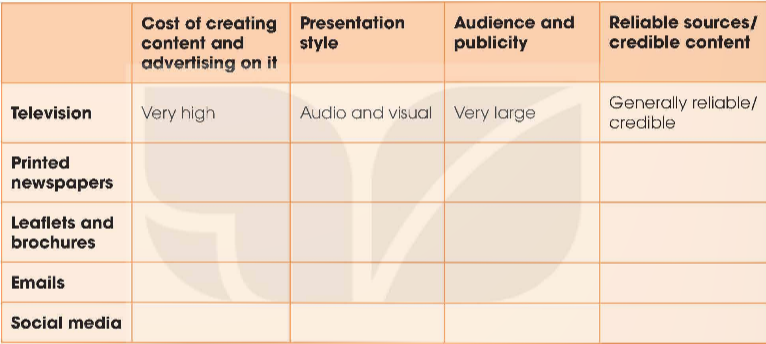
Answer:
| Cost of creating content and advertising on it | Presentation style | Audience and publicity | Reliable sources/ credible content | |
| Television | very high | Audio and visual | Very large | Generally reliable/ credible |
| Printed newspaper | High | Text and images | Large | Generally reliable |
| Leaflets and brochures | Medium | Text and images | Limited | Depending on source |
| Emails | Low | Text and images | Targeted audience | Depending on source |
| Social media | Low | Text, video and images | Very large | Depending on source, reliable |
2. Work in groups. Discuss the following situations and decide on the most suitable type of media to use in each situation. Provide reasons for your choice.
1. Your school's music club is organising a small concert. You want to promote the event and expect an audience of 30-50 people
Example: (Ví dụ)
A: I think we should write an event promotion email and send it to 100 people. I assume 30 per cent of them will show some interest.
B: Email is free of charge, but many people think email advertising or marketing is not credible. So I'm afraid they won't pay much attention to email messages.
C: How about promoting it on social media? we can choose several social networks and create an event page for each one.
2. Your school's social awareness club wants to raise awareness of cyberbullying among teenagers. You have some information and videos you want to share with as many students at your school as possible.
3. Your charity club is collecting books and winter clothes for children in disadvantaged areas. You want to inform as many people as possible about the activity.
Answer:
1.
A: I think we should create a Facebook event for the concert. We can invite all our friends and ask them to share it with their networks.
B: That's a good idea, but not everyone uses Facebook regularly. What about sending out a text message blast to all students in our school? That way, we can ensure everyone gets the invitation directly on their phones.
A: Text messages are direct and immediate, but they might get lost in the noise. How about making posters and hanging them up in high-traffic areas around school? Posters catch people's attention visually and remind them about the concert.
B: That could work well! Plus, we should ask our school newsletter to include a short announcement about the concert. Many students and parents read it regularly, so it will help spread the word.
A: Great idea! So, we'll create a Facebook event for online visibility, send out text messages for direct communication, put up posters for visual impact, and ask the school newsletter for additional coverage. This way, we'll reach a wide audience and ensure a successful turnout for our concert.
2.
A: I think we should create an engaging video about cyberbullying and share it on our school's social media accounts. Videos tend to grab attention better than text alone.
B: That's a good idea, but not all students check social media regularly. How about organizing an assembly where we can show the video to all students at once?
A: That could work! An assembly would ensure that every student sees the message and understands the seriousness of cyberbullying.
B: Exactly! Plus, we can have a Q A session afterward to discuss ways to prevent cyberbullying and support each other.
A: I'll start working on the video, and we can coordinate with the school administration to schedule the assembly. This way, we'll reach as many students as possible and make a meaningful impact.
3.
A: I think we should create posters and put them up around school and local community centers. Posters catch people's eyes quickly and give them the essential information.
B: That's a great idea, but we should also consider reaching people outside our immediate area. How about using local radio stations to announce our charity drive?
A: That's a good point! Radio reaches a broad audience, including those who might not see our posters. We can include details like drop-off locations and what items we're collecting.
B: Exactly! And we could also write a press release and send it to the local newspapers. They might run a story about our charity drive, which would help spread the word even further.
A: Great! So, posters for local visibility, radio for wider outreach, and a press release for media coverage. That should ensure we reach as many people as possible and gather lots of donations for the children in need.
3. Report your answers to the whole class. Vote for the best idea for each situation.
In our discussion about the best media strategies for different school activities, we explored several effective approaches. Regarding promoting the school's music club concert, we considered creating a Facebook event, sending text messages, making posters, and utilizing the school newsletter. Each option offers unique advantages: the Facebook event allows for broad online visibility and sharing, text messages ensure direct communication to students' phones, posters provide visual reminders in high-traffic areas, and the school newsletter reaches both students and parents through a trusted source. After considering the options, we conducted a class vote to determine the best idea for each situation. For the music club concert promotion, the majority favored creating a Facebook event. This choice was supported for its ability to reach a large audience online and facilitate easy sharing among peers, maximizing exposure and potential attendance.
Next, for raising awareness of cyberbullying among teenagers, the class consensus leaned towards organizing an assembly with a video presentation. This approach was chosen for its capacity to engage all students simultaneously and initiate meaningful discussions about cyberbullying prevention.
Finally, for the charity club's book and winter clothes collection, the preferred strategy was using posters combined with radio announcements and a press release to local newspapers. This multi-pronged approach was seen as comprehensive in reaching diverse audiences both locally and beyond the school community.
V. LISTENING
Fake news on the Internet
1. Work in pairs. Find 3 words in the wordsearch to show things you should look at to decide whether a piece of news is fake or not.
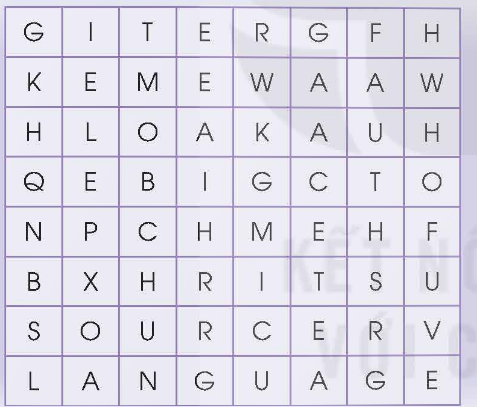
Answer:
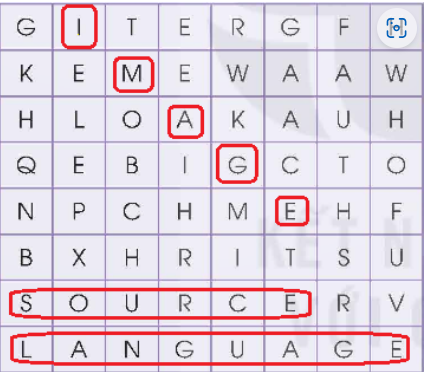
image: hình ảnh
source: nguồn
language: ngôn ngữ
2. Listen to three students talking about fake news. Match the speaker with his/her attitude towards fake news. There are TWO extra options.
Mai
| A. He/She is worried about fake news.
|
Nam
| B. He/She is not worried about fake news. |
| C. He/She doesn't care if it is fake news. | |
Mark
| D. He/She is ashamed of spreading fake news. |
| E. He/She is annoyed by fake news. |
Answer:
……………………………………………………………………………………
3. Listen to the recording again and complete the notes below. Use no more than TWO words and/or numbers for each gap.
FAKE NEWS ON THE INTERNET
The rise of the Internet
- Popular source of information around the world
- In Viet Nam (2022): more than (1) _______ Internet users or around (2) _______ of the population
The problem with fake news on the Internet
- Reason: easy to post any information on the Internet
- Problem: can promote ideas which can be harmful to people and can change their (3) ___
Tips to avoid fake online news
- Make sure that the websites are (4) _______
- Check if the story appears on other trusted sites
- Pay attention to the language, e.g. full of spelling and grammar mistakes and (5) _______
Answer:
……………………………………………………………………………………
4. Work in groups. Discuss these questions.
How helpful do you find the tips in the talk? Have you used any of them?
Answer:
……………………………………………………………………………………
VI. WRITING
Description of pie charts
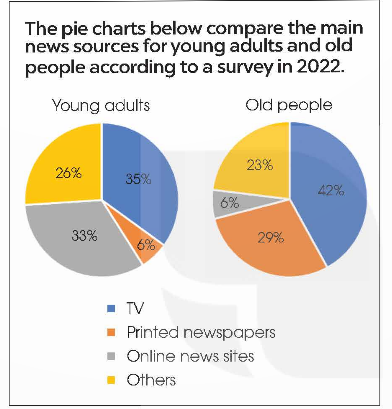
1. Work in pairs. Study the pie charts on page 96 and choose the correct answer A or B.
1. In general, which news source was very popular with both age groups?
A. Television.
B. Printed newspapers.
2. Which news source was least popular among young adults?
A. Printed newspapers.
B. Online news sites
3. Which news source was least popular among old people?
A. Printed newspapers.
B. Online news sites.
4. Printed newspapers were old people's _______ choice of news source.
A. top
B. second
5. Other sources of news were chosen by around _______ of the people in both age groups.
A. a quarter
B. half
Answer:
1. A - Television
According to pie chart, TV accounts for 35% in young adults group and 42% in old people group
2. A - Printed newspapers
According to pie chart, Print media accounts for the lowest percentage (6%) among young people
3. B - Online news sites
According to pie chart, Online news sites have the lowest percentage (6%) among the elderly
4. B - second
According to pie chart, Print media ranked second (with 29%) among old people
5. A - a quarter
According to the pie chart, Other news sources accounted for about a quarter of both age groups. (With 26% for younger people and 23% for elder people)
2. Complete the following descriptions of the charts in 1. Use the words and phrases in the box.
| as opposed to meanwhile while most popular |
The pie charts compare the main news sources for young adults and old people according to a survey in 2022.
Overall, television was the (1) _________ source of news for both age groups. It was chosen by 42 per cent of old people, and more than one third of young adults. (2) _________, more young adults turned to the Internet for news. The figure was 33 per cent for young adults (3) _________ just 6 per cent for old people. By contrast, printed newspapers were the second choice of news source for old people with 29 per cent (4) _________ only 6 per cent of young adults reported getting their news from printed newspapers. In both age groups, around a quarter relied on other sources for news.
Answer:
(1) most popular - Overall, television was the (1) most popular source of news for both age groups.
(2) Meanwhile - (2) Meanwhile, more young adults turned to the Internet for news.
(3) as opposed to - The figure was 33 per cent for young adults (3) as opposed to just 6 per cent for old people.
(4) while - By contrast, printed newspapers were the second choice of news source for old people with 29 per cent (4) while only 6 per cent of young adults reported getting their news from printed newspapers
3. Write a description (120-150 words) of the charts below. Use the model and tips in 2 to help you.
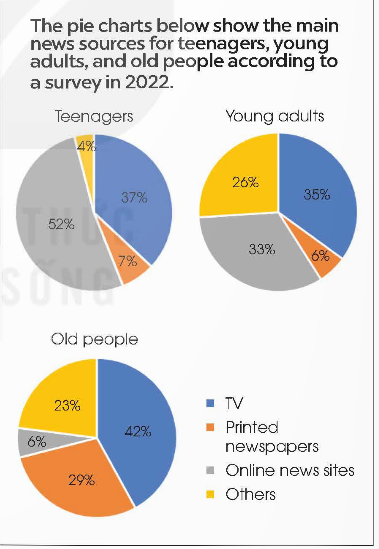
Answer:
The pie charts demonstrate the main news sources for teenagers, young adults, and old people according to a survey conducted in 2022.
Overall, television was the most popular source for all age groups. It was chosen by 42 per cent of old people, and more than one third of teenagers and young adults. Meanwhile, the Internet source emerged as a strong contender for younger audiences. While only 6 percent of old people rely on the internet for news, this number jumps to 33 per cent for young adults and a surprising 52 per cent for teenagers. In contrast, printed newspapers were the second choice of news source for old people with 29 percent, only 7 percent for teenagers and 6 percent for young adults. Young adults and old people relied on "other" sources for news for around a quarter, while teenagers only had 4 per cent.
VII. COMMUNICATION AND CULTURE/ CLIL
Everyday language
Making small talk
1. Listen and complete the conversations with the expressions in the box. Then practise them in pairs.
A. How has your day been B. It's a lovely day, isn't it C. I like your shoes D. I heard on the radio today that |
1.
Julie: ________ the flower festival is going to be held in our city.
Mai: Really? I love flowers. I went to a flower festival in Da Lat once. It was amazing!
2.
Mai: Hi, ________ so far?
Mark: I've been very busy! I'm working on promoting a charity event. It's a lot of work!
Mai: Sounds very stressful! Have you thought of inviting a famous celebrity?
3.
Linda: ________ ! They look very stylish. Where did you get them?
Mai: Thank you. I saw them advertised on a fashion website and bought them online. I'll send you the link.
Linda: That'd be great. Thanks.
4.
Nam: ________?
Linda: Yeah, it's so beautiful outside! Last week, the weather was awful.
Nam: I know, it was raining all the time. Have you got any plans for the weekend?
Answer:
1. D - I heard on the radio today that the flower festival is going to be held in our city.
2. A - Hi, how has your day been so far?
3. C - I like your shoes! They look very stylish. Where did you get them?
4. B - It's a lovely day, isn't it?
2. Work in pairs. Use the models in 1 to make similar conversations for these situations. One of you is A, the other is B. Use the tips and expressions below to help you.
1. A and B don't know each other. They are at a birthday party of a mutual friend. A starts a conversation with B. They make small talk and discover they are both interested in a career in the media industry.
2. A and B are both members of their school's Media Club. They are not close friends. They meet in the local park by chance. B starts a conversation with A. They make small talk and find out they are both in charge of promoting a school event.
Answer:
1.
A: Hi there! I haven't seen you before. Are you a friend of Lan?
B: Hi! Yes, I am Huệ and I have been friends since elementary school. What about you?
A: Oh, cool! I'm Mai - Lan’s college friend. It's a great party, isn't it?
B: Absolutely! Great music and food. So, what do you do?
A: I'm working as a junior reporter for a local news station. I've always been passionate about the media.
B: That sounds exciting. I'm currently interning at a digital marketing agency. I've always been fascinated by the media too.
A: It's great to meet someone with similar interests. Maybe we can share some experiences and tips sometime.
B: I'd like that. Let's exchange contact information!
2.
B: Hey, you're from the Media Club, right?
A: Yes, it is!
B: I am a member of the Media Club, too. Nice to meet you.
A: Nice to see you too. What brings you to the park today?
B: Just getting some fresh air and taking a break from planning the school event. I'm in charge of promotion. How about you?
A: Really? I'm also working on promoting the event. Looks like we're on the same team!
B: That's great to hear! We should definitely coordinate our efforts. Have you started working on any ideas yet?
A: Yes, I've been thinking about some social media campaigns and posters. What about you?
B: I was considering doing a video teaser and some interactive activities. We should combine our ideas and make a solid plan.
A: Absolutely. This could be a fantastic event if we collaborate well.
B: Agreed. Let's set up a time to brainstorm together.
Culture
1. Read the following text and complete the table below.
MASS MEDIA AROUND THE WORLD
There are different types of mass media and some work better than others in different situations. They could be as advanced as digital billboards, or as simple as public loudspeakers.
Digital billboards
Unlike a traditional billboard which can only show one printed image, a digital billboard can change between different messages. Digital billboards are also considered more attractive than traditional ones, and people are more likely to notice them. Moreover, they can also be updated in real time.
Nowadays, digital billboards are common in many big cities around the world. It is hard to imagine places like Times Square in New York, Piccadilly Circus in London, or Shibuya in Tokyo without bright light adverts. Although they are growing in popularity, there have been concerns about their impact on the surrounding environment. Global light pollution is increasing each year. The constant light emitted by digital billboards often confuses birds, harms insects, and causes health problems in humans, too.
Public loudspeakers
In the past, public loudspeakers were used during the war to warn people of air attacks. Nowadays, they are still used in parts of Japan, the Philippines, and the US to alert people to natural disasters such as storms, earthquakes, and tornadoes. In Viet Nam, they are used to communicate important public announcements to residents. However, the noise from a city-wide loudspeaker system can be a problem to some people.
| Digital billboards | Public loudspeakers | |
| Uses and advantages | ||
| Problems | ||
| Countries where they are used |
Answer:
| Digital billboards | Public loudspeakers | |
| Uses and advantages | change between different messages, attractive, can be updated in real time | In the past: warn people of air attacks. Nowadays: alert people to natural disasters, and communicate important public announcements to residents. |
| Problems | light pollution, confuses birds, harms insects, and causes health problems in humans | noise from a city-wide loudspeaker system affect some people
|
| Countries where they are used | New York, London, Tokyo
| parts of Japan, the Philippines, the US, Viet Nam |
2. Work in pairs. Discuss the questions.
How effective do you think these types of mass media are? Will they become more or less popular in the future? Why/Why not?
Answer:
In my opinion, digital billboards and public loudspeakers are both highly effective forms of mass media, each serving unique purposes. Digital billboards captivate attention with their dynamic and visually appealing displays, making them an invaluable tool for modern advertising in urban areas. However, their environmental impact, particularly light pollution, raises valid concerns that might necessitate stricter regulations. On the other hand, public loudspeakers excel in emergency situations, providing crucial, immediate communication, especially where other systems might fail. While technological advancements may reduce their everyday use, their role in disaster management and community announcements remains irreplaceable. Ultimately, both media types will continue to be essential, though their popularity and applications might evolve with technological and environmental considerations.
VIII. LOOKING BACK
Pronunciation
Work in pairs and mark (ᴗ) the places where the linking /r/ can appear. Listen and check. Then practise saying the sentences.
1. Peter and I are discussing the news in the local press.
2. There is a huge poster on the wall advertising the public event.
3. The village is far away in the mountains, but the villagers have a fast Internet connection.
4. The singer is the focus of media attention
Answer:
1. Peter ᴗ and I are discussing the news in the local press.
2. There is a huge poster ᴗ on the wall advertising the public event.
3. The village is far ᴗ away in the mountains, but the villagers have a fast Internet connection.
4. The singer ᴗ is the focus of media attention.
VOCABULARY
Solve the crossword with the words you've learnt in this unit. What is the hidden word?
1. Broadcast TV, radio, and printed newspapers are typical examples of traditional mass ______.
2. We should only use information which comes from ______ sources.
3. The press report has strong ______ in favour of male consumers.
4. The Internet makes information easily ______ to everyone using a computer or a smart device.
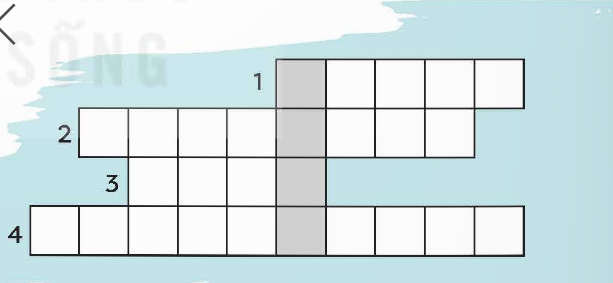
Answer:
1. media (n) - Broadcast TV, radio, and printed newspapers are typical examples of traditional mass media.
2. reliable (adj) - We should only use information which comes from reliable sources.
3. bias (n)- The press report has strong bias in favor of male consumers.
4. accessible (adj) - The Internet makes information easily accessible to everyone using a computer or a smart device.
=> The hidden word: MASS
GRAMMAR
Circle the mistake in each sentence. Then correct it.
1. The Internet has become so a convenient tool that people can't live without it.
A B C D
2. My sister has never been to Mexico, but she writes a blog about it on the
A B C
Internet as like she had spent a lot of time there.
D
3. There are so many adverts in the local press so I get really annoyed
A B C D
4. Today it does not take much time for news to reach people around the world
A B
as if it used to take in the past.
C D
Answer:
1. B - The Internet has become such a convenient tool that people can't live without it.
Structure: “S + V + such + a + adj + N + that + mệnh đề.” (…quá…đến nỗi mà…)
2. D - My sister has never been to Mexico, but she writes a blog about it on the Internet as if she had spent a lot of time there.
Structure: as if (như thể) dùng để diễn tả tình huống không có thật.
3. D - There are so many adverts in the local press that I get really annoyed.
Structure: “S + V + so + lượng từ + danh từ + THAT + mệnh đề.” (…quá…đến nỗi mà…)
4. C - Today it does not take much time for news to reach people around the world like it used to take in the past.
PROJECT
The Pros and Cons of Mass Media
Work in groups. Give a presentation to compare two types of mass media you are interested in. Use these questions as cues for your presentation.
- What are the mass media types?
- How are they similar or different?
- What are the advantages and disadvantages of each type?
- Which of them do you think will be more popular in the future? Why?
Answer:
- Mass Media Types
- Digital Billboards: Large electronic displays typically found in high-traffic urban areas, capable of showing dynamic and changeable content.
- Social Media: Online platforms like Facebook, Twitter, Instagram, and TikTok, where users can create, share, and interact with content.
- Similarities:
- Both serve as platforms for advertising and public announcements.
- Both are capable of reaching a large audience quickly.
- Both utilize digital technology to deliver their content.
- Differences:
- Format: Digital billboards are physical installations, while social media exists entirely online.
- Interactivity: Social media allows for direct interaction between users and content creators; digital billboards do not.
- Targeting: Social media offers more precise targeting options based on user data, whereas digital billboards target a broader, location-based audience.
- Digital Billboards:
- Advantages:
- High visibility in busy areas.
- Can display dynamic and time-sensitive content.
- Effective for brand awareness in physical locations.
- Disadvantages:
- Contribute to light pollution.
- Limited interactivity.
- High installation and maintenance costs.
- Social Media:
- Advantages:
- Highly interactive and engaging.
- Precise targeting based on user demographics and behaviors.
- Cost-effective with potential for viral reach.
- Disadvantages:
- Can be overwhelming due to information overload.
- Privacy concerns and data security issues.
- Algorithm changes can affect visibility and engagement.
- I believe social media will continue to grow in popularity due to its interactive nature and precise targeting capabilities. As technology advances, more people are spending time online, and businesses are increasingly leveraging social media for advertising and customer engagement. While digital billboards will remain relevant in high-traffic urban areas for brand visibility and public announcements, the convenience, engagement, and cost-effectiveness of social media will likely make it the more dominant form of mass media in the future.
Tài liệu cùng môn học
Tài liệu khác
- Trắc nghiệm tiếng anh 2 Family and Friends
- Trắc nghiệm tiếng anh 2 Explore our world
- Trắc nghiệm tiếng anh 3 Family and Friends
- Trắc nghiệm tiếng anh 3 Explore our world
- Trắc nghiệm tiếng anh 4 Family and Friends
- Trắc nghiệm tiếng anh 4 Global Success
- Trắc nghiệm tiếng anh 4 Explore our world
- Trắc nghiệm tiếng anh 5 Family and Friends
- => Xem nhiều môn hơn