Giải tiếng anh 11 Explore new worlds: Unit 9A Discuss Life in the Past
Hướng dẫn giải tiếng anh 11 Explore new worlds: Giải Unit 9A Discuss Life in the Past. Bài được giải chi tiết, rõ ràng, dễ hiểu. Bài giải giúp học sinh nắm vững kiến thức trong sách giáo khoa, rèn kĩ năng giải bài tập và có phương pháp học tập hiệu quả.
Nội dung chi tiết
Vocabulary
A. Look at the picture. Answer the questions in pairs.
(Nhìn vào bức tranh. Trả lời câu hỏi theo cặp)
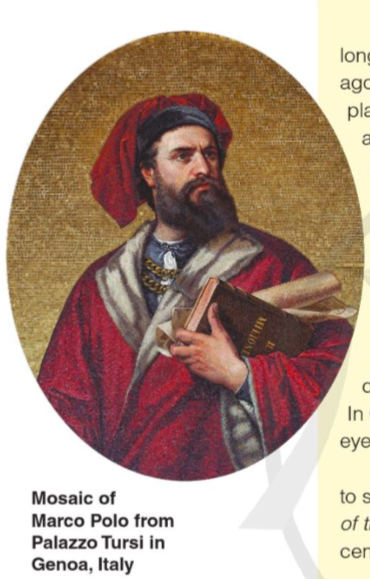
1. What do you know about Marco Polo?
2. Where did he travel? How do you think he traveled?
Answer:
1. Marco Polo was a Venetian explorer and merchant who lived from 1254 to 1324. He is best known for his extensive travels throughout Asia, which he documented in his book "The Travels of Marco Polo."
2. Marco Polo traveled extensively throughout Asia, including China, Mongolia, India, and Persia. He likely traveled by land and sea, using various modes of transportation such as horses, camels, and boats. His journey lasted for over 20 years, and he encountered many different cultures and people along the way. His travels had a significant impact on European understanding of Asia, and his book remains an important historical document today.
B. Read the text.
(Đọc văn bản)
Today, many people travel from one country to another easily, but long-distance travel used to be very challenging hundreds of years ago. Still, there were always people who wanted to discover new places. Explorers used to travel on trips that often took many years, and the result was an exchange of knowledge and culture that changed the world.
Marco Polo (1254-1324) was one of these great explorers. He lived in Venice and Genoa, in what is now Italy. In 1271, at about 17, he set off on a trip with his father and uncle and traveled east—far beyond the borders of Europe, into Asia.
Marco's father was a merchant searching for opportunities for trade with China. They traveled first by ship, then by horse and camel, through many countries. Everything was very different: they saw amazing places and learned new things. In China, for example, they were surprised to see paper money, eyeglasses, the compass, and silk making.
Marco Polo returned to Italy 24 years later with lots of experiences to share. But he only became famous after his book, The Description of the World, was published. The book inspired other world travelers centuries later.
Answer:
Hôm nay, nhiều người dễ dàng đi du lịch từ một quốc gia sang một quốc gia khác, nhưng cách đây hàng trăm năm, việc du lịch xa là một thử thách lớn. Tuy nhiên, luôn có những người muốn khám phá những nơi mới. Các nhà thám hiểm từng đi đến những chuyến đi mất nhiều năm, và kết quả là sự trao đổi kiến thức và văn hóa đã thay đổi thế giới.
Marco Polo (1254-1324) là một trong những nhà thám hiểm vĩ đại đó. Ông sống ở Venecia và Genoa, Ý như hiện nay. Vào năm 1271, khi ông khoảng 17 tuổi, ông cùng cha và chú của mình bắt đầu một chuyến đi về phía đông - xa hơn nhiều so với ranh giới châu Âu, vào châu Á.
Cha của Marco là một nhà buôn tìm kiếm cơ hội để buôn bán với Trung Quốc. Họ đi trên tàu đầu tiên, sau đó đi bằng ngựa và lạc đà, qua nhiều quốc gia. Mọi thứ đều rất khác nhau: họ nhìn thấy những nơi kỳ diệu và học được những điều mới lạ. Ở Trung Quốc, ví dụ, họ ngạc nhiên khi thấy tiền giấy, kính cận, la bàn và chế tạo lụa.
Marco Polo trở về Ý 24 năm sau với rất nhiều kinh nghiệm để chia sẻ. Nhưng ông chỉ trở nên nổi tiếng sau khi cuốn sách của ông, Mô tả Thế giới, được xuất bản. Cuốn sách đã truyền cảm hứng cho những nhà du hành khắp thế giới hàng thế kỷ sau đó.
C. Write each word in blue next to the correct definition or synonym.
(Viết mỗi từ màu xanh bên cạnh định nghĩa đúng hoặc từ đồng nghĩa)
1. set off started a journey
2. _____ giving and receiving
3. _____ difficult
4. _____ buying and selling
5. _____ printed and sold
6. _____ a very soft cloth
7. _____ chances
Answer:
1. set off - started a journey
2. exchange - giving and receiving
3. challenging - difficult
4. trade - buying and selling
5. published - printed and sold
6. sink - a very soft cloth
7. opportunities - chances
D. Complete each sentence with a blue word.
(Hoàn thành mỗi câu với một từ màu xanh)
1. Traveling provides people with many ____________ to learn about different cultures and customs.
2. We use ____________ to make beautiful dresses and shirts.
3. Marco Polo ____________ for China in 1271.
4. Living in a foreign country can be very ____________ at first.
5. Today, there is a lot of ____________ between China and Europe.
Answer:
1. Traveling provides people with many opportunities to learn about different cultures and customs.
2. We use silk to make beautiful dresses and shirts.
3. Marco Polo set off for China in 1271.
4. Living in a foreign country can be very challenging at first.
5. Today, there is a lot of exchange between China and Europe.
E. Write questions using the words provided and the correct form of 'used to'. Ask a partner your questions.
(Viết câu hỏi sử dụng các từ cho sẵn và dạng đúng của 'used to'. Hỏi đối tác câu hỏi của bạn)
1. people / travel - How did people use to travel?
2. trade / take longer
3. clothes / people / wear
4. merchants / trade
Answer:
1. How did people use to travel?
2. Did trade use to take longer in the past?
3. What kind of clothes did people use to wear?
4. What did merchants use to trade?
F. Complete the conversation. Then, listen and check your answers.
(Hoàn thành cuộc trò chuyện. Sau đó, lắng nghe và kiểm tra câu trả lời của bạn)
didn't travel use used used to
Sue: Why did people (1) __________ to travel by horse?
Aki: Well, there (2) __________ use to be other transportation.
Sue: OK, but did everyone use to (3) ____________ that way?
Aki: No, in some parts of the world, they (4) ___________ use camels, not horses. Why are you so interested in how people (5) ____________ to travel?
Sue: I'm writing about transportation in the past for my history class.
Answer:
Sue: Why did people (1) use to travel by horse?
Aki: Well, there (2) didn't use to be other transportation.
Sue: OK, but did everyone use to (3) travel that way?
Aki: No, in some parts of the world, they (4) used to use camels, not horses. Why are you so interested in how people (5) used to travel?
Sue: I'm writing about transportation in the past for my history class.
G. MY WORLD. Make a list of things that were different 100 years ago where you live.
(Lập danh sách những thứ đã khác 100 năm trước nơi bạn sống)
Answer:
1. Vietnam was a colony of France, so the country was under French colonial rule.
2. There were no smartphones, internet, or computers, and the means of communication were limited.
3. Transportation was very different as there were no cars, motorcycles, or airplanes. People mostly traveled by horse carts, bicycles, or walked.
4. Education was not widely available, and the literacy rate was lower than it is now.
5. The country was not unified, and there were different kingdoms and regions with different cultures and languages.
6. The economy was based mostly on agriculture, and industrialization was limited.
7. Women's rights were not as advanced as they are now, and they were not allowed to participate in politics or hold high-level jobs.
8. Healthcare was not as advanced as it is now, and there were limited medical facilities and treatments available.
9. The architecture and urban development were different, and many cities and towns had different layouts and structures.
10. The population was much smaller, and the demographics were different with a higher percentage of the population living in rural areas.
Goal check
1. Complete the chart.
(Hoàn thành biểu đồ)
| Before | Now | |
| transportation | ||
| communication | ||
| trade | ||
| home life | ||
| education | ||
| beliefs |
2. In pairs, describe what people used to do in the past. Use the topics in the chart and your own ideas.
(Theo cặp, mô tả những gì mọi người thường làm trong quá khứ. Sử dụng các chủ đề trong biểu đồ và ý tưởng của riêng bạn)
Answer:
1. Complete the chart.
| Before | Now | |
| transportation | horse-drawn vehicles | motor vehicles |
| communication | Sent letters, telegrams, or used landline phones | Can send instant messages, emails, or video call with mobile phones or computers |
| trade | Depended on local production and limited international trade | Can participate in global trade with advanced transportation and communication |
| home life | Had limited access to technology, appliances, and entertainment | Can enjoy various forms of entertainment, and use advanced technology and appliances |
| education | Limited access to education, and mostly traditional teaching methods | Wider access to education, online learning, and advanced teaching methods |
| beliefs | Strong influence of religion, superstition, and traditional customs | More diverse beliefs, and less influence of traditional customs |
2. In pairs, describe what people used to do in the past. Use the topics in the chart and your own ideas.
Transportation: People used to travel by foot or horse for short distances, and by horse carts or boats for longer distances. They also had to plan their trips carefully, as it took much longer to get from one place to another.
Communication: People used to communicate by sending letters, telegrams, or using landline phones. It was much more difficult to stay in touch with family and friends who lived far away, and communication was slow and expensive.
Trade: People used to depend on local production and limited international trade. They had to rely on what was available locally, and there were fewer options for goods and services.
Home life: People used to have limited access to technology, appliances, and entertainment. They spent more time outdoors or doing chores at home. Families were also larger and more closely knit, and they spent more time together.
Education: Access to education was limited, and mostly traditional teaching methods were used. Students had to attend school in person, and there were fewer opportunities for higher education.
Beliefs: Religion, superstition, and traditional customs had a strong influence on people's beliefs and values. People were more conservative and traditional in their thinking, and there was less diversity in beliefs and ideas.
Tài liệu cùng môn học
Tài liệu khác
- Trắc nghiệm tiếng anh 2 Family and Friends
- Trắc nghiệm tiếng anh 2 Explore our world
- Trắc nghiệm tiếng anh 3 Family and Friends
- Trắc nghiệm tiếng anh 3 Explore our world
- Trắc nghiệm tiếng anh 4 Family and Friends
- Trắc nghiệm tiếng anh 4 Global Success
- Trắc nghiệm tiếng anh 4 Explore our world
- Trắc nghiệm tiếng anh 5 Family and Friends
- => Xem nhiều môn hơn