Giải tiếng anh 11 Explore new worlds: Unit 9B Contrast Different Ways of Life
Hướng dẫn giải tiếng anh 11 Explore new worlds: Giải Unit 9B Contrast Different Ways of Life. Bài được giải chi tiết, rõ ràng, dễ hiểu. Bài giải giúp học sinh nắm vững kiến thức trong sách giáo khoa, rèn kĩ năng giải bài tập và có phương pháp học tập hiệu quả.
Nội dung chi tiết
Listening
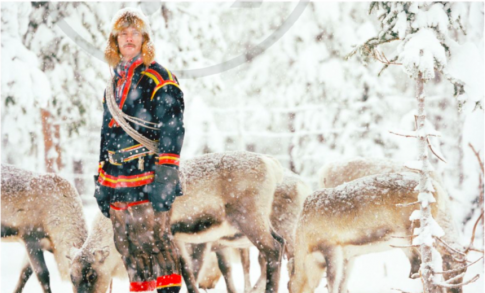
A. Look at the photo. Would you like to live there? Discuss in pairs.
(Nhìn vào bức hình. Bạn có muốn sống ở đó không? Thảo luận theo cặp)
Answer:
Suggestions:
Student 1: Hey, have you seen those pictures of the forests in Lapland, Sweden in the winter? They look so beautiful!
Student 2: Yeah, I've seen them. But do you think you would actually want to live there?
Student 1: I think it would be amazing to live in the middle of a snowy forest, surrounded by all that natural beauty.
Student 2: But what about the cold? It gets really cold in Lapland in the winter, and it's dark most of the day.
Student 1: Yeah, but I think it would be worth it. Imagine waking up every morning to that view, and being able to go on long hikes through the forest.
Student 2: I don't know, I think I'd miss the city too much. Plus, there wouldn't be much to do out there.
Student 1: That's true, but I feel like you could find things to do. You could learn how to ski or snowboard, or maybe even try dog sledding.
Student 2: I guess that's true. But what about food and supplies? It would be hard to get everything you need out there.
Student 1: Yeah, that's definitely a concern. But I think it would be worth it to live in such a beautiful place. Plus, you could always stock up on supplies when you go into town.
Student 2: I see what you're saying, but I think I'd rather just visit Lapland in the winter, rather than live there.
Student 1: Yeah, I can understand that. But I think it would be an adventure to live somewhere so different and remote.
B. How do you think people used to live in this part of the world 1,000 years ago? Check (v) the things you think people did.
(Bạn nghĩ con người từng sống như thế nào ở khu vực này của thế giới 1.000 năm trước? Đánh dấu (v) những điều bạn nghĩ mọi người đã làm)
1. _____ ate fish from the Arctic Ocean
2. _____ lived on small farms
3. _____ followed groups of animals, such as reindeer
4. _____ lived in houses made of wood
5. _____ had their own language and customs
Answer:
1. (v) ate fish from the Arctic Ocean
2. (v) lived on small farms
3. (v) followed groups of animals, such as reindeer
4. (v) lived in houses made of wood
5. (v) had their own language and customs
C. Listen to a talk about the Sami people and choose the main idea.
(Nghe bài nói về người Sami và chọn ý chính)
a. The Sami people depend on animals, especially reindeer, to make a living.
b. Life is changing for the Sami people, but some of them siill live in traditional ways.
c. Many young Sami people want to attend a university and choose a career.
Answer:
HS tự thực hiện
D. Listen again and circle T for true or F for false. Correct the false sentences to make them true.
(Nghe lại và khoanh tròn T cho đúng hoặc F cho sai. Sửa các câu sai để làm cho chúng đúng)
1. Traditionally, the Sami people stayed and lived in one place. T F
2. Reindeer were used by the Sami people for food and clothing. T F
3. Most Sami people still live in the traditional way. T F
4. Some Sami people now raise reindeer on farms. T F
5. New laws affect the way Sami people may use land. T F
Answer:
HS tự thực hiện
E. Do you think it’s important to maintain traditions from the past? Or do you think people should focus on the future? Discuss your ideas in pairs.
(Bạn có nghĩ rằng điều quan trọng là duy trì truyền thống từ quá khứ? Hay bạn nghĩ mọi người nên tập trung vào tương lai? Thảo luận về ý tưởng của bạn theo cặp)
Answer:
Traditions are an important part of cultural heritage and can provide a sense of identity, belonging, and continuity with the past. Maintaining and preserving traditions can also help to safeguard the cultural diversity and richness of different communities around the world.
On the other hand, focusing solely on the past can sometimes hinder progress and innovation, and prevent societies from adapting to changing circumstances and evolving needs. Thus, striking a balance between preserving cultural traditions and embracing change and progress is essential.
Ultimately, whether or not it is important to maintain traditions from the past depends on the context and individual values. Some may argue that traditions should be preserved at all costs, while others may prioritize progress and innovation above all else.
Pronunciation
F. You will hear each sentence twice. Listen to the strong form and the weak form of 'used to'. Listen again and repeat the sentences.
(Bạn sẽ nghe mỗi câu hai lần. Nghe dạng mạnh và dạng yếu của 'used to'. Nghe lại và lặp lại các câu)
1. The Sami people used to follow their herds of reindeer.
2. They used to sleep in tents.
3. They used to make the tents from reindeer skins.
4. Did the Sami use to raise sheep?
5. No, they didn't use to raise sheep, only reindeer.
Answer:
HS tự thực hiện
G. Complete the sentences with your own information. Then, share your ideas in pairs. Use the reduced form /‘juste/.
(Hoàn thành các câu với thông tin của riêng bạn. Sau đó, chia sẻ ý tưởng của bạn theo cặp. Sử dụng dạng rút gọn /‘juste/)
1. When I was younger, I used to ____________________.
2. As achild, I used to want money for ____________________.
3. In my country, people used to ____________________.
4. Before I was born, my grandparents used to ____________________.
5. As children, my parents used to ____________________.
Answer:
1. When I was younger, I used to play a lot of sports with my friends. It was always fun to be outside and active.
2. As a child, I used to want money for toys and games. Whenever my parents would give me money, I would always save up to buy something new to play with.
3. In my country, people used to celebrate certain cultural festivals in a more traditional way. However, nowadays many people prefer to celebrate them in a more modern and commercialized way.
4. Before I was born, my grandparents used to farm and grow their own food. They had a big garden and raised animals, which provided them with most of what they needed to live.
5. As children, my parents used to play a lot of board games and card games together. They still enjoy playing games as a family today, and it's something that I have always loved doing with them as well.
Communication
H. MY WORLD. How has your culture changed? Write notes to answer the questions below.
(Văn hóa của bạn đã thay đổi như thế nào? Viết ghi chú để trả lời các câu hỏi dưới đây)
1. Fifty years ago in your culture:
* How old were men and women when they got married?
* How many children did they use to have?
* Where did people use to live?
* What kind of jobs did people use to do?
2. How have these things changed?
Answer:
1. Fifty years ago in my culture:
Men and women used to get married at a younger age, typically in their early twenties.
It was more common for families to have a larger number of children, usually four or five.
People tended to live in more rural areas, with many living in smaller villages or on farms.
Many people worked in agriculture, manufacturing, or trade jobs, with fewer opportunities in services or technology.
2. These things have changed over time:
Today, the average age for marriage has increased, with many people choosing to marry in their late twenties or early thirties.
The number of children per family has decreased, with most families having one or two children.
More people live in urban areas and cities, with fewer living in rural areas.
There are more opportunities for employment in a variety of industries, including services, technology, and other fields.
Goal check
education food housing language location traditions transportation
In groups, discuss your answers to the following questions. Use the ideas in the box and your own ideas.
(Theo nhóm, thảo luận câu trả lời của bạn cho các câu hỏi sau. Sử dụng các ý tưởng trong hộp và ý tưởng của riêng bạn)
1. How is your life different from other cultures you know?
2. How is your life now different from your parents’ life when they were young?
3. Is there any generation gap in your family? How do you deal with that?
Answer:
1. How is your life different from other cultures you know?
I come from a culture where education is highly valued and it is important to achieve a high level of academic success. In other cultures, the emphasis may be more on practical skills or vocational training.
The food I eat in my culture is quite different from what is consumed in other cultures. We have a variety of traditional dishes that are unique to our culture and not found elsewhere.
Housing styles can also differ between cultures, with some societies placing a greater emphasis on spacious homes while others may prefer more compact living spaces.
Language is also an important factor that sets cultures apart, as the way people communicate greatly influences daily life.
Traditions can also vary greatly between cultures, with some societies placing a greater emphasis on preserving historical customs and practices.
Transportation options can also vary greatly between cultures, with some relying heavily on public transit while others may prefer private vehicles or bicycles.
2. How is your life now different from your parents’ life when they were young?
My parents grew up in a time before the internet and smartphones, so the way I interact with technology on a daily basis is quite different from what they experienced.
Education has also changed since my parents were young, with a greater emphasis being placed on achieving higher levels of academic success and specialization.
The food we eat today is also different from what my parents ate growing up, with more diverse options and a greater emphasis on healthy eating.
Housing styles and availability have also changed since my parents were young, with more people living in apartments or shared living spaces.
Transportation options have also changed, with more people relying on private vehicles rather than public transit.
3. Is there any generation gap in your family? How do you deal with that?
Yes, there may be differences in values and beliefs between my parents' generation and my own. We try to have open and respectful conversations about our differing perspectives and try to find common ground. It's important to listen to each other and understand where each person is coming from.
Tài liệu cùng môn học
Tài liệu khác
- Trắc nghiệm tiếng anh 2 Family and Friends
- Trắc nghiệm tiếng anh 2 Explore our world
- Trắc nghiệm tiếng anh 3 Family and Friends
- Trắc nghiệm tiếng anh 3 Explore our world
- Trắc nghiệm tiếng anh 4 Family and Friends
- Trắc nghiệm tiếng anh 4 Global Success
- Trắc nghiệm tiếng anh 4 Explore our world
- Trắc nghiệm tiếng anh 5 Family and Friends
- => Xem nhiều môn hơn