Giải Tiếng Anh 9 kết nối: Unit 2 City life
Hướng dẫn giải Tiếng Anh 9 kết nối tri thức: Giải Unit 2 City life. Bài được giải chi tiết, rõ ràng, dễ hiểu. Bài giải giúp học sinh nắm vững kiến thức trong sách giáo khoa, rèn kĩ năng giải bài tập và có phương pháp học tập hiệu quả.
Nội dung chi tiết
Unit 2: City Life
GETTING STARTED
How is your city?
1. Listen and read
Trang: Hi, Ben. Sorry I couldn't get online earlier. I got stuck in a traffic jam and came home late
Ben: No problem, Trang. Did you go by bus?
Trang: No. My dad picked me up. I rarely use the bus. It's slow and packed with people.
Ben: I mostly get around by underground. It’s more reliable than the bus.
Trang: That's great.
Ben: But traffic congestion is terrible in London. You know, the more crowded the city gets, the more congested the streets are.
Trang: Yeah... and the more polluted they may become. There's a construction site in my neighbourhood. It's dusty, so people easily get itchy eyes.
Ben: It must be noisy, too. The noise probably makes people feel stressed sometimes.
Trang: That's right. But new buildings make the city look modern and attractive. Do you remember the grand building downtown?
Ben: Of course. How's it now? When I left Viet Nam, they nearly finished it.
Trang: Well, it's now a shopping mall. Teens like it because it's modern and fun.
Ben: Do you often go there?
Trang: Sometimes. I watch movies there with my sister. I want to go there more often, but it's a bit pricey.
Ben: It's expensive here in London, too…
2. Read the conversation again and decide if the following statements are true (T) or false (F)
| T | F |
1. The bus in Trang's city is slow and crowded |
|
|
2. The underground system in Ben's city is unreliable. |
|
|
3. There is a dusty and noisy construction site near Trang's house. |
|
|
4. Trang thinks new buildings make the city look ugly. |
|
|
5. Both Trang and Ben find shopping malls expensive. |
|
|
Answer:
1. T (Explain: Trang: I rarely use the bus. It's slow and packed with people)
2. F (Explain: Ben: I mostly get around by underground. It's more reliable than the bus.
3. T (Explain: Trang: There's a construction site in my neighbourhood. It's dusty, so people easily get itchy eyes)
4. F (Explain: Trang: But new buildings make the city look modern and attractive
5. T (Explain: Trang: Well, it's now a shopping mall. I want to go there more often, but it's a bit pricey)
3. Match the words / phrases with their pictures
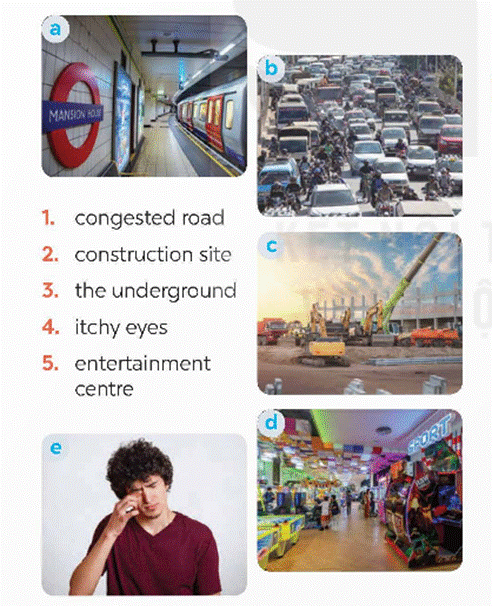
Answer:
1, congested road - b
2, construction site - c
3, the underground - a
4, itchy eyes - e
5, entertainment centre – d
4. Choose the correct answer A, B, C, or D. (Chọn câu trả lời đúng A, B, C hoặc D.)
1. I like getting around by _______ I hate the smell of car exhaust.
A. underground
B. private car
C. txi
D. bus
2. Road dust may badly affect our _______.
A. stomach
B. back
C. eyes
D. leg
3. There's a _______ in my neighbourhood. It's noisy and dusty.
A. building
B. construction site
C. hospital
D. lake
4. The road is narrow, so _______ often occurs at rush hour.
A. traffic light
B. traffic flow
C. traffic congestion
D. traffic safety
5. Many teens fancy spending their weekends in an entertainment _______.
A. industry
B. value
C. business
D. centre
Answer:
1. A - I like getting around by underground I hate the smell of car exhaust.
2. C - Road dust may badly affect our eyes.
3. B - There's a construction site in my neighbourhood. It's noisy and dusty.
4. C- The road is narrow, so traffic congestion often occurs at rush hour.
5. D- Many teens fancy spending their weekends in an entertainment centre.
5. QUIZ. A lifestyle survey: City life or village life?
Complete the quiz. Then compare your choices with your friends' and the teacher's explanation. Which suits you more, life in the city or in a village?
1. What kind of house do you want to live in?
A. A small and modern apartment.
B. A house with a garden.
2. How do you like to get around?
A. By public transport.
B. By motorbike or bicycle.
3. Where do you frequently enjoy visiting?
A. Shops, restaurants, cinemas, and art galleries.
B. Local farmers' markets.
4. How do you describe your favourite neighbourhood?
A. Crowded and busy.
B. Quiet and green.
5. How do you like to spend time outdoors?
A. Going for a walk or running in the park.
B. Doing gardening or visiting next-door neighbours.
Answer:
- Có thể chọn A, B phụ thuộc vào sở thích của từng cá nhân.
A CLOSER LOOK 1
VOCABULARY
1. Match the words / phrases with their explanations.
1. downtown | a. an underground train system |
2. concrete jungle | b. a city or part of a city with many buildings next to each other |
3. sky train | c. the centre of a city, especially its main business area |
4. metro | d. things in a neighbourhood that make life more comfortable such as parks and shopping centres |
5. public amenities | e. a type of train that runs on a railway high above the ground |
Answer:
1. c - downtown - the centre of a city, especially its main business area
2. b - concrete jungle - a city or part of a city with many buildings next to each other
3. e - sky train - a type of train that runs on a railway high above the ground
4. a - metro - an underground train system
5. d - public amenities - things in a neighbourhood that make life more comfortable such as parks and shopping centres
2. Choose the correct answer A, B, C, or D to complete each sentence.
1. The sky train is _______ with commuters at rush hour.
A. packed
B. full
C. busy
D. interesting
2. The town's public amenities make it a _______ place for its residents.
A. crowded
B. boring
C. liveable
D. dull
3. It's not always _______ on the metro. Pickpocketing sometimes takes place.
A. careful
B. dangerous
C. noisy
D. safe
4. It is often more _______ to live in the downtown than in the suburbs.
A. convenient
B. peaceful
C. quiet
D. silent
5. Hong Kong is like a concrete jungle with so many people in it. It's a _______ city.
A. calm
B. quiet
C. bustling
D. high
Answer:
1. A -The sky train is packed with commuters at rush hour.
2. C - The town's public amenities make it a liveable place for its residents.
3. D - It's not always safe on the metro. Pickpocketing sometimes takes place.
4. A - It is often more convenient to live in the downtown than in the suburbs.
5. C- Hong Kong is like a concrete jungle with so many people in it. It's a bustling city
3. Complete the texts, using the words and phrases from the box.
metro liveable downtown | safe concrete jungles public amenities |
John: City life is great! People can travel by public transport, like buses and the (1)________. There are good schools and hospitals, and other (2)______ such as parks, cinemas, and sports facilities. They make cities (3)________ places for people.
Jenny: City life is terrible! The (4)_________ area is too crowded. Public transport is always packed with people. Some cities are like (5)________ with so many buildings. Some cities are not (6)_____ because of high crime rates.
Answer:
1. metro (People can travel by public transport, like buses and the metro)
2. public amenities (There are good schools and hospitals, and other public amenities such as parks, cinemas, and sports facilities)
3. liveable (They make cities liveable places for people.)
4. downtown (The downtown area is too crowded)
5. concrete jungles ( Some cities are like concrete jungles with so many buildings)
6. safe (Some cities are not safe because of high crime rates.)
PRONUNCIATION
4. Put the words in the correct column. Then listen and check.
crowded, outdoor, council, locate, repair, coastal, square, airport, overseas
/aʊ/ | /əʊ/ | /eə/ |
|
|
|
Answer:
/aʊ/ | /əʊ/ | /eə/ |
crowded - /ˈkraʊ.dɪd/ outdoor - /ˈaʊtˌdɔːr/ council - /ˈkaʊn.səl/ | locate - /ləʊˈkeɪt/ coastal - /ˈkəʊ.stəl/ overseas - /ˌəʊ.vəˈsiːz/ | repair -/rɪˈpeər/ square - /skweər/ airport - /ˈeə.pɔːt/ |
5. Read the sentences. Circle the words with/aʊ/, underline those with /ǝʊ/, and put a tick (v) next to those with/eǝ/. Then listen, check, and practice the sentences.
1. They go shopping downtown.
2. The chairman comes from a coastal city.
3. Buses in the old days were not as crowded as they are now.
4. She gets around the city easily thanks to the apps on her phone.
5. I hope we will arrive at the city square in time for the fashion show.
Answer:
1. They go shopping downtown.
2. The chairman comes from a coastal city.
3. Buses in the old days were not as crowded as they are now.
4. She gets around the city easily thanks to the apps on her phone.
5. I hope we will arrive at the city square in time for the fashion show.
/aʊ/ | /ǝʊ/ | /eǝ/ |
downtown /ˌdaʊnˈtaʊn/ crowded /ˈkraʊ.dɪd/ now /naʊ/ around /əˈraʊnd/ | go /ɡəʊ/ coastal /ˈkəʊ.stəl/ old /əʊld/ phone /fəʊn/ hope /həʊp/ show /ʃəʊ/ | chairman /ˈtʃeə.mən/ square /skweər/ |
A CLOSER LOOK 2
GRAMMAR
Double comparatives
1. Choose the correct option to complete each sentence.
1. Lan isn't home yet. The later / more late it gets, the more worried I get about her
2. He wants a new house. The larger the house is, the comfortable / more comfortable he feels.
3. She thinks the bigger the city is, higher / the higher the cost of living gets.
4. The famouser / more famous the city is, the higher number of tourists it can attract
5. The larger population the town has, more difficult / the more difficult it is to find a job.
Answer:
1. later ( Lan isn't home yet. The later it gets, the more worried I get about her - “Later” là tính từ ngắn)
2. more comfortable (He wants a new house. The larger the house is, the more comfortable he feels. - Cấu trúc: The + so sánh hơn + S + V, the + so sánh hơn + S + V)
3. the higher (She thinks the bigger the city is, the higher the cost of living gets - Cấu trúc: The + so sánh hơn + S + V, the + so sánh hơn + S + V)
4. more famous ( The more famous the city is, the higher number of tourists it can attract - Cấu trúc: The + so sánh hơn + S + V, the + so sánh hơn + S + V)
5. the more difficult (The larger population the town has, the more difficult it is to find a job - Cấu trúc: - Cấu trúc: The + so sánh hơn + S + V, the + so sánh hơn + S + V)
2. Find a mistake in the underlined parts in each sentence below and correct it.
1. I love the spicy food in this city. The hostess the food is, the more I like it
A B C D
2. I got stuck in a traffic jam yesterday. The more congested the road was, the tired I became.
A B C D
3. The modern the library is, the more attractive it is to teenagers
A B C D
4. The streets are getting dirtier. The more crowded this city is, more polluted it becomes.
A B C D
5. The dense the buildings are, the more ugly the city becomes. It’ll soon look like a concrete jungle
A B C D
Answer:
1. B => Sửa: I love the spicy food in this city. The hotter the food is, the more I like it.
2. C => Sửa: I got stuck in a traffic jam yesterday. The more congested the road was, the more tired I became
3. A => Sửa: The more modern the library is, the more attractive it is to teenagers.
4. D => Sửa: The streets are getting dirtier. The more crowded this city is, the more polluted it becomes.
5. B => Sửa: The dense the buildings are, the uglier the city becomes. It’ll soon look like a concrete jungle.
3. Match a phrasal verb in column A with a suitable word / phrase in column B
A | B |
1. get around | a. noise pollution |
2. carry out | b. friends |
3. come down with | c. a project |
4. hang out with | d. the city |
5. cut down on | e. the flu |
Answer:
1. d - get around the city
2. c - carry on a project
3. e- come down with - the flu
4. b- hang out with friends
5. a - cut down on noise pollution
4. Complete each sentence with a phrasal verb in 3. You can change the form of the verb when necessary
1. I'm ______ a cold. I have a runny nose and a sore throat
2. We all need to ______ using our cars and ride our bikes more to reduce air pollution.
3. When I was in town, I chose to ______ by bus.
4. Where do teenagers in your neighbourhood often ______ each other?
5. The authority is ______ a plan to solve traffic congestion in the downtown area.
Answer
1. coming down with - I'm coming down with a cold. I have a runny nose and a sore throat.
2. cut down on - We all need to cut down on using our cars and ride our bikes more to reduce air pollution.
3. get around - When I was in town, I chose to get around by bus.
4. hang out with - Where do teenagers in your neighbourhood often hang out with each other?
5. carrying out - The authority is carrying out a plan to solve traffic congestion in the downtown area.
5. Work in pairs. Tell each other whether you agree or disagree with the following ideas.
1. The busier the city is, the more unhappy its people are.
2. The older the city becomes, the less attractive it is to immigrants.
3. Your hometown should cut down on noise pollution.
Answer:
1. The busier the city is, the more unhappy its people are.
Agree: I agree because a busy city often means more traffic, noise, and stress, which can negatively affect people's happiness.
Disagree: I disagree. Although the city is very busy, it offers various opportunities and community amenities that can contribute to people's happiness.
2. The older the city becomes, the less attractive it is to immigrants.
Agree: I agree because older cities might have outdated infrastructure and fewer job opportunities compared to newer, more modern cities.
Disagree: I disagree because older cities often have rich history, established communities, and unique cultural attractions that can be very appealing to people.
3. Your hometown should cut down on noise pollution.
Agree: I agree because reducing noise pollution would improve the quality of life, making it easier for people to relax and sleep better.
Disagree: I disagree because I think my hometown already has good measures in place to control noise levels, and other issues might need more attention.
COMMUNICATION
Everyday English
Offering help and responding
1. Listen and read the conversations below. Pay attention to the highlighted parts.
1. Duong's dad: I can take you to the airport if you like. Duong: Thanks, Dad. |
2. Minh: Would you like me to give you a ride home? Hoang: Thank you. That's so kind of you. |
2. Work in pairs. Make similar conversations with the following situations.
1. Your friend doesn't know how to use the library smart card. You offer to show him/ her.
2. A teacher wants to talk to Ms Hoa, but she is not there. You offer to write a note for Ms Hoa.
Answer:
1. Your friend doesn't know how to use the library smart card. You offer to show him/ her.
You: Would you like me to show you how to use the library smart card
Friend: Yes, please. That would be great. Thank you!
2. A teacher wants to talk to Ms Hoa, but she is not there. You offer to write a note for Ms Hoa.
You: Would you like me to write a note for Ms Hoa?
Teacher: Thanks. That’s so kind of you.
Transport in the city
3. Work in pairs. Read the descriptions of three teenagers about their favourite means of transport. Then complete the table below.
Hoang: I live in the suburbs of Ha Noi. I use my bike to get around. It's convenient because I can ride it to places where the bus line doesn't reach. Going by bike might be a bit slow, but I can avoid traffic jams.
Cholada: My favourite means of transport in Bangkok is the sky train. It's crowded at rush hour, but it's always on time. It doesn't get stuck in traffic jams, so I can save time travelling.
Kathy: I love the tram in Melbourne. It offers a discount for students. Sometimes the tram is late, but it always updates its arrival on a smartphone app, so I know in advance and arrange my time easily.
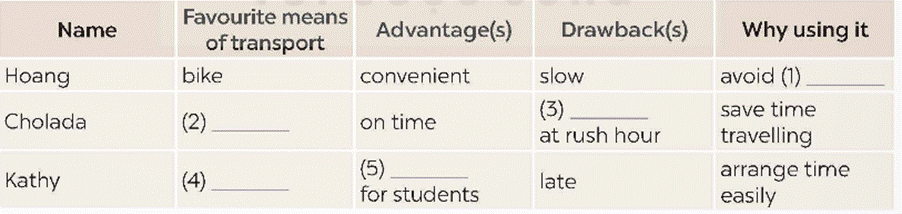
Answer:
1. traffic jams (Explain: Going by bike might be a bit slow, but I can avoid traffic jams.
2. sky train (Explain: Cholada: My favourite means of transport in Bangkok is the sky train)
3. crowded (Exxplain: It's crowded at rush hour, but it's always on time.)
4. tram (Explain: Kathy: I love the tram in Melbourne)
5. discount (Explain: It offers a discount for students)
4. Make notes about a means of transport you are using.
- Name of the means of transport
- Its advantage(s) and drawback(s)
- Why you choose to use it
Answer:
- Name of the means of transport: Bicycle
- Advantage(s): Environmentally friendly, Cost-effective, Health benefits
- Drawbacks: Limited range, Weather-dependent
- Why I choose to use it: I choose to use a bicycle for commuting to work or running errands because it allows me to incorporate physical activity into my daily routine, reduces my carbon footprint, and saves money on transportation costs. Additionally, cycling gives me a sense of freedom and independence while navigating through the city streets.
5. Work in groups. Talk to your friends about the means of transport that you use. Use your notes in 4.
Answer:
I go to work by bicycle everyday because of some reasons. Regarding the environmentally friendly, bicycles do not emit pollutants or greenhouse gasses, making them eco-friendly. Secondly, it is cost- effective because it is cheaper than using a car or using public transportation. Besides, riding a bicycle is a form of exercise that improves cardiovascular health, strengthens muscles, and helps with weight management. However, bicycles are suitable for short to medium-distance travel but may not be practical for long distances and may not be feasible in extreme weather conditions such as heavy rain, snow, or extreme heat.
I choose to use a bicycle for commuting to work or running errands because it allows me to incorporate physical activity into my daily routine, reduces my carbon footprint, and saves money on transportation costs. Additionally, cycling gives me a sense of freedom and independence while navigating through the city streets.
SKILL 1
READING
1. Work in pairs. Match the words / phrases with their pictures.
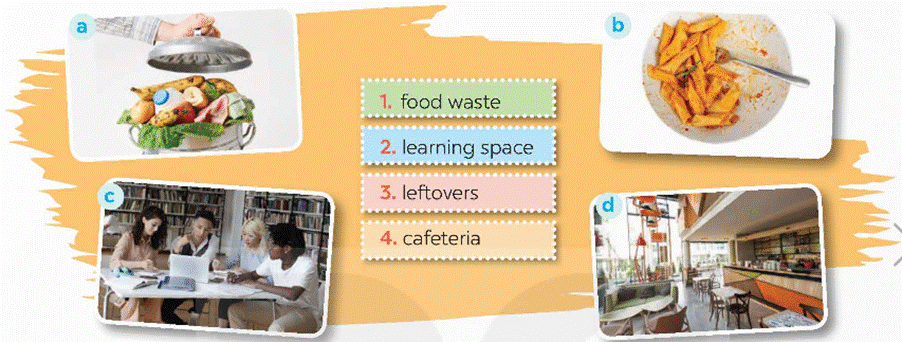
Answer:
1. a - food waste (chất thải thực phẩm)
2. c - learning space (không gian học tập)
3. b - leftovers (thức ăn thừa)
4. d - cafeteria (quán cà phê)
2. Read part of an announcement about the Teenovator competition. Match the topics in the competition with their winners. There is one extra topic.
List of topics:
A. The street-safe city
B. The teen-friendly city
C. The food-smart city
D. The waste-free city
Teenovator competition
Teenovator is an annual competition by the City Teen Council. We ask teens to find problems of the city and suggest solutions. Here are this year's winners
1. _________: Central School
They see that the more developed a city is, the more food people throw away. They suggest carrying out a project which turns food waste into energy. Students would sort their leftovers at school canteens. A nearby farm would come to take the food waste and process it into biogas.
2. _________: Bookworm Team
This team feels that many public amenities, particularly the city library, are not teen-friendly. They suggest a list of changes so that the library can attract more teens. Some of them include designing lively learning spaces for teens and having teen's favourite desserts in the cafeteria.
3. _________: Helena Wilson
Helena realises that there are too many vehicles around school gates. This is unsafe for children who walk to school. She suggests that the city authorities not allow cars at school gates at drop-off and pick-up times. In addition, they should not let motorbikes park on the pavement near school gates.
Answer:
1. D - The waste-free city
2. B - The teen-friendly city
3. A - The street-safe city
3. Read the announcement again. Choose the correct answer.
1. How often does the City Teen Council organise the Teenovator competition?
A. Once a year.
B. Twice a year.
C. Every two years.
D. Every three years.
2. Who would partner with Central School in Topic 1?
A. The city council.
B. The university's canteen.
C. A biogas factory.
D. A nearby farm.
3. What does the word "them" in Topic 2 refer to?
A. Teen users.
B. Changes.
C. Learning spaces.
D. Libraries.
4. Which topic has an individual winner?
A. Topic 1
B. Topic 2
C. Topic 3
D. All topics
5. Which of the following is INCORRECT about Helena Wilson?
A. She suggests banning bikes at school gates
B. She wants the city authorities to take action.
C. She thinks cars moving near school gates can cause accidents to children.
D. Her concern is road safety around school for children.
Answer:
1. A (Explain: Teenovator is an annual competition by the City Teen Council.)
2. A (Explain: Teenovator is an annual competition by the City Teen Council.)
3. B (Explain: They suggest a list of changes so that the library can attract more teens. Some of them include designing lively learning spaces for teens.)
4. C (Explain: Topic 1. The waste-free city: Central School; The teen-friendly city: Bookworm Team; Topic 3. The street-safe city: Helena Wilson)
5. A (Explain: In addition, they should not let motorbikes park on the pavement near school gates)
SPEAKING
4. Make a list of city problems and some solutions to them.
Example
Problems | Solutions |
- Traffic congestion - Lack of green spaces | - Use public transportation - Plant more trees |
Answer:
Problems | Solutions |
|
|
5. Work in pairs. Talk to your friends about the city problems and suggest solutions to them. You can use the ideas in 4.
Answer:
In our city, traffic congestion, insufficient green spaces, and inadequate waste management pose significant challenges. To avoid congestion, investments in public transportation and the promotion of alternative modes of travel are crucial. Expanding green spaces through park creation and urban greening initiatives can mitigate heat island effects and enhance residents' well-being. Implementing comprehensive waste management programs, including recycling and composting, will address environmental concerns. As a result, our city can become more sustainable and livable, fostering a healthier and more enjoyable urban environment for all residents.
SKILL 2
LISTENING
1. Work in pairs. Tick (V) the things that you want in your home town. Add more ideas if you have any.
Nice parks
Modern cinemas
Air-conditioned buses
Free sports facilities
Convenient food stalls
Wide roads
Answer:
Nice parks ( Công viên đẹp)
Modern cinemas (Rạp chiếu phim hiện đại)
Air-conditioned buses (Xe buýt có điều hòa)
Free sports facilities ( Các cơ sở thể thao miễn phí)
Convenient food stalls (Quầy hàng thực phẩm tiện lợi)
Wide roads (Đường rộng)
Học sinh có thể tự chọn theo quan điểm cá nhân.
2. Listen to an interview with three teenagers about life in their cities. Decide if the statements are true (T) or false (F).
| T | F |
1. There are many facilities for public use in Tom's city. |
|
|
2. Elena likes spending her free time in shopping malls. |
|
|
3. Food stalls are not popular in Chi's city. |
|
|
4. In Chi's city, many teens like street food more than food prepared at home. |
|
|
Answer:
1. T 2. F 3. F 4. T
3. Listen again. Choose the correct answer A, B, or C.
1. Where might this interview come from?
A. A chat show.
B. A documentary.
C. The daily news.
2. What is a problem in Tom's city?
A. Some buses don't have air-conditioners.
B. There are no parks.
C. Some roads are too wide.
3. What change does Elena suggest for her city?
A. A new shopping mall.
B. More free sports facilities.
C. More modern sports centres.
4. Chi thinks that _______ should tell teens about the drawbacks of street food.
A. parents and the city council
B. the city council and schools
C. parents and schools
Answer:
1. A ; 2. A ; 3. B ; 4. C
WRITING
4. Work in pairs. Put the phrases from the box in the correct column
Too much noise good health services high crime rate beautiful buildings | easy shopping air pollution heavy traffic green space |
What I like about city life | What I dislike about city life |
|
|
Answer:
What I like about city life | What I dislike about city life |
- good health service (Dịch vụ sức khỏe tốt) - beautiful buildings (tòa nhà đẹp) - easy shopping (mua sắm dễ dàng) - green space (không gian xanh) | - too much noise (quá nhiều tiếng ồn) - high crime rate (Tỷ lệ tội phạm cao) - air pollution (ô nhiễm không khí) - heavy traffic (nhiều xe cộ lưu thông) |
5. Write a paragraph (about 100 words) about what you like OR dislike about living in a city. You can use the ideas in 4 or your own ideas.
You can use the following outline
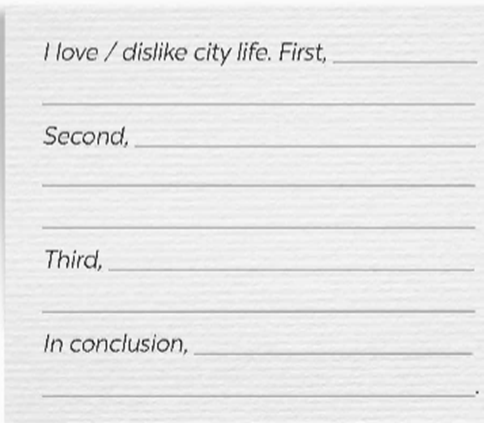
Answer:
Living in a city has its advantages and disadvantages. I dislike city life. Firstly, it is the constant traffic congestion, which makes commuting stressful and time-consuming. Secondly, the high levels of air and noise pollution can be overwhelming and detrimental to health. Thirdly, the lack of green spaces is another downside, as it limits opportunities for outdoor activities and relaxation. On the other hand, I appreciate the convenience of city living, with easy access to amenities, cultural events, and diverse dining options. Despite these conveniences, the challenges of pollution and congestion make city living less enjoyable for me.
LOOKING BACK
VOCABULARY
1. Choose the correct answer to complete each sentence below.
1. It takes Jane 30 minutes to travel from her house in the suburbs / downtown to her office in the city center.
2. Minh prefers the metro / sky train. He finds it more comfortable to go underground than above the ground.
3. The city centre is now packed with high buildings. It looks like an ugly public amenity / concrete jungle.
4. He loves the nightlife of his city. He thinks that it is lively / noisy.
5. Ho Chi Minh City is a slow / bustling city. It is always full of activities.
Answer:
1. suburbs - It takes Jane 30 minutes to travel from her house in the suburbs to her office in the city centre.
2. metro - Minh prefers the metro. He finds it more comfortable to go underground than above the ground.
3. concrete jungle - The city centre is now packed with high buildings. It looks like an ugly concrete jungle.
4. lively - He loves the nightlife of his city. He thinks that it is lively
5. bustling - Ho Chi Minh City is a bustling city. It is always full of activities.
2. Fill in each gap with a word from the box to complete the passage.
congestion peaceful safe liveable itchy |
Mia lives in a small town. In the past, there were not many people living in the town, so it was rather quiet and (1)________. Nowadays, it is totally different. The more crowded the town is, the less (2)______ it becomes. Crime rates are increasing quickly. Moreover, many car drivers don't obey traffic rules, so they indirectly cause traffic (3)_____. Construction sites are everywhere in the town. The dust and dirt from these sites have caused many problems for people's health, for example (4)______ eyes, runny noses, and acne. All these things make Mia feel that her town is not as (5)_______ as before.
Answer:
1. peaceful - yên bình (In the past, there were not many people living in the town, so it was rather quiet and peaceful)
2. safe - an toàn (The more crowded the town is, the less safe it becomes)
3. congestion - tắc đường (Moreover, many car drivers don't obey traffic rules, so they indirectly cause traffic congestion)
4. itchy - ngứa (The dust and dirt from these sites have caused many problems for people's health, for example itchy eyes, runny noses, and acne)
5. liveable - đáng sống (All these things make Mia feel that her town is not as liveable as before)
GRAMMAR
3. Complete the sentences with the particles in the box.
out (x2) down with down on away |
1. People are throwing _______ tons of food each year. This is such a waste!
2. Shopping malls are a popular place for teens to hang _______ one another these days.
3. The city council wants to cut _______ construction noise by 20% in the next five years.
4. The researchers carried _______ a study about people's attitudes towards their cities.
5. Many people come _______ the flu in winter.
Answer:
1. away ( People are throwing away tons of food each year. This is such a waste!)
2. out with (Shopping malls are a popular place for teens to hang out with one another these days.)
3. down on (The city council wants to cut down on construction noise by 20% in the next five years.)
4. on (The researchers carried on a study about people's attitudes towards their cities.)
5. down with (Many people come down with the flu in winter.)
4. Find a grammar mistake in each sentence and correct it.
1. The dirtier the air gets, more difficult it is for people to breathe.
2. My brother likes to get up the city by bike, but I prefer using public transport
3. Nearer the school is, the more convenient it is for the students.
4. She came up with a cold after walking in the heavy rain.
5. The more slow the Internet is, the angrier the users get.
Answer:
1. more difficult => the more difficult (The dirtier the air gets, the more difficult it is for people to breathe.- Cấu trúc: The + so sánh hơn + S + V, the + so sánh hơn + S + V)
2. up => around (My brother likes to get around the city by bike, but I prefer using public transport - Get around: đi xung quanh)
3. nearer => the nearer ( The nearer the school is, the more convenient it is for the students.- Cấu trúc: The + so sánh hơn + S + V, the + so sánh hơn + S + V)
4. up => down (She came down with a cold after walking in the heavy rain - Come down with - mắc bệnh)
5. more slow => slower (The slower the Internet is, the angrier the users get - slow là tính từ ngắn)
PROJECT
What to change in our community
1. Imagine a future city you would like to live in. Complete the table.
My future city | |
Population |
|
Types of house |
|
Transportation |
|
School |
|
Entertainment |
|
Answer:
My future city | |
Population |
|
Types of house |
|
Transportation |
|
School |
|
Entertainment |
|
2. Prepare a poster presentation on your future city. Use the information from your table in 1
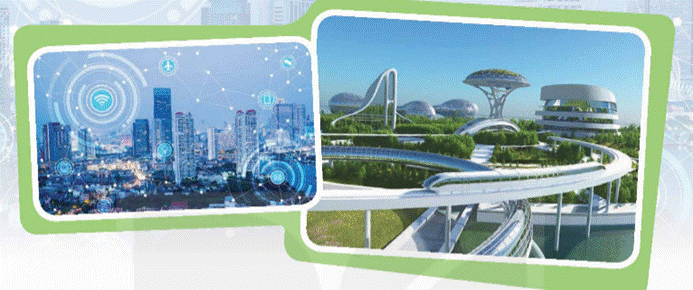
Answer:
In my future city, I envision a diverse, inclusive, and thriving population with a mix of modern high-rise apartments, eco-friendly suburban homes, and vibrant mixed-use developments. The city will boast a sustainable transportation network with electric buses, light rail transit, and bicycle-sharing systems, promoting eco-friendly commuting and reducing traffic congestion. Education will be prioritized through state-of-the-art schools and innovative teaching methods, preparing students for future success. A vibrant cultural scene with theaters, art galleries, museums, and diverse culinary experiences will enrich residents' lives, while ample parks and green spaces will offer relaxation and recreational opportunities, ensuring a healthy and enjoyable urban environment.
3. Present your poster of the future city to your class
Answer:
In my future city, I envision a diverse, inclusive, and thriving population with a mix of modern high-rise apartments, eco-friendly suburban homes, and vibrant mixed-use developments. The city will boast a sustainable transportation network with electric buses, light rail transit, and bicycle-sharing systems, promoting eco-friendly commuting and reducing traffic congestion. Education will be prioritized through state-of-the-art schools and innovative teaching methods, preparing students for future success. A vibrant cultural scene with theaters, art galleries, museums, and diverse culinary experiences will enrich residents' lives, while ample parks and green spaces will offer relaxation and recreational opportunities, ensuring a healthy and enjoyable urban environment.
Tài liệu cùng môn học
Tài liệu khác
- Trắc nghiệm tiếng anh 2 Family and Friends
- Trắc nghiệm tiếng anh 2 Explore our world
- Trắc nghiệm tiếng anh 3 Family and Friends
- Trắc nghiệm tiếng anh 3 Explore our world
- Trắc nghiệm tiếng anh 4 Family and Friends
- Trắc nghiệm tiếng anh 4 Global Success
- Trắc nghiệm tiếng anh 4 Explore our world
- Trắc nghiệm tiếng anh 5 Family and Friends
- => Xem nhiều môn hơn