Giải Tiếng Anh 9 kết nối: Unit 3 Heathy living for teens
Hướng dẫn giải Tiếng Anh 9 kết nối tri thức: Giải Unit 3 Heathy living for teens. Bài được giải chi tiết, rõ ràng, dễ hiểu. Bài giải giúp học sinh nắm vững kiến thức trong sách giáo khoa, rèn kĩ năng giải bài tập và có phương pháp học tập hiệu quả.
Nội dung chi tiết
Unit 3: Healthy living for teens
GETTING STARTED
Advice from a School Counsellor
1. Listen and read
School Counsellor: Good morning, class. Welcome to our "Tips for Good Physical and Mental Health". In this session, feel free to ask any questions.
Nick: How can we maintain good physical health?
School Counsellor: You should get enough sleep, eat a healthy diet, and do physical exercise regularly.
Mai: My parents say students of our age need to sleep at least eight hours a day. Is that right?
School Counsellor: Yes, it is.
Phong: But we often find it difficult to get a good night's sleep, especially before exams. Could you offer us any advice?
School Counsellor: I understand that exams bring about lots of stress. You can reduce this stress by studying long before the exam, not waiting until the night before it.
Phong: Thank you. Do you have any tips about looking after our mental health?
School Counsellor: If you want to have good mental health, you should have a well-balanced life. I mean you should balance your study and life.
Nick: But how can we balance them?
School Counsellor: Well, you have to manage your time by planning your schedule and giving priority to your work. And you should keep a balance between study and play.
| T | F |
1. The counsellor is giving advice on how to maintain good physical and mental health.
|
|
|
2. According to Mai's parents, students shouldn't sleep more than eight hours a day.
|
|
|
3. Many students find it easy to get a good night's sleep before exams.
|
|
|
4. Nick doesn't know how to have a well-balanced life
|
|
|
5. The school counsellor advises the students to balance their study and play time.
|
|
|
Answer:
1. T (Explain: You should get enough sleep, eat a healthy diet, and do physical exercise regularly.)
2. F (Explain: My parents say students of our age need to sleep at least eight hours a day. Is that right?)
3. F (Explain: Phong: But we often find it difficult to get a good night's sleep, especially before exams.)
4. T (Explain: Nick: But how can we balance them?)
5. T (Explain: School Counsellor: And you should keep a balance between study and play)
3. Match the words with their definitions.
1. physical
| a. a person whose job is to help and support people with problems l
|
2. mental
| b. connected with a person's body rather than their mind
|
3. well-balanced
| c. something that you think is more important than other things and should be dealt with first
|
4. priority
|
d. connected with the state of health of the mind
|
5. counsellor | e. having the right amounts of all the different parts that make up something
|
Answer:
1 - b. physical - connected with a person's body rather than their mind
2 - d. mental - connected with the state of health of the mind
3 - e. well-balanced - having the right amounts of all the different parts that make up something
4 - c. priority - something that you think is more important than other things and should be dealt with first
5 - a. counsellor- a person whose job is to help and support people with problems
4. Complete the sentences with the words in the box
physical counsellor well-balanced priority mental |
1. You should make a list of all the jobs you have to do and give _______ to them.
2. Maintaining a _______ life often means making time for the things you have to do, as well as the things you want to do in a suitable way.
3. The police asked them to describe his _______ appearance.
4. You need to maintain your physical and _______ health.
5. The _______ is willing to listen to the students to help them solve their problems.
Answer:
1. priority - You should make a list of all the jobs you have to do and give priority to them.
2. well-balanced - Maintaining a well-balanced life often means making time for the things you have to do, as well as the things you want to do in a suitable way.
3. physical- The police asked them to describe his physical appearance.
4. mental- You need to maintain your physical and mental health.
5. counsellor - The counsellor is willing to listen to the students to help them solve their problems.
5. Work in pairs. Interview each other about how healthy you are. Give each other advice.
Example:
A: How healthy are you?
B: I'm tired.
A: You should take a break and do some physical exercise.
Answer:
A: How are you feeling today?
B: I'm feeling a bit sick, I have a headache and a sore throat.
A: Oh no, that doesn't sound good. Have you been resting?
B: Not really, I've been trying to push through it.
A: Maybe you should take some time off and rest properly. Have you been drinking enough fluids?
B: I think so, but probably not enough.
A: It's important to stay hydrated, especially when you're feeling unwell. You might also want to consider seeing a doctor if your symptoms persist.
B: Yeah, I'll try to take it easy and drink more water. Thanks for the advice.
A CLOSER LOOK 1
VOCABULARY
1. Circle the correct word or phrase to complete each sentence.
1. It's always difficult for students to give / make priority to work, school, and family.
2. David works out at his home gym to maintain his mental / physical health.
3. Well-balanced / Badly balanced living is hard to achieve if you have many things to do
4. Managing / Making time means organising and planning how to divide your time between different activities.
5. I tried to accomplish / get my goal of cycling five kilometres a day.
Answer:
1. give (It's always difficult for students to give priority to work, school, and family. -Cấu trúc “give priority to sth” )
2. physical ( David works out at his home gym to maintain his physical health.)
3. Well-balanced (Well-balanced living is hard to achieve if you have many things to do.)
4. Managing (Managing time means organizing and planning how to divide your time between different activities.)
5. accomplish (. I tried to accomplish my goal of cycling five kilometers a day.)
2. Match the words and phrases with their definitions.
1. delay
| a. the planned day and time that something is required to be completed
|
2. due date
| b. believing that good things will happen
|
3. optimistic
| c. too anxious and tired to be able to relax
|
4. stressed out
| d. things that stop you from paying attention to what you are doing
|
5. distractions
| e. not to do something until a later time
|
Answer:
1 – e. delay - not to do something until a later time
2 – a. due date - the planned day and time that something is required to be completed
3 – b. optimistic - believing that good things will happen
4 – c. stressed out - too anxious and tired to be able to relax
5 – d. distractions - things that stop you from paying attention to what you are doing
3. Complete the sentences with the words and phrases from 2.
1. I want to know the ______ for my history assignment.
2. I'm trying to go to bed earlier because I'm feeling ______ at the moment.
3. He intended to ______ telling her the news, waiting for the right moment.
4. I'm ______ about the result of the exam I took last week.
5. I prefer to study in the school library because there are too many ______ at home.
Answer:
1. due date - I want to know the due date for my history assignment.
2. stressed out - I'm trying to go to bed earlier because I'm feeling stressed out at the moment.
3. delay - He intended to delay telling her the news, waiting for the right moment.
4. optimistic - I'm optimistic about the result of the exam I took last week.
5. distraction - I prefer to study in the school library because there are too many distractions at home.
PRONUNCIATION
/h/ and /r/
4. Listen and repeat the words. Pay attention to the sounds /h/ and /r/.
/h/
| /r/ |
healthy happiness habit ahead perhaps
| regularly really ready worrying several
|
5. Listen and practice the sentences. Pay attention to the bold words with/h/ and /r/.
1. Keep healthy by eating well and exercising regularly.
2. He usually does his homework and then reads a good book.
3. I'm ready to change my eating habits.
4. I finished several days ahead of the due date.
5. She's always worrying about her physical health.
Answer:
1. Keep healthy by eating well and exercising regularly. (Giữ sức khỏe bằng cách ăn uống lành mạnh và tập thể dục thường xuyên.)
2. He usually does his homework and then reads a good book. (Anh ấy thường làm bài tập về nhà và sau đó đọc một cuốn sách hay.)
3. I'm ready to change my eating habits. (Tôi sẵn sàng thay đổi thói quen ăn uống của mình.)
4. I finished several days ahead of the due date. (Tôi đã hoàn thành trước thời hạn vài ngày.)
5. She's always worrying about her physical health. (Cô ấy luôn lo lắng về sức khỏe thể chất của mình.)
A CLOSER LOOK 2
GRAMMAR
Modal verbs in first conditional sentences
1. Write the correct form of each verb in brackets.
1. If Mai (not want) _______ to gain weight, she shouldn't eat much fast food.
2. If you stay up too late tonight, you might (feel) _______ tired tomorrow morning.
3. You should (sleep) _______ eight hours a night if you want to be awake and fully alert.
4. If Tom (complete) _______ his assignment on Friday, he can go out with his friends at the weekend.
5. You must (be) _______ careful if you don't want to get burnt.
Answer:
1. doesn’t want (If Mai doesn’t want to gain weight, she shouldn't eat much fast food.)
2. feel ( If you stay up too late tonight, you might feel tired tomorrow morning.)
3. sleep (You should sleep eight hours a night if you want to be awake and fully alert.)
4. completes (If Tom completes his assignment on Friday, he can go out with his friends at the weekend.)
5. be (You must be careful if you don't want to get burnt.)
2. Circle the correct modal verbs to complete the following sentences.
1. She can / should go home early if she finishes her work.
2. If you train hard, you might / shouldn't win the first prize.
3. If they don't want to be punished, they must / may follow the rules.
4. If students have an upcoming exam, they shouldn't / can't wait to study until the day before it.
5. If you're having a bad day, you should / may do your best to get through it.
Answer:
1. can - She can go home early if she finishes her work.
2. might - If you train hard, you might win the first prize.
3. Must - If they don't want to be punished, they must follow the rules.
4. shouldn’t- If students have an upcoming exam, they shouldn't wait to study until the day before it.
5. should - If you're having a bad day, you should do your best to get through it.
3. Matching the first half of the sentence in A with the second half in B
A | B |
1. If you spend too much time on the computer,
| a. you can make your favourite food at home
|
2. If you put too much sugar in your coffee,
| b. you should use a calendar to plan your work ahead.
|
3. If you want to manage your time effectively,
| c. you may put on more weight.
|
4. If you want to have perfect white teeth,
| d. you might get shoulder pains
|
5. If you take a cooking class,
| e. you must brush your teeth regularly.
|
Answer:
1 – d. If you spend too much time on the computer, you might get shoulder pains.
2 – c. If you put too much sugar in your coffee, you may put on more weight.
3 – b. If you want to manage your time effectively, you should use a calendar to plan your work ahead.
4 – e. If you want to have perfect white teeth, you must brush your teeth regularly.
5 – a. If you take a cooking class, you can make your favourite food at home.
4. What will you say in each situation below? Use first conditional sentences with modal verbs.
1. Your friend wants to lose weight. You advise him/her to eat less high fat food and do more exercise.
2. Your friend invites you out for an ice cream, but it's possible that you will have a sore throat.
3. Your roommate often stays up late at night. You think it is necessary to get enough sleep every night; otherwise, his health will suffer.
4. Your little brother wants to go for a swim. You agree but ask him to finish all his homework first.
5. You're able to make a delicious pizza when you have all the needed ingredients.
Answer:
1. If you want to lose weight, you should eat less high-fat food and do more exercise. (Nếu muốn giảm cân, bạn nên ăn ít đồ ăn nhiều chất béo và tập thể dục nhiều hơn.)
2. If I eat an ice cream, I might/may/will have a sore throat. (Nếu tôi ăn kem, tôi có thể/sẽ bị đau họng.)
3. If you don't get enough sleep every night, your health will suffer. (Nếu không ngủ đủ giấc mỗi đêm, sức khỏe sẽ bị ảnh hưởng.)
4. If you finish all your homework, you can go for a swim. (Nếu bạn làm xong hết bài tập về nhà, bạn có thể đi bơi.)
5. If I have all the needed ingredients, I can make a delicious pizza. (Nếu tôi có đủ nguyên liệu cần thiết, tôi có thể làm một chiếc bánh pizza ngon.)
5. Complete the sentences with your own ideas using the modal verbs you have learnt.
1. If you spend too much time playing computer games, ...
2. If you want to get a good night's sleep, ...
3. If you don't feel well, ...
Answer:
1. If you spend too much time playing computer games, you may feel tired. (Nếu dành quá nhiều thời gian để chơi game trên máy tính, bạn có thể cảm thấy mệt mỏi )
2. If you want to get a good night's sleep, you should avoid caffeine and electronic devices before bedtime.
(Nếu muốn có giấc ngủ ngon, bạn nên tránh dùng caffeine và các thiết bị điện tử trước khi đi ngủ.)
3. If you don't feel well, you should go to the hospital. ((Nếu cảm thấy không khỏe, bạn nên đi bệnh viện .)
COMMUNICATION
Everyday English
Asking for repetition and responding
1. Listen and read the conversations. Pay attention to the highlighted sentences.
1. Mai: Can you open the door, Tom? Tom: Sorry? Mai: Can you open the door, please? |
2. Nick: Excuse me. Would you mind showing me the way to the post office? Woman: I beg your pardon. Nick: Would you mind showing me the way to the post office? |
2. Work in pairs. Make similar conversations for the following situations.
1. You ask your friend to pass the book, but he/she can't hear what you say.
2. A stranger asks you the way to the nearest bus station, but you can't hear what he/she says.
Answer:
1.
You: Can you pass me the book, Linh?
Linh: Sorry?
You: Can you pass me the book, please?
2.
Stranger: Excuse me. Could you tell me the way to the nearest bus station?
You: I beg your pardon.
Stranger: Could you tell me the way to the nearest bus station?
Tips for being happy on school days
3. Read the text and complete each sentence that follows with a suitable word.
Do nice things to others
Praise or encourage your classmates for a fun activity. Thank your teacher for his or her interesting lesson. Making other people feel happy can bring you great happiness.
Don't delay
When you complete your homework or assignment ahead of time, you will feel less worried about it. Don't wait to study until the night before a test. Instead, study one or two hours regularly a day.
Take care of yourself
Get enough sleep and eat healthy food. Do exercise regularly and do some activities you like. Taking care of yourself can bring you good health and happiness.
Be optimistic
There will always be bad things and difficulties to overcome at school, but they don't last long. If you have an unhappy day, you should try to get through it!
1. You should make others feel _______ by giving them encouragement or being thankful to them.
2. You shouldn't _______ doing your homework or assignment or preparing for a test. This will reduce your stress.
3. Getting enough sleep, eating healthy food, and doing what you like can bring you good health and _______.
4. You should always be expecting good things to happen and try to _______ difficulties.
Answer:
1. happy - You should make others feel happy by giving them encouragement or being thankful to them. (Explain: Making other people feel happy can bring you great happiness.)
2. delay - You shouldn't delay doing your homework or assignment or preparing for a test. This will reduce your stress. (Explain: Don't delay. When you complete your homework or assignment ahead of time, you will feel less worried about it.)
3. happiness - Getting enough sleep, eating healthy food, and doing what you like can bring you good health and happiness. (Explain: Taking care of yourself can bring you good health and happiness.)
4. overcome - You should always be expecting good things to happen and try to overcome difficulties. (Explain: There will always be bad things and difficulties to overcome at school, but they don't last long.)
4. Work in groups. Write tips for one of the following situations.
1. A friend of yours cannot get a good night's sleep.
2. A friend of yours does not feel very well.
3. A friend of yours cannot remember the words he/she learnt.
Answer:
1. Firstly, encourage them to establish a consistent sleep schedule by going to bed and waking up at the same time every day, even on weekends. Suggest creating a relaxing bedtime routine to signal to their body that it's time to wind down, such as reading a book or taking a warm bath. They should also avoid screens and stimulating activities before bed. Additionally, recommend creating a comfortable sleep environment by keeping the bedroom cool, dark, and quiet.
2.
Firstly, give priority to rest and self-care. Secondly, Consume nutritious foods, drink warm water and practice gentle exercises to increase health and resistance. Thirdly, go see the doctor for advice if symptoms persist or worsen.
3.
Firstly, encourage them to engage in regular practice and repetition of the words they're trying to remember. Secondly, suggest incorporating the words into everyday conversations, writing them down multiple times, or creating flashcards for review. Additionally, advise them to use mnemonic devices or associations to link the new words with something familiar, making them easier to recall. It might also be helpful for them to break down the words into smaller parts or focus on their meanings, context, or usage in sentences.
5. Present your tips to the class.
Answer:
1.
If a friend is struggling to get a good night's sleep, here are some tips to help them out. Firstly, establishing a consistent sleep schedule by going to bed and waking up at the same time every day, even on weekends, can regulate the body's internal clock. You can create a relaxing bedtime routine to signal to their body that it's time to wind down, such as reading a book or taking a warm bath. You should also avoid screens and stimulating activities before bed.
2.
If a friend is feeling under the weather, here are some tips to help them feel better. Firstly, you should give priority to rest and self-care. Secondly, it is important for you to consume nutritious foods, drink warm water and practice gentle exercises to increase health and resistance. Thirdly, you should go see the doctor for advice if symptoms persist or worsen.
3. If a friend is struggling to remember words they've learned, here are some tips to help improve their memory recall. Firstly, You can engage in regular practice and repetition of the words they're trying to remember. Secondly, I suggest that you can incorporate the words into everyday conversations, write them down multiple times, or create flashcards for review. Additionally, you can use mnemonic devices or associations to link the new words with something familiar, making them easier to recall. It might also be helpful for them to break down the words into smaller parts or focus on their meanings, context, or usage in sentences.
SKILL 1
READING
1. Work in pairs. Discuss the following question.
How is a well-balanced life important for students?
Answer:
A well-balanced life is crucial for students for several reasons. Firstly, it helps in maintaining good physical health. Balancing academic demands with regular exercise and healthy eating habits ensures students have the energy and stamina needed to excel in their studies. Additionally, mental health is equally important. Taking breaks, engaging in hobbies, and spending time with friends and family can alleviate stress and prevent burnout. Moreover, a balanced life fosters emotional well-being, providing students with the resilience and coping mechanisms to navigate challenges effectively. It also encourages personal growth and development by allowing students to explore diverse interests and passions outside of academics. Ultimately, a well-balanced life enhances overall academic performance, promotes holistic well-being, and prepares students for success in both their academic and personal lives.
2. The following text is about how a successful teen celebrity kept a well-balanced life when he was at school. Read the text and match each highlighted word with its meaning.
When I was at school, I had to learn how to have a well-balanced life in order to reduce stress and anxiety. Below are some of the typical things I did.
Firstly, I managed my time properly. I started to plan my schedule, made a weekly work list and gave priority to some of my work. This helped me concentrate my efforts on my most important tasks.
In addition, I communicated with my family, friends, and teachers about my busy schedule and problems, so they would offer me additional support.
I also took breaks appropriately because they helped me keep away from stress and anxiety and gave my brain a rest and improved my mood.
Finally, I looked after my physical health. I got at least eight hours of sleep a day. I played football with my classmates twice a week and went for a walk with my grandparents early every morning. Besides, I also tried to follow a healthy diet. I ate a lot of fruit and vegetables. I ate little fattening foods and avoided junk foods like chips, cookies, pizza, etc.
1. anxiety
| a. more than the amount you expected or agreed to
|
2. additional
| b. likely to make you fat
|
3. appropriately
| c. the state of feeling nervous or worried that something bad is going to happen |
4. fattening
| d. in a way that is suitable or right for a particular situation
|
Answer:
1 – c. anxiety: the state of feeling nervous or worried that something bad is going to happen
2 – a. additional: more than the amount you expected or agreed to
3 – d. appropriately: in a way that is suitable or right for a particular situation
4 – b. fattening: likely to make you fat
3. Read the text again and answer the following questions.
1. Why did the teen celebrity have to learn how to have a well-balanced life when he was a student?
2. What did he do to manage his time properly?
3. Why did he communicate with his family, friends, and teachers about his schedules and problems?
4. Why did he take breaks?
5. How did he follow a healthy diet?
Answer:
1. He had to learn how to have a well-balanced life when he was a student in order to reduce stress and anxiety. (Explain: When I was at school, I had to learn how to have a well-balanced life in order to reduce stress and anxiety.)
2. He started to plan his schedule, made a weekly work list and gave priority to some of his work. (Explain: Firstly, I managed my time properly. I started to plan my schedule, made a weekly work list and gave priority to some of my work.)
3. Because they would offer him additional support. (Explain: In addition, I communicated with my family, friends, and teachers about my busy schedule and problems, so they would offer me additional support.)
4. Because they helped him keep away from stress and anxiety and gave his brain a rest and improved his mood.(Explain: I also took breaks appropriately because they helped me keep away from stress and anxiety and gave my brain a rest and improved my mood.)
5. He ate a lot of fruit and vegetables. He ate little fattening foods and avoided junk foods like chips, cookies, pizza, etc. (Explain: Besides, I also tried to follow a healthy diet. I ate a lot of fruit and vegetables. I ate little fattening foods and avoided junk foods like chips, cookies, pizza, etc.)
SPEAKING
4. Work in pairs. Ask and answer the following questions about how to have a well-balanced life. Make notes of your partner's answers.
1. How can we manage our time properly?
2. How can we spend time with our friends, teachers, and parents?
3. How can we avoid stress and anxiety?
4. How can we take care of our physical health?
Answer:
1. We should make a to-do list daily and weekly and give priority to tasks based on their importance and urgency to manage our time properly. Breaking down large tasks into smaller, more manageable goals helps to prevent being overwhelmed. Set realistic goals and deadlines to avoid procrastination.
2. To spend time with friends, teachers and parents, we can openly share and foster communication to strengthen the bond; planning regular meet-ups and setting aside time for shared activities helps ensure that these connections remain strong and meaningful. By fostering an environment of openness and actively engaging in shared experiences, we can deepen our relationships and create lasting memories with those who matter most to us.
3. To effectively manage and reduce stress and anxiety, it's crucial to implement various strategies into our daily lives. Firstly, incorporating relaxation techniques like deep breathing, meditation, or yoga can help calm the mind and alleviate tension. Secondly, maintaining a healthy lifestyle through regular exercise, balanced nutrition, and sufficient sleep is essential for managing stress levels. Thirdly, effective time management practices such as prioritizing tasks and setting realistic goals can prevent feelings of overwhelm. Additionally, setting boundaries and learning to say no to additional commitments can help reduce stressors
4. Taking care of our physical health involves a holistic approach encompassing regular exercise, balanced nutrition, hydration, sufficient sleep, routine health check-ups, stress management, and limiting substance use. Engaging in at least 30 minutes of moderate exercise most days, consuming a diverse diet rich in fruits, vegetables and maintaining adequate sleep to take care of our physical health.
5. Work in groups. Take turns to talk about your partner's ideas about how to have a well-balanced life.
Answer:
To have a well-balanced life. I think we should maintain a well-balanced life by starting with daily and weekly to-do lists, prioritizing tasks by importance and urgency to effectively manage her time. Breaking down large tasks into smaller, more manageable goals helps prevent feeling overwhelmed. Additionally, I also incorporate relaxation activities like hobbies, meditation, or yoga into her routine to reduce stress. Lastly, following a balanced and nutritious diet, including plenty of fruits, vegetables, and proteins, as well as ensuring adequate sleep to enhance physical health is important to have a well balanced life.
SKILL 2
LISTENING
1. Work in pairs. Discuss the following question.
How do you make time for study and other activities?
Answer:
I typically structure my schedule into daily, weekly, or monthly plans, ensuring dedicated time for studying alongside other activities. While learning responsibilities take precedence, I also allocate time for essential activities such as exercise, socializing, and relaxation. To optimize productivity, I aim to minimize time spent on distractions like social media during study periods, focusing instead on tasks that contribute to my overall goals and well-being. This balanced approach helps me stay organized, motivated, and efficient in managing both academic and personal commitments.
2. You will hear Trang, Phong, and Tom talking about how to manage their time effectively. For each student (1-3), choose the opinion (A-C) each of them expresses.
|
|
|
|
|
|
Options |
A. I don't let things distract me from the schoolwork that I have to do
|
B. Using a calendar to plan my work ahead helps me manage my time effectively.
|
C. I try not to delay doing my homework and working on my projects and coming tests.
|
Answer:
Trang: B, Phong: A, Tom: C
3. Listen again and choose the correct answer A, B, or C.
1. Trang enters what she has to do into a _______ at the beginning of each term.
A. poster
B. routine
C. calendar
2. Trang often uses _______ colours to mark project due dates and exam times on her calendar.
A. different
B. the same
C. similar
3. Phong turns off his cell phone and signs out of social media _______ when he starts his work.
A. accounts
B. networks
C websites
4. Tom tries not to _______ homework until just before the due date.
A. leave
B. complete
C submit
5. Tom _______ his projects and coming tests and adds them to his schedule.
A. prepares
B. reviews
C revises
Answer:
1 – C ; 2 – A ; 3 – A ; 4 – A ; 5 – B
WRITING
4. Match the time management tips in column A with the explanations and / or reasons in column B.
A | B |
1. Making a plan or schedule for things you need to do, including appointments, projects, homework and tests.
| a. You should decide which is the most urgent and important task so that you can concentrate on it first. By doing this, you may not be at a loss to deal with too much work at the same time.
|
2. Giving priority to the most important task.
| b. An effective routine can help you accomplish the things you need to do. The more you follow a daily routine, the less you will worry or get stressed.
|
3. Building an effective daily routine.
| c. You can plan your work ahead by using a calendar, a diary, or a mobile app. It helps you remember what you need to accomplish and when you should do it
|
Answer:
1 - c. Making a plan or schedule for things you need to do, including appointments, projects, homework and tests. - You can plan your work ahead by using a calendar, a diary, or a mobile app. It helps you remember what you need to accomplish and when you should do it.
2 - a. Giving priority to the most important task. - You should decide which is the most urgent and important task so that you can concentrate on it first. By doing this, you may not be at a loss to deal with too much work at the same time.
3 - b. Building an effective daily routine. - An effective routine can help you accomplish the things you need to do. The more you follow a daily routine, the less you will worry or get stressed.
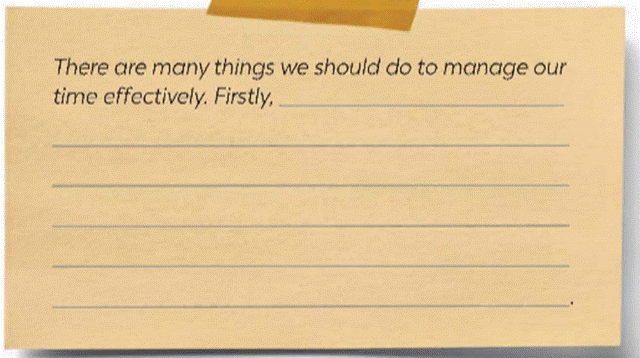
5. Write a paragraph (about 100 words) about how to manage your time effectively. Use the tips in 4 or your own ideas.
Answer:
There are many things we should do to manage our time effectively.
Firstly, making a plan or schedule for things you need to do, including appointments, projects, homework and tests. You can plan your work ahead by using a calendar, a diary, or a mobile app. It helps you remember what you need to accomplish and when you should do it.
Secondly, giving priority to the most important task. You should decide which is the most urgent and important task so that you can concentrate on it first. By doing this, you may not be at a loss to deal with too much work at the same time.
Finally, building an effective daily routine. An effective routine can help you accomplish the things you need to do. The more you follow a daily routine, the less you will worry or get stressed.
LOOKING BACK
VOCABULARY
1. Complete the sentences with the correct words and phrases in the box.
stressed out priority delay well-balanced due date
|
1. A _______ meal or diet contains all the different things you need to keep you healthy.
2. The _______ for the project is next Friday.
3. I've got too much to do, and I'm completely _______.
4. Nick gave _______ to tasks at his job because he couldn't do everything he wanted today.
5. You may not feel better if you _______ going to the doctor
Answer:
1.well-balanced - A well-balanced meal or diet contains all the different things you need to keep you healthy.
2. due date - The due date for the project is next Friday.
3. stressed out - I've got too much to do, and I'm completely stressed out.
4. priority - Nick gave priority to tasks at his job because he couldn't do everything he wanted today.
5. delay - You may not feel better if you delay going to the doctor.
2. Choose the correct answer A, B, C, or D.
1. To most people, _______ living means both physical and mental health are functioning well together.
A. healthy
B. unhealthy
C. health
D. healthily
2. When we _______ our task, we headed home
A. succeeded
B. won
C. accomplished
D. managed
3. She's in poor health, but she's _______ about her future.
A. optimistic
B. negative
C. pleased
D. unhappy
4. There are too many _______ in this classroom it's hard for me to pay attention to the lesson.
A. difficulties
B. distractions
C. obstacles
D. omissions
5. He was in a good _______ when he got home from school.
A. mind
B. feeling
C. attitude
D. mood
Answer:
1. A - To most people, healthy living means both physical and mental health are functioning well together.
A. healthy (adj): lành mạnh
B. unhealthy (adj): không lành mạnh
C. health (n): sức khỏe
D. healthily (adv): lành mạnh
2. C - When we accomplished our task, we headed home.
3. A - She's in poor health, but she's optimistic about her future.
4. B - There are too many distractions in this classroom. It's hard for me to pay attention to the lesson.
5. D - He was in a good mood when he got home from school.
GRAMMAR
3. Complete the sentences with the correct modal verbs in the box. A modal verb can be used twice.
can must should might
|
1. If you don't want to get in an accident, you _______ follow these safety instructions.
2. If you take these pills, you ______ feel better soon.
3. You ______ come and join us if you like.
4. If you feel unwell, you______ consult a doctor.
5. If she tries hard, she ______ speak English better than you.
Answer:
1.must - If you don't want to get in an accident, you must follow these safety instructions.
2. might - If you take these pills, you might feel better soon.
3. can - You can come and join us if you like.
4. should - If you feel unwell, you should consult a doctor.
5. can - If she tries hard, she can speak English better than you.
4. Circle the most suitable modal verbs to complete the sentences.
1. He shouldn't / may not / cannot stay up late tonight if he wants to feel awake and alert tomorrow morning.
2. Nick should / can't / might be very excited if we invite him to our home.
3. Mai can / must / should be good at time management if she takes a training course at school.
4. If you want to save on your electricity bills, you must / can / might turn off all the electric equipment before going out.
5. If you help me tidy our flat this morning, you must / can / can't go out this afternoon.
Answer:
1. shouldn’t - He shouldn't stay up late tonight if he wants to feel awake and alert tomorrow morning.- (Anh ấy không nên thức khuya tối nay nếu muốn cảm thấy tỉnh táo vào sáng mai.)
2. might - Nick might be very excited if we invite him to our home. - (Nick có thể sẽ rất hào hứng nếu chúng ta mời anh ấy đến nhà.)
3. can - Mai can be good at time management if she takes a training course at school. - (Mai có thể giỏi quản lý thời gian nếu cô ấy tham gia một khóa đào tạo ở trường.)
4. must - If you want to save on your electricity bills, you must turn off all the electric equipment before going out.- (Muốn tiết kiệm tiền điện, bạn phải tắt tất cả các thiết bị điện trước khi ra ngoài.)
5.can - If you help me tidy our flat this morning, you can go out this afternoon.- (Nếu sáng nay bạn giúp tôi dọn dẹp căn hộ của chúng ta thì chiều nay bạn có thể ra ngoài.)
PROJECT
How good are your classmates at time management
1. Work in groups. Ask your classmates about how good they are at time management. Write their answers in the table
Questions | Student 1 | Student 2 | Student 3 | Student 4 | Student 5 |
1. Do you often create and follow a schedule or to do list to manage your time effectively?
|
|
|
|
|
|
2. Do you often prioritize your tasks effectively to ensure timely completion? |
|
|
|
|
|
3. Do toi consistently complete tasks and projects within the given deadlines? |
|
|
|
|
|
4. Do you usually avoid delaying and stay focused on your tasks?
|
|
|
|
|
|
5. Do you often use productivity tools or techniques to enhance your time management skills?
|
|
|
|
|
|
Answer:
Questions | Student 1 | Student 2 | Student 3 | Student 4 | Student 5 |
1. Do you often create and follow a schedule or to do list to manage your time effectively?
| Yes | No | Yes | No | Yes |
2. Do you often prioritize your tasks effectively to ensure timely completion? | Yes | Yes | No | No | Yes |
3. Do toi consistently complete tasks and projects within the given deadlines? | Yes | No | No | Yes | No |
4. Do you usually avoid delaying and stay focused on your tasks?
| No | Yes | No | Yes | Yes |
5. Do you often use productivity tools or techniques to enhance your time management skills?
| No | No | No | Yes | Yes |
2. Work in groups again. Count the answers you have got for each student.
0 Yes answer: Very poor at time management
1 – 2 Yes answers: Poor at time management
3 – 4 Yes answers: Good at time management
5 Yes answers: Excellent at time management
Answer:
Student 1: 3 Yes answers: Good at time management.
Student 2: 2 Yes answers: Poor at time management.
Student 3: 1 Yes answer: Poor at time management.
Student 4: 3 Yes answers: Good at time management.
Student 5: 4 Yes answers: Good at time management.
3. Present your group's findings on how good your classmates are at time management.
Answer:
Most of the students asked often create and follow a schedule or to-do list to manage their time efficiently. Some students prioritize their tasks effectively to ensure complete tasks and projects within the given deadlines. They also usually avoid delaying and stay focused on their tasks. Fewer of the students surveyed use productivity tools or techniques to enhance their time management skills.
Tài liệu cùng môn học
Tài liệu khác
- Trắc nghiệm tiếng anh 2 Family and Friends
- Trắc nghiệm tiếng anh 2 Explore our world
- Trắc nghiệm tiếng anh 3 Family and Friends
- Trắc nghiệm tiếng anh 3 Explore our world
- Trắc nghiệm tiếng anh 4 Family and Friends
- Trắc nghiệm tiếng anh 4 Global Success
- Trắc nghiệm tiếng anh 4 Explore our world
- Trắc nghiệm tiếng anh 5 Family and Friends
- => Xem nhiều môn hơn