Giải Tiếng Anh 9 kết nối: Unit 7 Natural wonders of the world
Hướng dẫn giải Tiếng Anh 9 kết nối tri thức: Giải Unit 7 Natural wonders of the world. Bài được giải chi tiết, rõ ràng, dễ hiểu. Bài giải giúp học sinh nắm vững kiến thức trong sách giáo khoa, rèn kĩ năng giải bài tập và có phương pháp học tập hiệu quả.
Nội dung chi tiết
UNIT 7: Natural wonders of the world
GETTING STARTED
Meeting on the corridor
1. Listen and read
Lan: Hi, Tom. I hear that you've won second prize in the Natural Wonders Contest. Congratulations!
Tom: Thanks, Lan. I like exploring the wonders of nature. I'm crazy about them.
Lan: What did you talk about in the contest? Tom: I talked about some natural wonders like Mount Everest, the Great Barrier Reef, and the Dead Sea.
Lan: Wonderful! I'm interested in them too.
Tom: Well, you know our planet has so many beautiful landscapes, from snow-covered peaks to charming rivers, lakes, and other natural places that we can't help admiring. So that's what I talked about.
Lan: Oh yeah... And what else did you mention?
Tom: Well, I mentioned the risk of us, humans, destroying natural wonders, and I suggested ways to preserve them and support sustainable development. Lan: Sounds interesting. Do you want to visit any of these places?
Tom: The host also asked me if I wanted to visit those places, and I answered that I wanted to see two of them: the Grand Canyon and Ha Long Bay.
Lan: I'd love to visit them too.
2. Read the conversation again and tick (✔) T (True) or F (False) for each sentence.
| T | F |
1. Tom took part in the Natural Wonders Contest. |
|
|
2. Lan is not keen on natural wonders. |
|
|
3. Tom suggested ways to preserve natural wonders. |
|
|
4. Tom asked the host if he wanted to go to Ha Long Bay. |
|
|
Answer:
1. T - Tom took part in the Natural Wonders Contest. (Explanation: Tom participated and won second prize in the Natural Wonders Contest.)
2. F - Lan is not keen on natural wonders. (Explanation: Lan shows interest in natural wonders, as she expresses her interest in the same topics Tom discussed.)
3. T - Tom suggested ways to preserve natural wonders. ( Explanation: Lan shows interest in natural wonders, as she expresses her interest in the same topics Tom discussed.)
4. F - Tom asked the host if he wanted to go to Ha Long Bay (Explanation: Lan shows interest in natural wonders, as she expresses her interest in the same topics Tom discussed.
3. Complete each sentence with a word or a phrase from the box.
explore couldn't help landscape support development |
1. A____________is everything you can see in a large area of land, especially in the countryside.
2. It was risky for him to climb the peak, but we_____________admiring his courage.
3. The best way to_________the Trang An Landscape Complex is by boat
4. Environmentalists strongly__________ measures to save these heritage trees.
5. Sustainable_________ goals will guide us to create a more sustainable future for all
Answer:
1. landscape - A landscape is everything you can see in a large area of land, especially in the countryside.
2. couldn’t help - It was risky for him to climb the peak, but we couldn't help admiring his courage.
3. explore - The best way to explore the Trang An Landscape Complex is by boat.
4. support - Environmentalists strongly support measures to save these heritage trees.
5. development - Sustainable development goals will guide us to create a more sustainable future for all.
4. Underline the correct answer to complete each sentence.
1. Charles is crazy / interested about football. He follows all the World Cup
matches.
2. When you go to Mui Ne, you can see the unique location/landscape of a desert.
3. The children were very eager to explore/ possess the surrounding countryside.
4. Can you suggest/ discover ways of boosting our local tourism?
5. Tourism develops / contributes millions of dollars to our country's economy.
Answer:
1. crazy - Charles is crazy about football. He follows all the World Cup matches.
2. landscape - When you go to Mui Ne, you can see the unique landscape of a desert.
3. explore - The children were very eager to explore the surrounding countryside.
4. suggest - Can you suggest ways of boosting our local tourism?
5. contributes - Tourism contributes millions of dollars to our country's economy.
5. GAME Natural Wonders
Knowledge
Work in groups. List some natural wonders and say where they are
located. The group that has the most correct answers wins.
Example:
The Amazon Rainforest in Brazil / in South America
Answer:
Grand Canyon in the USA
Great Barrier Reef in Australia
Mount Everest in Nepal/Tibet
Aurora Borealis (Northern Lights) in the Arctic regions
Victoria Falls on the border of Zambia and Zimbabwe
Ha Long Bay in Vietnam
Serengeti Migration in Tanzania/Kenya
A CLOSER LOOK 1
VOCABULARY
1. Match the words in A with their definitions / explanations in B.
A
| B |
1. permit
| a. happening once every year
|
2. paradise
| b. a way of entering or reaching a place
|
3. annual
| c. a range of many things that are very different from each other |
4. diversity
| d. that needs to be done or happen immediately |
5. access | e. to allow or make something possible
|
6. urgent
| f. a place that is extremely beautiful and that seems perfect
|
Answer:
1. permit - e. to allow or make something possible
2. paradise - f. a place that is extremely beautiful and that seems perfect
3. annual - a. happening once every year
4. diversity - c. a range of many things that are very different from each other
5. access - b. a way of entering or reaching a place
6. urgent - d. that needs to be done or happen immediately
2. Complete the following table. There is one example.
Verb | Noun |
discover | discovery |
1. locate |
|
2. hesitate |
|
3. explore |
|
4. possess |
|
5. admire |
|
Answer:
Verb | Noun |
discover | discovery |
1. locate | location (vị trí) |
2. hesitate | hesitation (sự do dự) |
3. explore | exploration (sự khám phá) |
4. possess | possession (sự sở hữu) |
5. admire | admiration (sự ngưỡng mộ) |
3. Complete the following sentences with the words from the box.
located hesitation permit urgent diversity |
1. The government encourages people to protect the___________of their communities.
2. There is a(n)_________need to preserve biological diversity of our national parks.
3.______between Israel and Jordan, the Dead Sea is the lowest place on Earth.
4. When I asked her to go to Lan Ha Bay with me, she agreed without________
5. They do not____________visitors to take photographs of the palace.
Answer:
1. diversity - The government encourages people to protect the diversity of their communities.
2. urgent - There is a(n) urgent need to preserve the biological diversity of our national parks.
3. Located - Located between Israel and Jordan, the Dead Sea is the lowest place on Earth.
4. hesitation - When I asked her to go to Lan Ha Bay with me, she agreed without hesitation.
5. permit - They do not permit visitors to take photographs of the palace.
PRONUNCIATION
/sl/ and /sn/
4. Listen and repeat the words. Pay attention to the sounds/sl/ and/sn/.
/sl/ | /sn/ |
sleepy slice slippery slogan slope | snack snowy sneeze sneaker snake |
Answer:
/sl/ | /sn/ |
sleepy /ˈsliː.pi/ slice /slaɪs/ slippery /ˈslɪp.ɚ.i/ slogan /ˈsləʊ.ɡən/ slope /sləʊp/ | snack /snæk/ snowy ˈsnəʊ.i/ sneeze /sniːz/ sneaker /ˈsniː.kər/ snake /sneɪk/ |
5. Listen and repeat the sentences. Pay attention to the underlined words.
1. There are many snowstorms on Mount Everest.
2. He went down the slope, wearing a pair of sneakers.
3. She sneezed when I gave her a slice of pizza.
4. The way down the hill was slippery as it was covered in snow.
5. After eating a snack, she felt very sleepy.
Answer:
1. There are many snowstorms on Mount Everest.
snowstorms: /ˈsnəʊ.stɔːm/
2. He went down the slope, wearing a pair of sneakers.
slope: /sləʊp/
sneakers: /ˈsniː.kər/
3. She sneezed when I gave her a slice of pizza.
sneezed:/sniːz/
slice: /slaɪs
4. The way down the hill was slippery as it was covered in snow.
slippery: /ˈslɪp.ər.i/
snow: /snəʊ/
5. After eating a snack, she felt very sleepy.
snack: /snæk/
sleepy: /ˈsliː.pi/
A CLOSER LOOK 2
GRAMMAR
Reported speech (Yes/No questions)
1. Choose the correct answer A, B, C, or D to complete each question.
1. "Will pollution endanger the wildlife here?" Kate asked.
→Kate_________if pollution would endanger the wildlife there.
A. told me
B. said to me
C. wanted to know
D. questions me
2. "Are you enjoying your flight?" the stewardess asked me.
→ The stewardess asked me if I______my flight.
A. am enjoying
B. was enjoying
C. enjoyed
D. would enjoy
3. "Is Ganh Da Dia in Phu Yen Province, Phong?
→ She asked Phong ___ In Phu Yen Province.
A. was Ganh Da Dia
B. if Ganh Da Dia is
C. whether Ganh Da Dia was
D. if it is Ganh Da Dia
4. "Can I take a photo inside the cave?", he said to the guide.
→ He_________ the guide if he could take a photo inside the cave.
A. asked
B. said
C. advised
D. ordered
5. "Is the weather good in Sa Pa in the winter?"
→ She wanted to know________
A. was the weather good in Sa Pa in the winter?
B. if the weather is good in Sa Pa in the winter.
C. whether was the weather good in Sa Pa in the winter.
D. if the weather was good in Sa Pa in the winter.
Answer:
1. C - → Kate wanted to know if pollution would endanger the wildlife there
2. B → The stewardess asked me if I was enjoying my flight.
3. C → She asked Phong whether Ganh Da Dia was in Phu Yen Province.
4. A → He asked the guide if he could take a photo inside the cave.
5. D → She wanted to know if the weather was good in Sa Pa in the winter.
2. Complete the following reported questions.
1. "Are you excited about your upcoming trip to Mui Ne?"
→ He asked the children if they were___________
2. "Do you often meet Angela at school?"
→ She asked us whether we_________
3. "Will you visit Giang Dien Waterfall next week?"
→ She wanted to know if Mark___________
4. "Is Con Dao National Park rich in flora and fauna?"
→I asked the teacher____________
5. "Can we go to the campsite by bike?"
→Arthur wanted to know____________
Answer:
1. "Are you excited about your upcoming trip to Mui Ne?"
→ He asked the children if they were excited about their upcoming trip to Mui Ne.
2. "Do you often meet Angela at school?"
→ She asked us whether we often met Angela at school.
3. "Will you visit Giang Dien Waterfall next week?"
→ She wanted to know if Mark would visit Giang Dien Waterfall next week.
4. "Is Con Dao National Park rich in flora and fauna?"
→ I asked the teacher if Con Dao National Park was rich in flora and fauna.
5. "Can we go to the campsite by bike?"
→ Arthur wanted to know if they could go to the campsite by bike.
3. Rewrite the sentences in reported questions.
1. "Are you still working from home?" I asked my dad.
→
2. "Do you have to pack your suitcase, Anne?" said Mark.
→
3. Lan: "Are you interested in visiting Phu Quoc Island, Tom?"
→
4. "Can we afford to go to Niagara Falls, Mum?" said Kay.
→
5. "Will they visit Sa Pa and climb Mount Fansipan this summer?"
→
Answer:
1. "Are you still working from home?" I asked my dad.
→ I asked my dad if he was still working from home.
2. "Do you have to pack your suitcase, Anne?" said Mark.
→Mark asked Anne if she had to pack her suitcase.
3. Lan: "Are you interested in visiting Phu Quoc Island, Tom?"
→ Lan asked Tom if he was interested in visiting Phu Quoc Island.
4. "Can we afford to go to Niagara Falls, Mum?" said Kay.
→ Kay asked Mum if they could afford to go to Niagara Falls.
5. "Will they visit Sa Pa and climb Mount Fansipan this summer?"
→ They wondered if they would visit Sa Pa and climb Mount Fansipan that
summer.
4. Read the passage and underline the Yes/No questions. Then write
them in reported questions.
A tour guide is taking a group of tourists to visit Tonle Sap Lake in Cambodia. The guide said to them: "Is it your first time here?" Some said yes and some said no. Olivia asked the guide: "Do the people here live on fishing?" He said most of them did? Then Mark said: "Do their children go to school on land?" "Yes, they do," said the guide....
→ The guide asked them______
Answer:
A tour guide is taking a group of tourists to visit Tonle Sap Lake in Cambodia. The guide said to them: "Is it your first time here?" Some said yes and some said no. Olivia asked the guide: "Do the people here live on fishing?" He said most of them did? Then Mark said: "Do their children go to school on land?" "Yes, they do," said the guide....
→ The guide asked them if it was their first time there
→ Olivia asked the guide if the people there lived on fishing
→ Mark asked if their children went to school on land
5. Work in two groups. Group A gives three direct Yes/No questions. Group B turns them into reported questions. Then they swap roles. The group with more correct
the answer is the winner.
Example:
Group A: "Is the Atacama Desert in Chile?"
Group B: She asked if the Atacama Desert was in Chile.
Answer:
1.
Group A:”Is the Eiffel Tower in Paris?”
Group B:She asked if the Eiffel Tower was in Paris.
2.
Group A: “Do you like chocolate ice cream?”
Group B: He asked me if I liked chocolate ice cream
3.
Group A :”Are you going to the party tonight?”
Group B: They asked me if I was going to the party thatnight
COMMUNICATION
Everyday English
Asking for permission and responding
1. Listen and read the conversations. Pay attention to the highlighted parts.
1. Anne: Can I watch a horror film, Mum? Anne's Mum: No, dear, you can't. It's late now. |
2. Tourist: May we come in and have a look around the temple? Guard: Sure. But be careful. It's very dark inside. |
Answer:
1. Anne: Can I watch a horror film, Mum? (Con có thể xem phim kinh dị không mẹ) Anne's Mum: No, dear, you can't. It's late now.( Không, con yêu, con không thể. Bây giờ trễ quá rồi) |
2. Tourist: May we come in and have a look around the temple? (Chúng tôi có thể vào và tham quan ngôi chùa được không?) Guard: Sure. But be careful. It's very dark inside. (Chắc chắn rồi. Nhưng hãy cẩn thận. Bên trong rất tối) |
2. Work in pairs. Make similar conversations to ask for permission and respond in the following situations.
1. You ask your friend for permission to borrow a book on the Galápagos Islands.
2. You ask your teacher for permission to submit your project after the deadline.
Answer:
1. You: Can I borrow a book on the Galápagos Islands, please?
Friend: Sure, here you go. Just make sure to return it on time.
2. You: May I submit my project after the deadline, please?
Teacher: I'm sorry, but I can't allow that. It's important to adhere to deadlines
Natural wonders and tourism
5. Write each natural wonder under the correct picture.
- Ha Long Bay
- Jeju Island
- Grand Canyon
- The Sahara Desert.
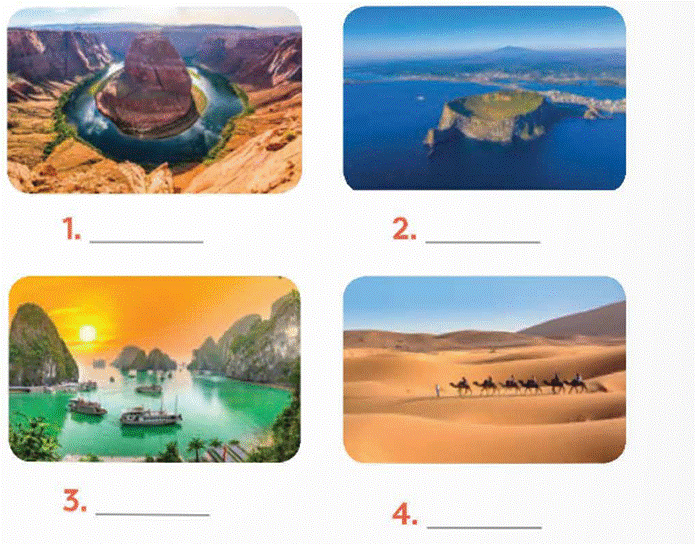
Answer:
1. Grand Canyon (hẻm núi lớn)
2. Jeju Island (đảo Jeju)
3. Ha Long Bay (vịnh Hạ Long)
4. The Sahara Desert. (sa mạc Sahara)
4. Mai, Phong, and Mark are talking about the natural wonders they have visited. Read and decide which wonder in 3 each of them is talking about.
Μαi It's an island located off the coast of South Korea. It was formed by the eruption of an underwater volcano about 2 million years ago. It ranks among the world's seven natural wonders. Every year, it receives millions of tourists 1__________ |
Phong Visiting this place is a wonderful experience for adventurers like me. It's the largest desert on Earth, covering over 9 million square kilometers. You can see red sand and beautiful sand dunes everywhere. You can also see plant life and even nomadic men with their camels.
2___________ |
Mark It's a UNESCO World Heritage Site and one of the greatest tourist attractions of the USA! It's 446 kilometres long, up to 29 kilometres wide, and over 1,800 metres deep. Some people say that it's the most magnificent landscape on Earth. 3____________ |
Answer:
1. Mai is talking about Jeju Island in South Korea.
2. Phong is talking about the Sahara Desert.
3. Mark is talking about the Grand Canyon in the USA
5. Work in groups.
Discuss and decide which place in 3 and 4 your group wants to visit. Explain the reasons why you want to visit it. Plan the things you want to do there.
Report your decision to the class
Answer:
Our group has decided to visit HaLong Bay because of some reasons:
- Natural Beauty: Ha Long Bay is renowned for its breathtaking natural scenery, with thousands of limestone karsts and isles rising from the emerald waters. The picturesque landscapes and serene surroundings offer a tranquil retreat from the hustle and bustle of daily life.
- Unique Activities: We're excited about the variety of activities available in Ha Long Bay, such as cruising through the limestone formations, exploring hidden caves and grottoes, kayaking in secluded lagoons, and visiting floating fishing villages. These experiences promise adventure and discovery.
- Cultural Richness: Besides its natural wonders, Ha Long Bay also boasts a rich cultural heritage. We look forward to learning about the local culture, interacting with the communities living in the bay, and savoring delicious seafood cuisine.
SKILL 1
READING
1. Work in groups. Look at the picture and answer the questions.
1. What do you see in the picture?
2. What activities do you think visitors can do there?
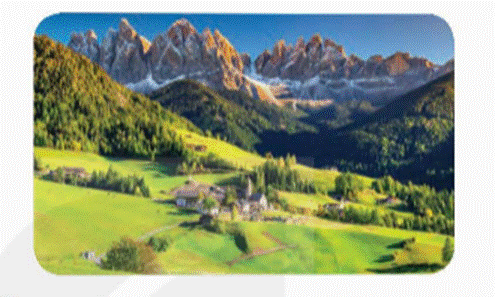
Answer:
1. I can see in the picture a village nestled in the Dolomites, a mountain range in northern Italy .
2. Some activities that visitors can do in the Dolomites: Hike the many trails that wind through the mountains, go rock climbing, bike on the many scenic roads and trails, walking in the road, go skiing or snowboarding in the winter
2. Read the text and match the highlighted words with their meanings or explanations.
The Dolomites - Paradise at Your Feet
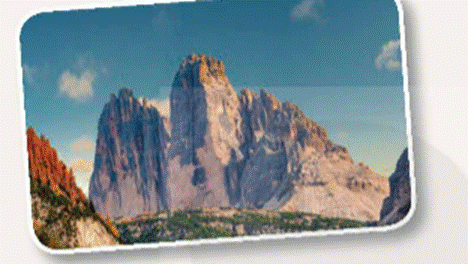
If you haven't decided on where to travel this holiday, consider the Dolomites! The Dolomites are a mountain range in Italy. It was recognised as a UNESCO World Heritage Site in 2009.
The Dolomites are part of the Alps, stretching from the Adige River to the Piave River valley. This mountain range has a total area of about 141,900 hectares. It has 18 peaks over 3,000 metres high. It is easy to get access to most parts of the Dolomites.
The Dolomites are a majestic site. They are widely regarded as being among the most attractive mountain landscapes in the world. There are steep rocky cliffs, sharp peaks, narrow and deep valleys, and white snow on the mountain top. Their natural scenery attracts tourists from many parts of the world.
The Dolomites are a popular place for winter skiing, mountain climbing, hiking, and cycling any time of the year. An annual bicycle race covering seven mountain passes on the Dolomites occurs in the first week of July. So do not hesitate to book a tour to the Dolomites to see and do these things for yourself!
Note: Dolomites /'dolǝmaits/
Words | Meaning/Explanation |
1. consider 2. peaks 3. majestic
4. occurs | a. impressive, magnificent b. happens c. to think about something carefully d. pointed tops, mountains |
Answer:
1. consider c. to think about something carefully
2. peaks d. pointed tops, mountains
3. majestic a. impressive, magnificent
4. occurs b. Happens
3. Read the text again and choose the correct answer to each question.
1. According to the text, the Dolomites are a_________________
A. river
B. work of art
C. mountain range
D. valley
2. The word "hesitate" in the last sentence of the text is closest in meaning to__________
A. be unhappy
B. be indecisive
C. hurry
D. decide
3. Which of the following is NOT true, according to the text?
A. The Dolomites are in Italy.
B. You can get access to the Dolomites easily.
C. The Dolomites are a World Heritage Site.
D. You can cycle in the Dolomites only in July.
4. This text is probably taken from
A. a travel brochure
B. a science journal
C. a novel
D. an arts magazine
Answer:
1. C - According to the text, the Dolomites are a mountain range. (Explain: the Dolomites as a mountain range in Italy.)
2. B- The word "hesitate" in the last sentence of the text is closest in meaning to be indecisive. (Explain: Hesitate means to pause or delay in making a decision due to uncertainty.)
3. D - Which of the following is NOT true, according to the text? You can cycle in the Dolomites only in July. (Explain: The Dolomites are a popular place for winter skiing, mountain climbing, hiking, and cycling any time of the year. An annual bicycle race covering seven mountain passes on the Dolomites occurs in the first week of July.)
4. A - This text is probably taken from a travel brochure.
SPEAKING
4. Work in pairs. Ask and answer about the Great Barrier Reef, using the facts below. Then prepare a short talk about it.
World Heritage Site (1981)
Location: the Coral Sea, Australia
Total area: about 334,400 km²
Over 400 different types of corals
Tourists' activities: coral watching, sailing, scuba diving
Answer:
A: When was the Great Barrier Reef designated as a World Heritage Site?
B: It was designated as a World Heritage Site in 1981.
A: Where is the Great Barrier Reef located?
B: The Great Barrier Reef is located in the Coral Sea, off the coast of Australia.
A: How large is the total area of the Great Barrier Reef?
B: The total area of the Great Barrier Reef is about 334,400 square kilometers.
A: How many different types of corals are there in the Great Barrier Reef?
B: There are over 400 different types of corals in the Great Barrier Reef.
A: What activities can tourists enjoy at the Great Barrier Reef?
Short Talk:
The Great Barrier Reef is a remarkable natural wonder located in the Coral Sea, off the coast of Australia. It was designated as a World Heritage Site in 1981 due to its incredible biodiversity and ecological significance. Spanning an impressive total area of about 334,400 square kilometers, it is the largest coral reef system in the world. The reef boasts over 400 different types of corals, making it a vibrant and diverse underwater ecosystem.
Tourists visiting the Great Barrier Reef can indulge in a variety of activities that showcase its natural beauty. Coral watching allows visitors to appreciate the stunning array of coral species and the marine life that inhabits them. Sailing provides a serene and picturesque way to explore the vastness of the reef, while scuba diving offers an immersive experience, allowing divers to get up close with the colorful corals and the myriad of fish and other sea creatures. The Great Barrier Reef is not only a treasure for Australia but a heritage for the entire world, emphasizing the importance of its preservation and sustainable tourism practices.
5. Work in groups. Introduce the Great Barrier Reef to the class
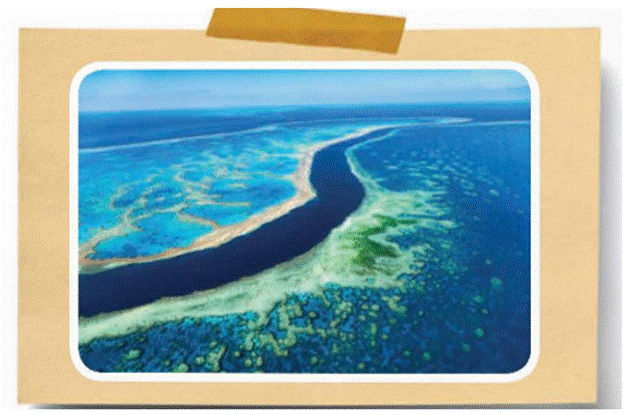
Answer:
The Great Barrier Reef is a remarkable natural wonder located in the Coral Sea, off the coast of Australia. It was designated as a World Heritage Site in 1981 due to its incredible biodiversity and ecological significance. Spanning an impressive total area of about 334,400 square kilometers, it is the largest coral reef system in the world. The reef boasts over 400 different types of corals, making it a vibrant and diverse underwater ecosystem.
Tourists visiting the Great Barrier Reef can indulge in a variety of activities that showcase its natural beauty. Coral watching allows visitors to appreciate the stunning array of coral species and the marine life that inhabits them. Sailing provides a serene and picturesque way to explore the vastness of the reef, while scuba diving offers an immersive experience, allowing divers to get up close with the colorful corals and the myriad of fish and other sea creatures. The Great Barrier Reef is not only a treasure for Australia but a heritage for the entire world, emphasizing the importance of its preservation and sustainable tourism practices.
SKILL 2
LISTENING
1. Write a word from the box under the correct picture
|
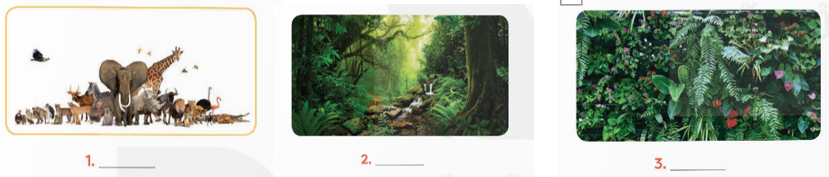
Answer:
1 - fauna (động vật)
2- Rainforest (Rừng nhiệt đới)
3- Flora - (thực vật)
2. Listen to the passage and tick (✔) the things you hear.
- Green lung of the world
- Causing climate change
- Threats to biodiversity
- Planting trees
- Exploring ecosystems
- Protecting wildlife
Answer:
✔ Green lung of the world
✔ Threats to biodiversity
✔ Planting trees
✔ Protecting wildlife
3. Listen again and choose the correct answers.
1. The Amazon Rainforest is rich in___________
A. rivers and forests
B. flora and fauna
C. climate change
2. The threats to biodiversity are deforestation, fires, and extinction of rare animal__________
A. flora
B. fauna
C. species
3. Which activity can governments and communities do to restore damaged
ecosystems?
A. Punishing loggers.
B. Establishing parks.
C. Putting out fires.
4. Governments are encouraging people to live in a way that doesn't hurt the.
A. environment
B. animals
C. marine life
Answer:
1 – B ; 2 – C ; 3 – B ; 4 – A
WRITING
4. Work in pairs. Brainstorm ideas about a natural wonder / beautiful landscape in your area. Ask and answer about it, using the following prompts.
- Name of the natural wonder / beautiful landscape
- Location
- Natural features
- Activities
- Ways to protect it
Answer:
A: Do you know any natural wonder landscapes in your area?
B: Yes, I know 1 place, it called Ba Na Hills
A: Where is Ba Na Hills located?
B: Ba Na Hills is located in Da Nang, Vietnam.
A: What are some of the natural features of Ba Na Hills
B: Ba Na Hills is known for its lush greenery, cool climate, and the Golden Bridge, which is supported by giant stone hands. It also has beautiful gardens and breathtaking views from the mountaintop.
A: That sounds amazing. What activities can people do there?
B: Visitors can take a cable car ride to the top, explore the French Village, visit the gardens, and enjoy the amusement park. Hiking and taking in the panoramic views are also popular activities.
A: How can we protect Ba Na Hills and its natural beauty?
B: We can protect Ba Na Hills by promoting eco-friendly tourism, ensuring that visitors do not litter, maintaining the trails and facilities, and supporting conservation efforts to preserve the flora and fauna.
5. Write a paragraph (100-120 words) about the natural wonder/beautiful landscape you have talked about in 4.
You can start your paragraph as follows:

Answer:
There is a beautiful location near my house called Ba Na Hills. Ba Na Hills, located in Da Nang, Vietnam, is a breathtaking natural wonder known for its lush greenery and cool climate. It features the iconic Golden Bridge, supported by giant stone hands, along with beautiful gardens and panoramic views from the mountaintop. Visitors can enjoy a scenic cable car ride, explore the charming French Village, and have fun at the amusement park. Hiking and nature walks are also popular activities. To protect this natural beauty, promoting eco-friendly tourism is essential. Encouraging visitors to avoid littering, maintaining trails and facilities, and supporting conservation efforts are crucial steps to preserve Ba Na Hills for future generations.
LOOKING BACK
VOCABULARY
1. Choose A, B, C, or D to indicate the correct answer to each question.
1. I'm sure you will be amazed by the___________of the Atacama Desert.
A. landscape
B. land
C. backdrop
D. territory
2. Can all of you ___________new ideas for improving our Geography Club?
A. explore
B. conserve
C. suggest
D. discover
3.__________ is all the animals living in an area or in a period of history.
A. Species
B. Nature
C. Flora
D. Fauna
4. He_________before sending the e-mail because he was afraid that she would not
like it.
A. possessed
B. hesitated
C. accepted
D. admired
5. When he reached the mountain _________he found it covered with countless flags
of climbers before him.
A. peak
B. bottom
C. height
D. sicle
Answer:
1. A. landscape - I'm sure you will be amazed by the landscape of the Atacama Desert.
2. C. suggest - Can all of you suggest new ideas for improving our Geography Club?
3. D. Fauna - Fauna is all the animals living in an area or in a period of history.
4. B. hesitated - He hesitated before sending the e-mail because he was afraid that she would not like it.
5. A. peak - When he reached the mountain peak he found it covered with countless flags of climbers before him.
2. Give the correct forms of the words in brackets to complete the sentences.
1. Natural wonders are one of our country's valuable (possess)_________
2. Our Central Highlands has (charm)_______ sights: natural and wild landscapes amid magnificent forests.
3. The Gobi is a very large desert (locate)_________ in China and Mongolia.
4. The Amazon River was named by the Spanish (explore)______Francisco de Orellana.
5. You don't need special (permit)_________to visit Cuc Phuong National Park.
Answer:
1. possessions - Natural wonders are one of our country's valuable possessions.
2. charming - Our Central Highlands has charming sights: natural and wild landscapes amid magnificent forests.
3. located - The Gobi is a very large desert located in China and Mongolia.
4. explorer - The Amazon River was named by the Spanish explorer Francisco de Orellana.
5. permission - You don't need special permission to visit Cuc Phuong National Park.
GRAMMAR
3. Underline the correct answers to complete the sentences.
1. Minh asked me did I know/ if I knew much about the Amazon Rainforest.
2. I asked Frankie if he was living / he is living near the Grand Canyon.
3. Trang said / wanted to know whether Tom wanted to visit Mount Fansipan.
4. My mum told / asked me whether I was studying or playing then.
5. The teacher asked Liam whether he wanted / did he want to visit Son Doong Cave.
Answer:
1. if I knew - Minh asked me if I knew much about the Amazon Rainforest.
2. he was living - I asked Frankie if he was living near the Grand Canyon.
3. wanted to know - Trang wanted to know whether Tom wanted to visit Mount Fansipan.
4. asked - My mum asked me whether I was studying or playing then.
5. whether he wanted - The teacher asked Liam whether he wanted to visit Son Doong Cave.
4. Rewrite the sentences in reported questions.
1. "Do you know about the Shilin Stone Forest in China?" she asked me.
=>
2. "Do you enjoy having virtual tours of these natural wonders?" Mi said to Nam.
=>
3. "Are you interested in the natural wonders of your country?" David asked me.
=>
4. "Can you manage to meet the deadline for the project?" I said to Linh.
=>
5. "Will you visit some natural wonders overseas this summer?" she said.
=>
Answer:
1. "Do you know about the Shilin Stone Forest in China?" she asked me.
=> She asked me if I knew about the Shilin Stone Forest in China.
2. "Do you enjoy having virtual tours of these natural wonders?" Mi said to Nam.
=> Mi asked Nam if he enjoyed having virtual tours of these natural wonders.
3. "Are you interested in the natural wonders of your country?" David asked me.
=> David asked me if I was interested in the natural wonders of my country.
4. "Can you manage to meet the deadline for the project?" I said to Linh.
=> I asked Linh if she could manage to meet the deadline for the project.
5. "Will you visit some natural wonders overseas this summer?" she said.
=> She asked if I would visit some natural wonders overseas that summer.
PROJECT
Natural Wonders of the World
Work in groups.
1. Find a natural wonder.
Answer:
- HaLong Bay (Vịnh Hạ Long)
- Ha Long Bay is a stunning natural wonder located in northern Vietnam.
2. Collect pictures of it.
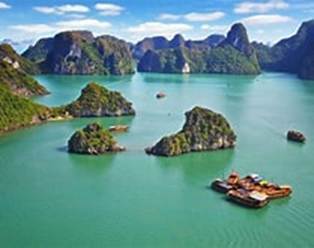
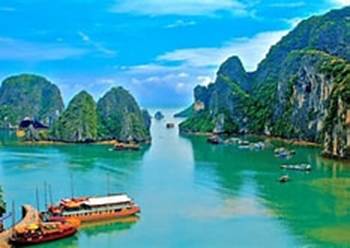
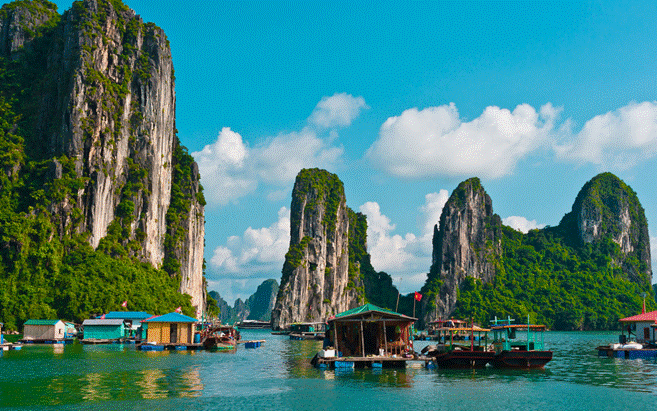
3. Look for information about:
- its location
- its special features / attractions
- threats to its existence
- ways / plans to preserve it
Answer:
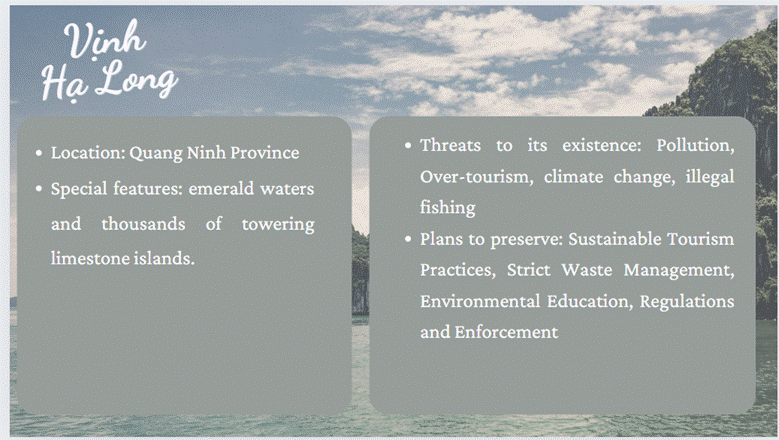
- Its location: Ha Long Bay is situated in Quang Ninh Province, in the northeastern part of Vietnam. It lies in the Gulf of Tonkin and is approximately 170 kilometers east of Hanoi, the capital city of Vietnam.
- Its special features / attractions: Ha Long Bay is renowned for its emerald waters and thousands of towering limestone islands topped with rainforests. The bay features numerous caves, grottoes, and islets, each with unique shapes and fascinating legends. Some of the most famous attractions include: Thien Cung Cave, Dau Go Cave (Wooden Stakes Cave), Sung Sot Cave,...
- Threats to its existence: Ha Long Bay faces several threats that endanger its pristine environment and biodiversity:
Pollution: From tourist boats, nearby industrial activities, and waste from fishing villages.
Over-tourism: High numbers of visitors can lead to habitat destruction and increased waste.
Climate Change: Rising sea levels and changing weather patterns impact the delicate ecosystem.
Illegal Fishing: Depletes marine life and disrupts the ecological balance.
- Ways / plans to preserve it: Efforts to preserve Ha Long Bay include:
Sustainable Tourism Practices: Encouraging responsible tourism to minimize environmental impact.
Strict Waste Management: Implementing measures to manage and reduce waste effectively.
Environmental Education: Raising awareness among locals and tourists about the importance of conservation.
Protected Areas: Establishing marine protected areas to safeguard biodiversity.
Regulations and Enforcement: Strengthening laws and regulations to prevent illegal activities and pollution.
4. Make a poster about it.
Answer:
5. Give a presentation about it to the class.
Answer:
Ha Long Bay, located in Quang Ninh Province in northeastern Vietnam, is a stunning natural wonder known for its emerald waters and thousands of towering limestone islands topped with rainforests. Famous attractions like Thien Cung Cave, Dau Go Cave,... draw tourists from around the world. However, Ha Long Bay faces threats from pollution, over-tourism, climate change, and illegal fishing, all of which endanger its pristine environment and biodiversity. To preserve this UNESCO World Heritage Site, efforts include promoting sustainable tourism, implementing strict waste management practices, raising environmental awareness, establishing protected areas, and enforcing regulations. By taking these measures, we can ensure that Ha Long Bay remains a breathtaking and unspoiled natural wonder for future generations to enjoy.
Tài liệu cùng môn học
Tài liệu khác
- Trắc nghiệm tiếng anh 2 Family and Friends
- Trắc nghiệm tiếng anh 2 Explore our world
- Trắc nghiệm tiếng anh 3 Family and Friends
- Trắc nghiệm tiếng anh 3 Explore our world
- Trắc nghiệm tiếng anh 4 Family and Friends
- Trắc nghiệm tiếng anh 4 Global Success
- Trắc nghiệm tiếng anh 4 Explore our world
- Trắc nghiệm tiếng anh 5 Family and Friends
- => Xem nhiều môn hơn