Giải Tiếng Anh 9 kết nối: Unit 1 Local community
Hướng dẫn giải Tiếng Anh 9 kết nối tri thức: Giải Unit 1 Local community. Bài được giải chi tiết, rõ ràng, dễ hiểu. Bài giải giúp học sinh nắm vững kiến thức trong sách giáo khoa, rèn kĩ năng giải bài tập và có phương pháp học tập hiệu quả.
Nội dung chi tiết
UNIT 1: LOCAL COMMUNITY
GETTING STARTED
I really love where I live now
1. Listen and read.
Ann: Hi, Mi. Long time no see. How're you doing?
Mi: I'm fine, thanks. By the way, we moved to a new house in a suburb last month.
Ann: Oh, that's why I haven't seen you in the Reading Club very often.
Mi: Yes. We're still busy moving in, you know.
Ann: How's your new neighbourhood?
Mi: It's much bigger than our old one. The streets are wider, and there are fewer people.
Ann: What about the facilities?
Mi: It has all the things we need: shopping malls, parks, and hospitals. And there's a craft village near our house.
Ann: Great! How're your new neighbors?
Mi: They're nice. Last Sunday when I was looking for the way to the bus station, a lady came and showed me the way. I think we will get on with them.
Ann: That reminds me of the time our family moved to Viet Nam. We didn't know where to buy stuff for our house, and the new neighbours in the community gave us useful advice. I guess you like your new place.
Mi: Sure. I really love where I live now.
2. Read the conversation again. Fill in each blank with no more than TWO words from the conversation.
1. Mi's family moved to a new house in a suburb _______.
2. Her new neighborhood is bigger with wider streets and _______.
3. There is a _______ near Mi's house.
4. Mi thinks she will get on with her new _______.
5. People in Ann's community gave her family _______ on where to buy stuff.
Answer:
last month (Explain: By the way, we moved to a new house in a suburb last month)
fewer people (Explain: Ann: How's your new neighborhood? Mi: It's much bigger than our old one. The streets are wider, and there are fewer people)
craft village (Explain: There's a craft village near our house)
neighbours ( Explain: Ann: Great! How're your new neighbors? - Mi: They're nice. Last Sunday when I was looking for the way to the bus station, a lady came and showed me the way. I think we will get on with them)
useful advice ( Explain: We didn't know where to buy stuff for our house, and the new neighbors in the community gave us useful advice.)
3. Match each word or phrase with its definition
1. suburb | a. the people living in a particular area; the place where people live |
2. facilities | b. to make somebody remember or think about somebody or something |
3. community | c. to have a good relationship with somebody |
4. get on with | d. an area outside the center of a city |
5. remind sb of | e. the buildings, equipment, and services provided for a particular purpose |
Answer:
d (suburb - an area outside the center of a city)
e (facilities - the buildings, equipment, and services provided for a particular purpose)
a (community - the people living in a particular area; the place where people live)
c (get on with - to have a good relationship with somebody)
b (remind sb of - to make somebody remember or think about somebody or something)
4. Complete each sentence with a word or phrase from 3.
1. They don't live in the city center but in a _______ of Ha Noi.
2. I love our new neighborhood because we _______ the people here.
3. There are enough sports _______ for people of all ages in our local park.
4. Souvenirs _______ people _______ a place, an occasion, or a holiday.
5. The local _______ encourages us to protect the environment and keep our neighborhood clean.
Answer:
suburb (They don't live in the city center but in a suburb of Ha Noi)
get on with (I love our new neighborhood because we get on with the people here)
facilities (There are enough sports facilities for people of all ages in our local park)
remind…of… (Souvenirs remind people of a place, an occasion, or a holiday)
community ( The local community encourages us to protect the environment and keep our neighborhood clean)
5. QUIZ. What is the place? Do the following quiz.
1. People watch sports such as football there.
2. People go there for health check-ups.
3. Parents take their children there so that they can have fun.
4. Children learn to read and write there.
5. Visitors see objects from the past there.
Answer:
1. stadium (People watch sports such as football there.)
2. hospital/clinic (People go there for health check-ups)
3. amusement park (Parents take their children there so that they can have fun)
4. school (Children learn to read and write there)
5. museum (Visitors see objects from the past there)
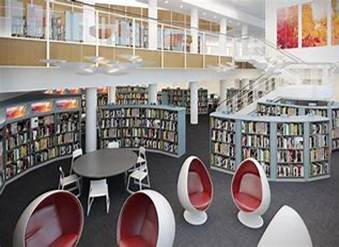
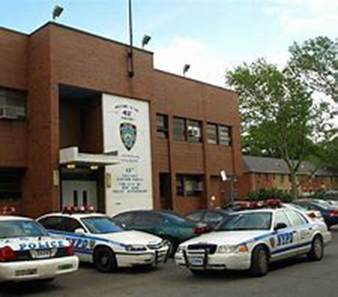
What are some other places in a neighbourhood you know?
Answer:
1. Museum

2. Park
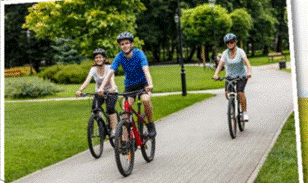
3. Market

4. Bank

5. Library
6. Police Station
A CLOSER LOOK 1
VOCABULARY
1. Match the community helpers with their responsibilities
1. police officer | a. puts in, checks, and repairs electrical wires and equipment |
2. garbage collector | b. puts out fires and saves people from dangerous fires |
3. electrician | c. protects people and property, makes people obey the law, prevents and solves crimes |
4. firefighter | d. delivers goods to people's houses or workplaces |
5. delivery person | e. takes people's rubbish away |
Answer:
1. c (police officer - protects people and property, makes people obey the law, prevents and solves crimes)
2. e (garbage collector - takes people's rubbish away)
3. a (electrician - puts in, checks, and repairs electrical wires and equipment)
4. b (firefighter - puts out fires and saves people from dangerous fires)
5. d (delivery person - delivers goods to people's houses or workplaces)
2. Write a word or phrase in the box under the correct picture.
Artisan handicraft pottery Speciality tourist attraction |
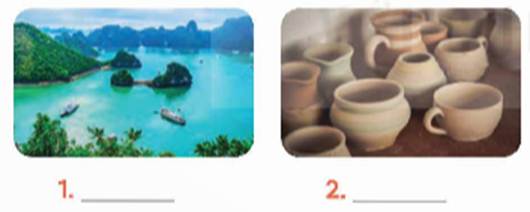
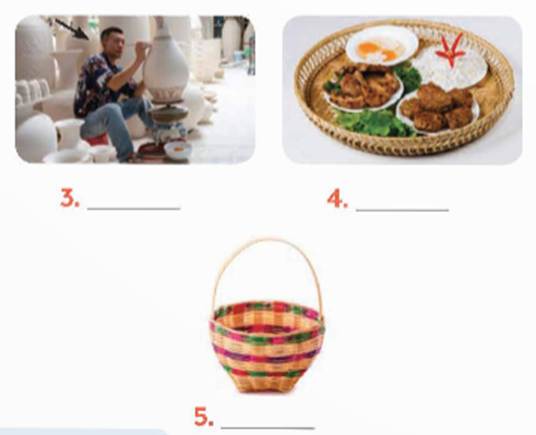
Answer:
1. tourist attraction (địa điểm du lịch)
2. pottery (đồ gốm)
3. artisan (thợ thủ công)
4. speciality food (món ăn đặc sản)
5. handicraft (đồ thủ công mỹ nghệ)
3. Fill in each blank with a word or phrase from the box
artisans electrician handicrafts speciality garbage collector |
1. Skilled local _______ made these beautiful flower vases.
2. The electrical wires in our neighbourhood broke down yesterday, so we had to call a(n) _______.
3. Bun cha, pho, and hu tieu are examples of famous Vietnamese _______.
4. The _______ in our street usually comes at 6 p.m. to take the rubbish away.
5. Tourists to Hoi An usually buy traditional _______ such as lanterns as souvenirs.
Answer:
1. artisans (Skilled local artisans made these beautiful flower vases.)
2. electrician (The electrical wires in our neighbourhood broke down yesterday, so we had to call a(n) electrician)
3. speciality (Bun cha, pho, and hu tieu are examples of famous Vietnamese speciality)
4. garbage collector (The garbage collector in our street usually comes at 6 p.m. to take the rubbish away.)
5. handicrafts (Tourists to Hoi An usually buy traditional handicrafts such as lanterns as souvenirs).
PRONUNCIATION
4. Listen and number the words you hear. Then listen again and repeat.
_______ pack
_______ kettle
_______ marry
_______ chart
_______ park
_______ cattle
_______ merry
_______ chat
Answer:
1 - chart
2 - merry
3 - pack
4 - cattle
5 - park
6 - chat
7 - kettle
8 - marry
5. Listen and practice the sentences. Underline the bold words with /æ/, circle the bold words with /a:/, and tick the bold words with /e/.
1. Thanks to garbage collectors, our streets are clean.
2. My grandmother is a well-known artist.
3. That bakery makes the best bread in our neighbourhood.
4. Do you know where to buy bamboo beds?
5. We sometimes go to the park to relax.
Answer:
1. - Thanks /θæŋks/
garbage /ˈɡɑː.bɪdʒ/
2. artist /ˈɑː.tɪst/
3. - That /ðæt/
bread /bred/
4. - bamboo /bæmˈbuː/
beds /bedz/
5. park /pɑːk/
relax /rɪˈlæks/
A CLOSER LOOK 2
GRAMMAR
Question words before to-infinitives
1. Fill in each blank with a suitable question word.
1. I don't know _______ to deal with this problem.
2. My sister wondered _______ to buy the best cakes.
3. Could you tell me _______ to do to get on well with my new neighbours?
4. They asked _______ to take out the rubbish, at 5 or 6 p.m.
5. He can't decide _______ to give his books to.
Answer:
1. how ( I don't know how to deal with this problem)
2. where (My sister wondered where to buy the best cakes)
3. what (Could you tell me what to do to get on well with my new neighbours)
4. when (They asked when to take out the rubbish, at 5 or 6 p.m)
5. who (He can't decide who to give his books to)
2. Rewrite the sentences using question words + to-infinitives.
1. I don't know how I can get to the swimming pool.
2. They are wondering where they can buy traditional handicrafts.
3. She asked what she should give to her new neighbour at his house-warming party.
4. I can't decide who I should ask for advice.
5. Could you tell me when I have to pay the water bill?
Answer:
1. I don't know how to get to the swimming pool.
2. They are wondering where to buy traditional handicrafts.
3. She asked what to give to her new neighbour at his house-warming party.
4. I can't decide who to ask for advice.
5. Could you tell me when to pay the water bill?
3. Match each phrasal verb with its meaning.
1. look around | a. to be responsible for somebody/something |
2. come back | b. to walk around a place to see what is there |
3. hand down | c. to get information about somebody or something |
4. find out | d. to return to a place |
5. take care of | e. to give something to somebody younger than you |
Answer:
1. b (look around - to walk around a place to see what is there)
2. d (come back - to return to a place)
3. e (hand down - to give something to somebody younger than you)
4. c (find out - to get information about somebody or something)
5. a (take care of - to be responsible for somebody/something)
4. Complete each sentence using the correct form of a phrasal verb in 3.
1. We _______ from our home town last Saturday.
2. The artisans in my village usually _______ their skills to their eldest children.
3. If you want to _______ about our community, you can go to the local museum.
4. When we aren't at home, our neighbour _______ our cats.
5. Whenever I go to a new place, I spend time _______.
Answer:
1. came back (We came back from our home town last yesterday)
2. hand down ( The artisans in my village usually hand down their skills to their eldest children)
3. find out (If you want to find out about our community, you can go to the local museum)
4. takes care of (When we aren't at home, our neighbour takes care of our cats)
5. looking around (Whenever I go to a new place, I spend time looking around)
5. GAME. Find someone who...
Ask as many friends as you can the following questions. Then write their names in the table if they say "yes"
| Name |
1. Do your parents often come back late at night? |
|
2. Do you get on with all your classmates? |
|
3. Do you take care of your younger brother or sister? |
|
4. Do you want to cut down on fast food? |
|
5. Do you enjoy going out on weekends? |
|
Answer:
| Name |
1. Do your parents often come back late at night? | Ex: Nam, Linh, Thảo |
2. Do you get on with all your classmates? | Ex: Hà, Mai, Chi |
3. Do you take care of your younger brother or sister? | Ex: Ngọc, Lan, Nhi |
4. Do you want to cut down on fast food? | Ex: Minh, Trang, Hiếu |
5. Do you enjoy going out on weekends? | Ex: Dũng, Đức |
COMMUNICATION
Everyday English
Seeking help and responding
1. Listen and read the conversations. Pay attention to the highlighted parts
1. - Mai: Do you mind carrying this suitcase for me? - Tom: Not at all. |
2.
|
2. Work in pairs. Ask for help and respond in the following situations.
1. You want your friend to lend you her pen.
2. You want your neighbour to tell you the name of the new garbage collector.
3. You want to ask your neighbour where to buy the best fruits and vegetables.
Answer:
1.
You: Do you mind lending me your pen?
Friend: Not at all. Here you are
2.
You: Could you tell the name of the new garbage collector?
Friend: Sure. His name’s Dũng
3.
- You: Could you tell me where to buy the best fruits and vegetables in our area?
- Friend: Sure. There’s a shop in Nguyen Trai Street.
3. Do you know the place in each picture?
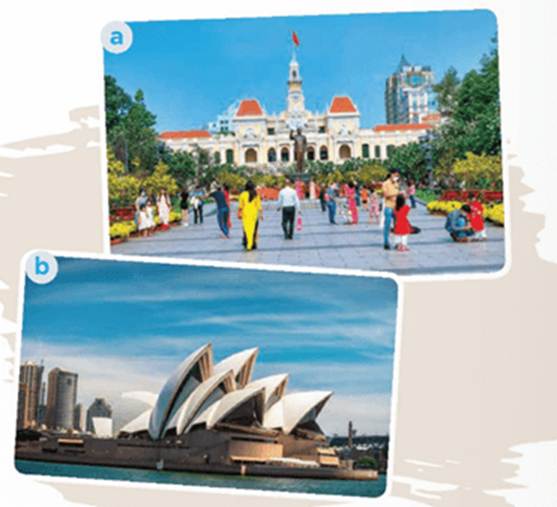
Answer:
a, Nguyen Hue Pedestrian Street (Ho Chi Minh City, Viet Nam)
b, Sydney Opera House (Australia)
4. Listen to Binh and Mira talking about a place of interest in their community. Fill in each blank with no more than TWO words and/or a number
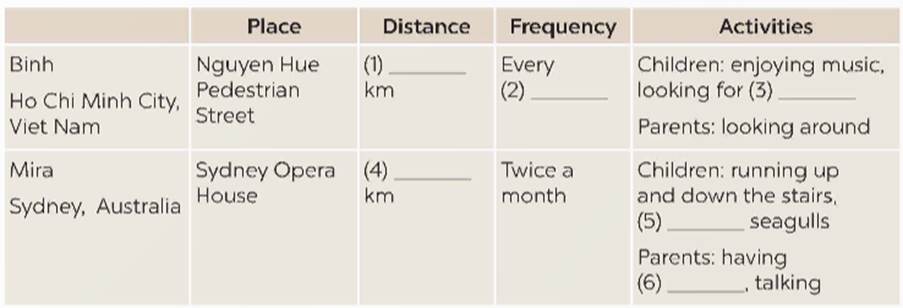
Answer:
1. one / 1 | 2. weekend | 3. favourite books |
4. five / 5 | 5. feeding | 6. a drink |
5. Work in pairs. Ask and answer about your favourite places of interest. Use the questions below
- What is your favourite place of interest?
- How far is it from your house?
- How often do you go to that place?
- What do you do there?
Then tell the class about your partner's favourite place of interest.
Answer:
My favourite place of interest is theThống Nhất park. It’s about 2 kilometers from their house, and they go there about three times a week with my mother, sister or friend. They usually jog, do some exercises and sometimes just cycle around the park and enjoy the fresh air there.
SKILL 1
READING
1. Work in pairs. Answer the questions.
1. What can you see in each picture?
2. Do you know any place where people make the thing(s) in each picture?
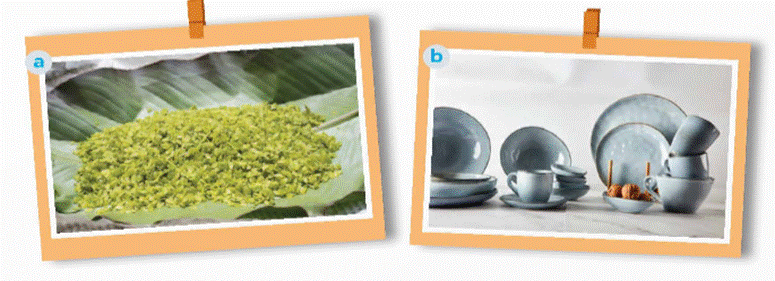
Answer:
1.
a) In the first picture (a), you can see "Cốm," which is young sticky rice flakes, a traditional Vietnamese dish.
b) In the second picture (b), you can see pottery including plates, cups, and bowls.
2.
a) Cốm is traditionally made in various places in Vietnam, and Vong Village in Hanoi is one of the most famous locations for producing this delicacy.
b) Pottery is common production made in Bát Tràng, a village in Hanoi, Vietnam.
2. Read the brochure introducing different places with special products. Match each highlighted word with its definition.
Vong, a small village in Ha Noi, is famous for a speciality food: com (young sticky rice flakes). To make com, artisans follow a series of steps. They preserve the techniques by passing them down to their sons. In the past, people made com by hand, but now they use machines for some steps to shorten the process. They wrap the final product in two layers of leaves to preserve its fragrance before selling it to consumers. Com Lang Vong is well known in Viet Nam as a speciality of HaNoi autumn.
Denby is a village in the county of Derbyshire, England. It is the home of the famous Denby Pottery, which is made from the finest local clay. Going around the village, we can see artisans hand-craft pottery collections. They still use some of the original techniques passed down through generations. In Denby products, we can see their beauty andfunction which make them world-famous. Today Denby is also a tourist attraction. Visitors can make pottery in workshops or find out about the history of pottery in the museum.
1. preserve | a. existing since the beginning |
2. shorten | b. to keep something as it is |
3. fragrance | c. to make something shorter |
4. original | d. a special purpose of a thing |
5. function | e. a pleasant smell |
Answer:
1. b ( preserve - to keep something as it is)
2. c (shorten - to make something shorter)
3. e (fragrance - a pleasant smell)
4. a (original - existing since the beginning
5. d (function - a special purpose of a thing)
3. Read the brochure again. Decide which place each detail below belongs to.
In which place...? | Vong | Denby |
1. people make the speciality from local material
|
|
|
2. people make the product from plants
|
|
|
3. people make the product with some traditional techniques |
|
|
4. the product is famous worldwide |
|
|
5. the product symbolises a season |
|
|
Answer:
1. Denby ( Explain: It is the home of the famous Denby Pottery, which is made from the finest local clay)
2. Vong ( Explain: Vong, a small village in Ha Noi, is famous for a speciality food: com (young sticky rice flakes))
3. Denby (Explain: They still use some of the original techniques passed down through generations.)
4. Denby (Explain: In Denby products, we can see their beauty and function which make them world-famous)
5. Vong (Explain: Com Lang Vong is well known in Vietnam as a speciality of Ha Noi autumn)
SPEAKING
4. Work in pairs. Ask and answer about a speciality in your neighbourhood, your hometown, or the area you know. Use the questions below.
1. What speciality is it?
2. What do people make it from?
3. Do people make it in the traditional way?
4. What can people do with it?
5. Is it well known in only your country or around the world?
Answer:
1. It’s Bánh xèo, a Vietnamese savory pancake
2. It makes from rice flour, water, turmeric powder, and it’s usually filled with shrimp, pork, bean sprouts, and green onions
3. Yes, people still make it in the traditional way, using a hot skillet to fry the pancake until it’s crispy
4. People can eat it by wrapping it in rice paper or lettuce leaves along with fresh herbs, and dipping it in a special fish sauce
5. It’s well known with both Vietnamese and foreign visitors.
5. Work in groups. Give a short presentation about the speciality you discussed in 4.
Answer:
Bánh xèo, a Vietnamese savory pancake, is a beloved speciality made from rice flour, water, and turmeric powder, filled with shrimp, pork, bean sprouts, and green onions. Traditionally, it's cooked in a hot skillet until crispy. To enjoy Bánh xèo, pieces of the pancake are wrapped in rice paper or lettuce leaves with fresh herbs and dipped in a special fish sauce. This dish is well-known not only in Vietnam but also internationally, especially in areas with Vietnamese communities and restaurants. Bánh xèo's unique flavors and traditional preparation highlight the rich culinary heritage of Vietnam.
SKILL 2
LISTENING
1. Work in pairs. Discuss the questions
1. Who can you see in the pictures?
2. What are they doing?
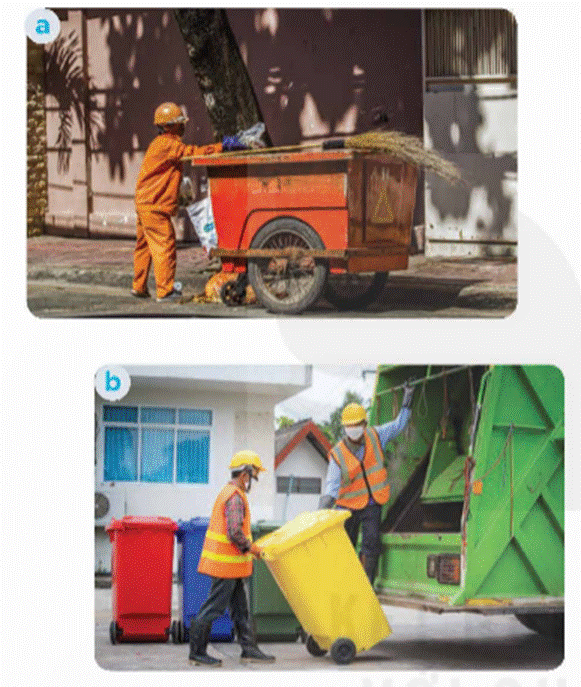
Answer:
1. In the picture, I can see garbage collectors.
2. They are cleaning streets, collecting garbage, and progressing garbage.
2. Listen and fill in each blank with no more than TWO words
1. The name of the writing contest is “My Favourite _______”.
2. Mr Vinh is a _______.
3. He is tall and _______.
4. He is hard-working, responsible, and _______.
Answer:
1. community helper
2. garbage collector
3. slim
4. friendly
3. Listen again and tick (V) T (True) or F (False)
| T | F |
1. Mr Vinh wears an orange uniform. |
|
|
2. He arrives at Mi's neighbourhood at 9 p.m. every day. |
|
|
3. He instructs people to put rubbish in two types of bins. |
|
|
4. He shares information about his work and the importance of sorting rubbish.
|
|
|
Answer:
1 – F ; 2 – F ; 3 – T ; 4 – T
WRITING
4. Work in pairs. Choose a community helper you like and answer the following questions.
- What is his/her job?
- What does he/she look like?
- What is he/she like?
- What does he / she do for the community?
- How do you feel about him/her?
Answer:
A: What is his/her job?
B: He is a police officer.
A: What does he/she look like?
B: Police officers typically wear uniforms and carry firearms or other equipment such as handcuffs and radios. He may have a confident and authoritative presence, reflecting hisrole in maintaining law and order.
A: What is he/she like?
B: He is courageous, vigilant, and committed to upholding justice and protecting the public. He undergoes rigorous training to enforce laws, investigate crimes, and ensure the safety of individuals and communities.
A: What does he/she do for the community?
B: He plays a crucial role in maintaining peace and order in our community. He responds to emergencies, patrol neighborhoods, and engage with residents to build trust and foster positive relationships.
A: How do you feel about him/her?
B: I have great respect for police officers and appreciate the sacrifices they make to keep us safe. Their dedication to serving and protecting others is commendable, and they deserve our support and gratitude.
5. Write a paragraph (about 100 words) about your favorite community helper
Answer:
My favorite community helper is a police officer. He typically wears uniforms and carries firearms or other equipment such as handcuffs and radios. He is a dedicated, brave, and quick-thinking individual, reflecting their role in maintaining law and order. He undergoes rigorous training to enforce laws, investigate crimes, and ensure the safety of individuals and communities. He plays a crucial role in maintaining peace and order in our community. He responds to emergencies, patrol neighborhoods, and engage with residents to build trust and foster positive relationships. I have great respect for police officers and appreciate the sacrifices they make to keep us safe. Their dedication to serving and protecting others is commendable, and they deserve our support and gratitude.
LOOKING BACK
VOCABULARY
1. Write a word or phrase for each description below.
1. This person delivers goods to your house
2. This person stops fires from burning.
3. People visit this place for pleasure usually while they are on holiday.
4. People make these objects out of clay.
5. This person makes things with his/her hands.
Answer:
1. Delivery person (This person delivers goods to your house)
2. Firefighter (This person stops fires from burning.)
3. Tourist destination/ Tourist attraction (People visit this place for pleasure usually while they are on holiday.)
4. Pottery (People make these objects out of clay.)
5. Artisan (This person makes things with his/her hands.)
2. Circle the correct word or phrase to complete each sentence.
1. The villagers (preserve / shorten) their traditional weaving techniques.
2. Com Lang Vong has a special (fragrance / function), so it is very popular.
3. Our (firefighters / police officers) help keep law and order in our community.
4. Spring rolls are the (speciality food / fast food) I like best.
5. My home town is famous for (handicrafts / objects), such as paper fans and lanterns.
Answer:
1. preserve (The villagers preserve their traditional weaving techniques
2. fragrance (Com Lang Vong has a special fragrance , so it is very popular.)
3. police officers (Our police officers help keep law and order in our community)
4. speciality food (Spring rolls are the speciality food I like best)
5. handicrafts (My home town is famous for handicrafts such as paper fans and lanterns.)
GRAMMAR
3. Choose the correct answer A, B, C, or D. (Chọn câu trả lời đúng A, B, C hoặc D.)
1. You should decide _______ to move to the new house.
A. while
B. when
C. where
D. who
2. Do you know _______ to sort rubbish?
A. who
B. which
C. how
D. what
3. She didn't tell me _______ to meet, in the library or in the lab.
A. how
B. when
C. what
D. where
4. Could you tell me _______ to do in this situation?
A. what
B. when
C. where
D. who
5. I wonder _______ to ask for advice, my teacher or my parents.
A. where
B. when
C. who
D. what
Answer:
1. B (You should decide when to move to the new house.)
2. C (Do you know how to sort rubbish?
3. D (She didn't tell me where to meet, in the library or in the lab.)
4. A (Could you tell me what to do in this situation)
5. C ( I wonder who to ask for advice, my teacher or my parents)
4. Rewrite each sentence so that it contains the phrasal verb in brackets. You may have to change the form of the verb.
1. In some villages, people reduce the number of steps to make the handicraft. (cut down on)
2. My grandparents gave the skills to my parents. (hand down)
3. In their community, the eldest child is usually responsible for his or her parents. (take care of)
4. Before we go to a new place, we always get information about it. (find out)
5. They have a good relationship with all neighbours. (get on with)
Answer:
1. In some villages, people cut down on the number of steps to make the handicraft.
2. My grandparents handed down the skills to my parents.
3. In their community, the eldest child usually takes care of his or her parents.
4. Before we go to a new place, we always find out information about it.
5. They get on with all their neighbors.
PROJECT
What to change in our community
1. Interview some students from your class or from other classes about the changes they want to make in their community. Use the questions below.
1. Where do you live?
2. What is good about your community?
3. What is not good about your community?
4. What changes do you want to make to improve your community?
Answer:
1. I live in a suburban neighborhood outside the city
2. Our neighborhood is very family-friendly, with excellent schools and safe streets
3. One issue we face is a lack of public transportation options. It makes it difficult for people without cars to get around, especially to access essential services or job opportunities.
4. I believe improving public transportation would benefit everyone. It would reduce traffic congestion, make our community more accessible, and lessen our environmental impact
2. Collect the answers. Use the table below.
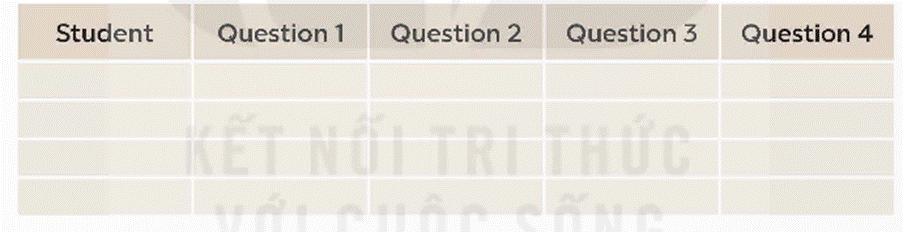
Answer:
Student | Question 1 | Question 2 | Question 3 | Question 4 |
1. | I live in a suburban neighborhood outside the city | Our neighborhood is very family-friendly, with excellent schools and safe streets | One issue we face is a lack of public transportation options. It makes it difficult for people without cars to get around, especially to access essential services or job opportunities.
| I believe improving public transportation would benefit everyone. It would reduce traffic congestion, make our community more accessible, and lessen our environmental impact |
3. Report your group's findings to your class. Use the following questions to guide your report
1. How many students did you interview?
2. What is good about their community?
3. What is not good about their community?
4. What changes do they want to make?
Answer:
1. There are 5 (6,7,8,....) students - Tùy thuộc vào tình hình thực tế trên lớp
2. Neighborhood is very family-friendly, with excellent schools and safe streets (Học sinh liệt kê, tóm tắt các ý chính của các bạn đã phỏng vấn)
3. Lack of public transportation options which makes it difficult for people without cars to get around, especially to access essential services or job opportunities. - (Học sinh liệt kê, tóm tắt các ý chính của các bạn đã phỏng vấn)
4. Improving public transportation reduce traffic congestion, make our community more accessible, and lessen our environmental impact (Học sinh liệt kê, tóm tắt các ý chính của các bạn đã phỏng vấn).
Tài liệu cùng môn học
Tài liệu khác
- Trắc nghiệm tiếng anh 2 Family and Friends
- Trắc nghiệm tiếng anh 2 Explore our world
- Trắc nghiệm tiếng anh 3 Family and Friends
- Trắc nghiệm tiếng anh 3 Explore our world
- Trắc nghiệm tiếng anh 4 Family and Friends
- Trắc nghiệm tiếng anh 4 Global Success
- Trắc nghiệm tiếng anh 4 Explore our world
- Trắc nghiệm tiếng anh 5 Family and Friends
- => Xem nhiều môn hơn