Giải tiếng anh 11 Friends Global: Unit 3C The body's limits
Hướng dẫn giải tiếng anh 11 Friends Global: Giải Unit 3C The body's limits. Bài được giải chi tiết, rõ ràng, dễ hiểu. Bài giải giúp học sinh nắm vững kiến thức trong sách giáo khoa, rèn kĩ năng giải bài tập và có phương pháp học tập hiệu quả.
Nội dung chi tiết
Listening
1. SPEAKING Describe and compare the photos. What are the similarities and differences between the activities? Use the words below to help you.
(Mô tả và so sánh các bức ảnh. Những điểm tương đồng và khác biệt giữa các hoạt động là gì? Sử dụng các từ dưới đây để giúp bạn)
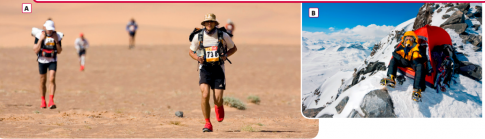
become dehydrated climber desert
food and water frostbite high altitude oxygen tent
Answer:
| Picture A | Picture B |
| become dehydrated; desert; food and water; oxygen | climber; food and water; frostbite; high altitude; oxygen; tent |
Listening Strategy
Some listening tasks may involve listening out for numbers, dates and measurements. Make sure you know how to pronounce these so that you can identify the information when you hear it.
2. Read the Listening Strategy. Then try to say the numbers and measurements below. Listen and check.
(Đọc Chiến lược nghe. Sau đó cố gắng nói các con số và phép đo dưới đây. Nghe và kiểm tra)
Large numbers: 4,500 100,000 250,000 2.5 million
Small numbers: 0 0.6 0.04 2.08
Years: 1500 1535 2000 2015 2150 the 1980s
Fractions: 1⁄2 1⁄3 1⁄4 1⁄5 1⁄10 3⁄8 12⁄3
Percentages: 50% 57%
Ratios and ranges: 2:1 10:1 aged 18 - 25 from 0 - 100 in 3.1 seconds
Temperature: -40℃ 0℃ 5℃ 15℃
Answer:
HS tự thực hiện.
3. Read and listen to the article. Complete the article with numbers and measurements from exercise 2.
(Đọc và nghe bài viết. Hoàn thành bài viết với các số và phép đo từ bài tập 2)
There are many amazing stories of human survival, but actually our bodies are very fragile and do not cope well with extremes. Polar explorers can cope with temperatures of (1) ____________, but only if they keep warm. Most people will collapse if their body temperature drops by only (2) ____________ and if it drops by (3) ____________, they'll die. Heat can be just as dangerous. Temperatures of 35°C are safe, provided humidity is not above (4) ____________. High altitudes are dangerous too. We pass out when the pressure falls below (5) ____________ of normal atmospheric pressure. This happens at about (6) ____________ metres. Climbers can go higher because their bodies gradually get used to it, but no one survives for long at 8,000 metres. At high altitudes, lack of oxygen is another problem. At ground level, about (7) ____________ of the air is oxygen. If that falls below (8) ____________, we die.
Answer:
There are many amazing stories of human survival, but actually our bodies are very fragile and do not cope well with extremes. Polar explorers can cope with temperatures of (1) -40℃, but only if they keep warm. Most people will collapse if their body temperature drops by only (2) 2℃ and if it drops by (3) 4℃, they'll die. Heat can be just as dangerous. Temperatures of 35°C are safe, provided humidity is not above (4) 80%. High altitudes are dangerous too. We pass out when the pressure falls below (5) 60% of normal atmospheric pressure. This happens at about (6) 5,500 metres. Climbers can go higher because their bodies gradually get used to it, but no one survives for long at 8,000 metres. At high altitudes, lack of oxygen is another problem. At ground level, about (7) 21% of the air is oxygen. If that falls below (8) 6%, we die.
4. Listen to an interview with a scientist. Which of the people he talks about tested the body’s limits deliberately?
(Nghe cuộc phỏng vấn với một nhà khoa học. Ai trong số những người mà anh ấy nói đến đã cố tình kiểm tra giới hạn của cơ thể?)
Answer:
HS tự thực hiện.
5. Read the sentences aloud, paying attention to the numbers. Then listen again and decide whether the sentences are true or false. Write T or F and correct the false sentences.
(Đọc to các câu, chú ý đến các con số. Sau đó nghe lại và quyết định xem câu đó đúng hay sai. Viết T hoặc F và sửa những câu sai)
1. When a Russian space capsule had a major problem in 1971, the cosmonauts died in less than 30 seconds.
2. In 1966, a scientist passed out after 15 seconds ina vacuum.
3. The scientist passed out for 27 seconds.
4. In the 1960s, Randy Gardner stayed awake for more than 250 hours.
5. After staying awake for so long, Randy Gardner then slept for almost 50 hours.
Answer:
HS tự thực hiện.
6. PRONUNCIATION Listen and mark the words that are stressed in the sentences from exercise 5. Then practise saying the sentences yourself.
(Nghe và đánh dấu những từ được nhấn trọng âm trong các câu ở bài tập 5. Sau đó tự luyện nói các câu đó)
Answer:
HS tự thực hiện.
7. SPEAKING Discuss the questions in pairs.
(Thảo luận các câu hỏi theo cặp)
1. Have you ever been awake all night or most of the night? If so, when / where / why?
2. Have you ever felt very cold? If so, when / where / why?
3. Have you ever experienced high altitude? If so, when / where / why? How did you feel?
Answer:
1. Have you ever been awake all night or most of the night? If so, when / where / why?
I have been awake all night a few times, especially during college when I had to stay up to finish assignments or study for exams. The most memorable time was during a camping trip with friends when we stayed up all night talking and stargazing.
2. Have you ever felt very cold? If so, when / where / why?
Yes, I have felt very cold many times. The most memorable time was during a winter trip to Iceland. I was standing on a glacier, and the wind chill made the temperature feel like it was below zero degrees Celsius. I was wearing multiple layers of clothing, but I still felt cold.
3. Have you ever experienced high altitude? If so, when / where / why? How did you feel?
Yes, I have experienced high altitude while hiking in the Himalayas. I felt a bit dizzy and short of breath at first, but my body gradually adjusted to the altitude. The scenery was breathtaking, and the experience was unforgettable.
Tài liệu cùng môn học
Tài liệu khác
- Trắc nghiệm tiếng anh 2 Family and Friends
- Trắc nghiệm tiếng anh 2 Explore our world
- Trắc nghiệm tiếng anh 3 Family and Friends
- Trắc nghiệm tiếng anh 3 Explore our world
- Trắc nghiệm tiếng anh 4 Family and Friends
- Trắc nghiệm tiếng anh 4 Global Success
- Trắc nghiệm tiếng anh 4 Explore our world
- Trắc nghiệm tiếng anh 5 Family and Friends
- => Xem nhiều môn hơn