Giải tiếng anh 11 Friends Global: Unit 8E Verb patterns
Hướng dẫn giải tiếng anh 11 Friends Global: Giải Unit 8E Verb patterns. Bài được giải chi tiết, rõ ràng, dễ hiểu. Bài giải giúp học sinh nắm vững kiến thức trong sách giáo khoa, rèn kĩ năng giải bài tập và có phương pháp học tập hiệu quả.
Nội dung chi tiết
Word Skills
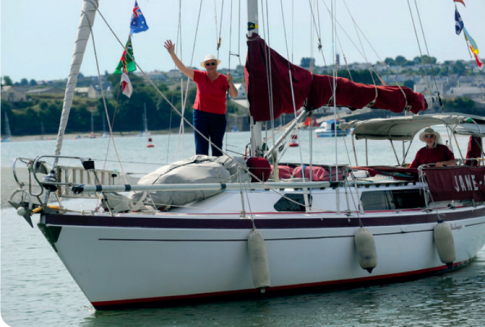
1. SPEAKING Describe the photo in pairs. What would be the best and worst things about going on a long trip on a boat like this?
(Mô tả bức ảnh theo cặp. Điều tốt nhất và tồi tệ nhất khi thực hiện một chuyến đi dài trên một chiếc thuyền như thế này là gì?)
Answer:
In the photo, we can see a woman standing on a boat wearing a red shirt and a white hat. There's also a man on the boat wearing a hat and sunglasses. The boat itself is visible in the background, and there is a close-up shot of it as well.
If we were to go on a long trip on a boat like this, there would be some great things about it, such as being able to see some beautiful scenery and exploring new places. It would also be a great opportunity to relax and spend time with friends or family. However, there are also some downsides, such as the potential for seasickness and discomfort from being on the boat for an extended period of time. Additionally, being out at sea for a long time could be isolating and lonely, which would be a significant downside.
2. Read the text. If you had been on a trip like this, would you have enjoyed it? Why? / Why not?
(Đọc văn bản. Nếu bạn đã có một chuyến đi như thế này, bạn có thích nó không? Tại sao? / Tại sao không?)
When Jane and Clive Green stopped working, they decided to go on a trip to Spain in their yacht. They expected to be away for about a week - but in the end, they continued travelling for sixteen years! After they reached Spain in their ten-metre yacht, they did not fancy returning home, so they kept sailing. After crossing the Atlantic, they stopped to explore the islands of the Caribbean for a while. Then they continued to sail west around the world. They ended up visiting 56 countries. They particularly enjoyed swimming with seals near the Galapagos Islands. However, they remembered feeling very anxious near Somalia because a boat. would not stop following them. It was actually a fishing boat with an injured man on board, so Jane offered to help him before they continued on their way. They managed to pay for their trip by selling their house back in the UK. They could afford to buy food, but they ran out of money onan island near Fifi. Fortunately, a local woman agreed to give them a box of fruit and vegetables in exchange for some clothes.
Answer:
I would have enjoyed a long trip on a boat like Jane and Clive Green's, there could be several reasons why. One reason might be the sense of adventure and excitement that comes with traveling to new places and exploring different cultures. Another reason could be the freedom and independence that comes with living on a boat and being able to sail wherever you want, without being tied down to a specific location or schedule. Additionally, the opportunity to swim with seals near the Galapagos Islands, as Jane and Clive Green did, could be a once-in-a-lifetime experience that would be very enjoyable. Finally, the challenge of facing difficulties, such as running out of money, and finding creative solutions to overcome them, like trading clothes for food with a local woman, could be a fulfilling and rewarding experience.
LEARN THIS! Verb patterns
a. Some verbs are followed by the infinitive of another verb.
Do you want to go out? / She hopes to be a teacher.
b. Some verbs are followed by the -ing form of another verb.
She always avoids paying. / I spend a lot of time texting.
c. Some verbs are followed by either an infinitive or an -ing form without any change in meaning.
d. Some verbs change their meaning depending on whether they are followed by an -ing form or an infinitive.
I didn't remember speaking to Jo. (I forgot that I had spoken to her.)
I didn't remember to speak to Jo. (I didn’t speak to her.)
e. The verbs let and make are followed by an infinitive without to.
She let me drive. / I made her laugh.
3. Read the Learn this! box. Then look at the highlighted verbs in the text above. Which verb pattern (a—e) does not have an example in the text?
(Đọc Learn this. Sau đó nhìn vào các động từ được đánh dấu trong văn bản trên. Mẫu động từ nào (a—e) không có ví dụ trong văn bản?)
stopped; decided; expected; continued; fancy; kept; stopped; continued; enjoyed; ended up; remembered; stop; offered; managed; afford; agreed
Answer:
The verb pattern (c) which is followed by either an infinitive or an -ing form without any change in meaning does not have an example in the text.
4. Add the verbs from the text to the table. Can you add any more verbs?
(Thêm các động từ từ văn bản vào bảng. Bạn có thể thêm động từ nào nữa không?)
| verb + infinitive | verb + -ing form | infinitive or -ing (same meaning) | infinitive or -ing (different meaning) |
| choose | not mind | like | remember |
Answer:
| verb + infinitive | verb + -ing form | infinitive or -ing (same meaning) | infinitive or -ing (different meaning) |
| choose, hope, want, afford, manage | not mind, avoid | like | remember, stop |
5. Compare sentences a and b. How is the meaning of the underlined verb different when followed by an -ing form or an infinitive?
(So sánh câu a và b. Ý nghĩa của động từ được gạch chân khác nhau như thế nào khi được theo sau bởi dạng -ing hoặc động từ nguyên thể?)
1. a I tried buying a present for her, but she was still angry with me.
b. I tried to buy a present for her, but everything was too expensive.
2. a. I stopped talking to my friend when the film started.
b. I stopped to talk to my friend when I met him in town.
3. a. After the film, they went on eating popcorn.
b. After the film, they went on to eat pizza.
4. a. I won't forget visiting the Taj Mahal - it was amazing.
b. I won't forget to visit the Taj Mahal - I've heard it's amazing.
Answer:
The meaning of the underlined verb is different when followed by an -ing form or an infinitive:
1. In sentence a, "tried buying" means that the speaker attempted to purchase a present for her, but it didn't have the desired effect (she was still angry).
In sentence b, "tried to buy" means that the speaker attempted to purchase a present, but couldn't because everything was too expensive.
2. In sentence a, "stopped talking" means that the speaker ended a conversation with a friend when the film started.
In sentence b, "stopped to talk" means that the speaker interrupted whatever they were doing to start a conversation with their friend.
3. In sentence a, "went on eating" means that they continued to eat popcorn after the film.
In sentence b, "went on to eat" means that they left the cinema and went to eat pizza.
4. In sentence a, "forget visiting" means that the speaker won't forget the experience of actually visiting the Taj Mahal.
In sentence b, "forget to visit" means that the speaker won't forget that they need to visit the Taj Mahal in the future.
6. Complete the text with the infinitive (with or without to) or -ing form of the verbs in brackets.
(Hoàn thành đoạn văn với dạng nguyên mẫu (có hoặc không có to) hoặc -ing của các động từ trong ngoặc)
In the UK, people who are travelling long distances by road often stop (1) ______________ (spend) the night at a roadside hotel. But David and Jean Davidson have spent 22 years (2) ______________ (live) in one. The Davidsons first tried (3) ______________ (visit) Travelodge hotels in 1985. They enjoyed (4) ______________ (be) there so much that gradually they stopped (5) ______________ (go) back to their own home. When a new Travelodge opened 65 km from Sheffield, they decided (6) ______________ (become) permanent guests. They like (7) ______________ (live) there because it is safe and convenient. The retired couple can afford (8) ______________ (pay) for their room because they book it weeks in advance and get a good rate. In fact, last year, they managed (9) ______________ (save) enough money for a three-week holiday abroad in the USA. And where did they end up (10) ______________ (stay)?
In an American Travelodge hotel, of course!
Answer:
In the UK, people who are travelling long distances by road often stop (1) to spend the night at a roadside hotel. But David and Jean Davidson have spent 22 years (2) living in one. The Davidsons first tried (3) to visit Travelodge hotels in 1985. They enjoyed (4) being there so much that gradually they stopped (5) going back to their own home. When a new Travelodge opened 65 km from Sheffield, they decided (6) to become permanent guests. They like (7) living there because it is safe and convenient. The retired couple can afford (8) to pay for their room because they book it weeks in advance and get a good rate. In fact, last year, they managed (9) to save enough money for a three-week holiday abroad in the USA. And where did they end up (10) staying?
In an American Travelodge hotel, of course!
7. SPEAKING Work in pairs. Tell your partner about something that you
(Làm việc theo cặp. Nói với đối tác của bạn về điều gì đó mà bạn)
1. love to do.
2. often forget to do.
3. will never forget doing.
4. will try doing one day.
Answer:
Person A: Hey, do you want to talk about things we love to do, things we often forget to do, things we'll never forget doing, and things we'll try doing one day?
Person B: Sure, that sounds interesting. What do you love to do?
Person A: I absolutely love to travel. There's something so exhilarating about exploring new places and experiencing different cultures. What about you?
Person B: I love playing the guitar. I find it very relaxing and it's a great way to express myself creatively.
Person A: That's cool. How about something you often forget to do?
Person B: Hmm, I often forget to drink enough water throughout the day. It's such a simple thing, but I tend to get caught up in other tasks and neglect my hydration.
Person A: Yeah, I know what you mean. For me, I often forget to stretch before and after exercising. It's important for preventing injury, but sometimes I just want to jump right into my workout.
Person B: I see. How about something you'll never forget doing?
Person A: I'll never forget hiking to the top of Mount Kilimanjaro. It was a physically and mentally challenging experience, but the feeling of accomplishment when I reached the summit was unforgettable.
Person B: Wow, that sounds amazing. For me, I'll never forget the time I went bungee jumping. It was a rush of adrenaline that I've never experienced before and I felt so alive in that moment.
Person A: That's awesome. And finally, how about something you'll try doing one day?
Person B: I've always wanted to learn how to surf. It looks like such a fun and challenging sport, and I love being near the ocean.
Person A: That's a great goal. For me, I've always wanted to try skydiving. The idea of jumping out of a plane is terrifying, but I think it would be an incredible experience.
Tài liệu cùng môn học
Tài liệu khác
- Trắc nghiệm tiếng anh 2 Family and Friends
- Trắc nghiệm tiếng anh 2 Explore our world
- Trắc nghiệm tiếng anh 3 Family and Friends
- Trắc nghiệm tiếng anh 3 Explore our world
- Trắc nghiệm tiếng anh 4 Family and Friends
- Trắc nghiệm tiếng anh 4 Global Success
- Trắc nghiệm tiếng anh 4 Explore our world
- Trắc nghiệm tiếng anh 5 Family and Friends
- => Xem nhiều môn hơn