Giải tiếng anh 11 Friends Global: Unit ID Articles, 'will' and 'be going to'
Hướng dẫn giải tiếng anh 11 Friends Global: Giải Unit ID Articles, 'will' and 'be going to'. Bài được giải chi tiết, rõ ràng, dễ hiểu. Bài giải giúp học sinh nắm vững kiến thức trong sách giáo khoa, rèn kĩ năng giải bài tập và có phương pháp học tập hiệu quả.
Nội dung chi tiết
Grammar
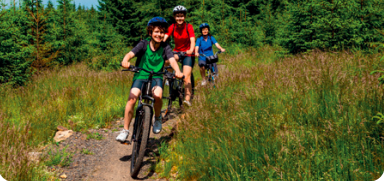
1. SPEAKING. Look at the photo in pairs. Is this an activity you enjoy? Why? / Why not?
(NÓI. Nhìn vào bức ảnh theo cặp. Đây có phải là một hoạt động bạn thích? Tại sao? / Tại sao không?)
Answer:
Yes, I enjoy riding a bike in both a forest and a park. I love the feeling of being surrounded by nature and the fresh air. It's a great way to exercise and clear my mind.
No, I don't enjoy riding a bike in a forest or park. I'm not a big fan of outdoor activities, and I find biking to be tiring and uncomfortable. I prefer to engage in other forms of exercise and relaxation.
2. In pairs, read the dialogue and decide whether each gap should be 'a' / 'an', 'the' or '—' (no article). Write your answers.
(Theo cặp, đọc đoạn hội thoại và quyết định xem mỗi chỗ trống nên là 'a' / 'an', 'the' hay '—' (không có mạo từ). Viết các đáp án của bạn)
Leah: What are you up to at (1) ___ weekend, Toby?
Toby: I’m going to go for (2) ___ bike ride on Saturday. Do you fancy coming too?
Leah: I can’t, I’m afraid. I'm going to help my dad with some gardening. We're going to do some work for a neighbour.
Toby: That doesn’t sound like (3) ___ best way to spend your weekend. Gardening is (4) ___ hard work! And according to the forecast, (5) ___ weather isn’t going to be good.
Leah: I know. But (6) ___ neighbour is going to pay us for it. My dad’s (7) ___ gardener, so he’s got the right tools.
Toby: Really? I'll come and help you. I mean, if that’s OK with you and your dad ...
Leah: Sure. We'll share (8) ___ money with you: £10 (9) ___ hour. But what about (10) ___ bike ride?
Toby: I'll go on Sunday instead. The weather will probably be better then. Do you want to come?
Leah: Yes, please. I love (11) ___ bike rides. But let’s go in (12) ___ afternoon. I'll be exhausted when I wake up!
Answer:
Leah: What are you up to at (1) — weekend, Toby?
Toby: I’m going to go for (2) a bike ride on Saturday. Do you fancy coming too?
Leah: I can’t, I’m afraid. I'm going to help my dad with some gardening. We're going to do some work for a neighbour.
Toby: That doesn’t sound like (3) the best way to spend your weekend. Gardening is (4) — hard work! And according to the forecast, (5) the weather isn’t going to be good.
Leah: I know. But (6) the neighbour is going to pay us for it. My dad’s (7) a gardener, so he’s got the right tools.
Toby: Really? I'll come and help you. I mean, if that’s OK with you and your dad ...
Leah: Sure. We'll share (8) the money with you: £10 (9) an hour. But what about (10) the bike ride?
Toby: I'll go on Sunday instead. The weather will probably be better then. Do you want to come?
Leah: Yes, please. I love (11) — bike rides. But let’s go in (12) the afternoon. I'll be exhausted when I wake up!
3. Listen and check your answers. When are Toby and Leah going to do the activity in the photo?
(Lắng nghe và kiểm tra những câu trả lời của bạn. Khi nào Toby và Leah sẽ thực hiện hoạt động trong ảnh?)
Answer:
HS tự thực hiện.
4. Study the use of articles in the dialogue. Complete the Learn this! box with 'a' / 'an', 'the' or '—' (no article).
(Nghiên cứu việc sử dụng mạo từ trong đoạn hội thoại. Hoàn thành phần Tìm hiểu này! ô có 'a'/'an', 'the' hoặc '—' (không có mạo từ)
LEARN THIS! Articles
a. We use (1) ___ when we mention something for the first time and (2) ___ when we mention it again.
b. We use (3) ___ when it is clear what we are talking about, and in superlatives.
c. We use (4) ___ to say what someone's job is.
d. We use (5) ___ when we make generalisations.
e. We use (6) ___ to mean ‘per’ or ‘in each’.
f. There are set phrases which do not follow a rule.
go to school at (7) ___ weekend watch TV
go to the cinema in (8) ___ morning / afternoon
on Monday listen to the radio
Answer:
LEARN THIS! Articles
a. We use (1) a when we mention something for the first time and (2) the when we mention it again.
b. We use (3) the when it is clear what we are talking about, and in superlatives.
c. We use (4) the to say what someone's job is.
d. We use (5) — (no article) when we make generalisations.
e. We use (6) a/an to mean 'per' or 'in each'.
f. There are set phrases which do not follow a rule.
go to school at (7) the weekend watch TV
go to the cinema in (8) the morning / afternoon
on Monday listen to the radio
5. Complete the sentences with a / an, the or — (no article). Use rules a-f in the Learn this! box to explain your answers.
(Hoàn thành các câu với a / an, the hoặc — (không có mạo từ). Sử dụng các quy tắc a-f trong Tìm hiểu điều này! hộp để giải thích câu trả lời của bạn)
1. My mum is _____ violin teacher. In fact, she’s _____ only violin teacher in our town.
2. I love _____ Chinese food and there’s _____ great Chinese restaurant near my house.
3. My brother, who is _____ accountant with one of _____ largest companies in London, earns £100 _____ hour.
4. If you're hungry, there’s _____ sandwich in _____ fridge.
Answer:
1. My mum is a violin teacher. In fact, she's the only violin teacher in our town.
2. I love Chinese food and there's a great Chinese restaurant near my house.
3. My brother, who is an accountant with one of the largest companies in London, earns £100 an hour.
4. If you're hungry, there's a sandwich in the fridge.
6. Read the Learn this! box. Then underline an example of each of the uses of 'will' and 'be going to' in the dialogue.
(Đọc Learn this. Sau đó gạch dưới một ví dụ về từng cách sử dụng 'will' và 'be going to' trong đoạn hội thoại)
LEARN THIS! 'will' and 'be going to'
a. For predictions, we use:
1. 'be going to' when it is based on what we can see or hear.
2. 'will' when it is based on what we know or is a guess.
b. For plans, we use:
1. 'be going to' when we have already decided what to do.
2. 'will' when we are deciding what to do as we speak.
c. For offers and promises, we use 'will'.
d. In spoken English, we usually use the contracted and weak forms ‘Il, 'm,’s, ’re instead of will, am, is, are.
e. Use the full and strong forms will, am, is, are to answer a yes-no question.
- Will you come? -Yes, I will. I'll come immediately.
Answer:
In the dialogue, there are several examples of the use of "will" and "be going to." Here are some examples:
"I'm going to go for a bike ride on Saturday." (be going to for future plan)
"The weather isn't going to be good." (be going to for future prediction)
"But the neighbor is going to pay us for it." (be going to for future action with a plan)
"I'll come and help you." (will for future decision)
"The weather will probably be better then." (will for future prediction)
"Do you want to come?" "Yes, please." (will for making a request and willingness to do something)
7. Complete the sentences with the correct form of 'will' or 'be going to' and the verbs in brackets. Write which rule in the Learn this! box you are following.
(Hoàn thành các câu với dạng đúng của 'will' hoặc 'be going to' và các động từ trong ngoặc. Viết quy tắc nào trong Learn this bạn đang theo dõi)
LEARN THIS! 'will' and 'be going to'
a. For predictions, we use:
1. 'be going to' when it is based on what we can see or hear.
2. 'will' when it is based on what we know or is a guess.
b. For plans, we use:
1. 'be going to' when we have already decided what to do.
2. 'will' when we are deciding what to do as we speak.
c. For offers and promises, we use 'will'.
d. In spoken English, we usually use the contracted and weak forms ‘Il, 'm,’s, ’re instead of will, am, is, are.
e. Use the full and strong forms will, am, is, are to answer a yes-no question.
- Will you come? -Yes, I will. I'll come immediately.
1. That train _____________ (not stop) here — it’s going too fast.
2. ‘We _____________ (spend) the weekend in Paris.’ ‘Lucky you. You _____________ (have) a great time!’
3. ‘Help! I _____________ (drop) one of these boxes.’ ‘Don’t worry. I _____________ (take) one for you.
4. I _____________ (go) into town this afternoon. But I _____________ (not be) home late, I promise.
Answer:
1. That train will not stop here — it's going too fast.
Using 'will' for prediction based on what we know
2. 'We are going to spend the weekend in Paris.' 'Lucky you. You will have a great time!'
Using 'be going to' for a plan that has already been decided
3. 'Help! I am going to one of these boxes.' 'Don't worry. I will take one for you.'
Using 'will' for an offer or promise
4. I am going into town this afternoon. But I won't be home late, I promise.
Using 'will' for a decision made as we speak
8. SPEAKING PRONUNCIATION. Work in pairs. Take turns to ask and tell your partner about your plans for your next summer, using 'will' and 'be going to'. Remember to pronounce the weak or strong forms of will, am, is, are appropriately.
(Làm việc theo cặp. Thay phiên nhau hỏi và nói với đối tác của bạn về kế hoạch cho mùa hè tới của bạn, sử dụng 'will' và 'be going to'. Hãy nhớ phát âm dạng yếu hoặc mạnh của will, am, is, are một cách thích hợp)
Answer:
Person A: Hi! What are you planning to do next summer?
Person B: Hey! I haven't decided yet, but I think I am going to visit my grandparents in Florida. They have been asking me to come over for a while.
Person A: That sounds great. Are you going to stay with them for the whole summer?
Person B: No, I will only be there for a couple of weeks. After that, I am going to travel around the West Coast.
Person A: Nice! What places are you planning to visit?
Person B: I will be going to California, Nevada, and Arizona. I will visit Los Angeles, San Francisco, Las Vegas, and the Grand Canyon.
Person A: Wow! It sounds like an exciting trip. Will you be traveling alone or with someone?
Person B: I will be traveling with my cousin. She is as excited as I am.
Person A: That's cool. I am still figuring out my plans for the summer, but I think I will stay in town and work on some projects.
Person B: That's a good idea. What kind of projects are you planning to work on?
Person A: I will be going to take some online courses and work on a personal website. I am also thinking about starting a small business.
Person B: That sounds interesting. Good luck with your projects!
Person A: Thank you! Enjoy your trip, and have fun!
Tài liệu cùng môn học
Tài liệu khác
- Trắc nghiệm tiếng anh 2 Family and Friends
- Trắc nghiệm tiếng anh 2 Explore our world
- Trắc nghiệm tiếng anh 3 Family and Friends
- Trắc nghiệm tiếng anh 3 Explore our world
- Trắc nghiệm tiếng anh 4 Family and Friends
- Trắc nghiệm tiếng anh 4 Global Success
- Trắc nghiệm tiếng anh 4 Explore our world
- Trắc nghiệm tiếng anh 5 Family and Friends
- => Xem nhiều môn hơn